Search

Joseph E Bird

Let's talk about reading, writing and the arts.

Tag

Fiction

It’s a trip, man.

A couple of items for your Sunday afternoon reading.

First, an article in the Sunday’s Charleston Gazette-Mail about The Mystery Hole, a crazy roadside attraction near Ansted, West Virginia.  You don’t see these kinds of places very often anymore. If you’ve never been, it’s worth the trip, even if you have to spend the night. (And there are plenty of other things to do on a weekend visit. New River Gorge Bridge. Hawk’s Nest State Park. Babcock State Park.  West Virginia – Wild and Wonderful!)

Mystery Hole 1 for web
It’s more than meets the eye. Note the gorilla on the roof.

So read this first.

Then read this. It’s a story I wrote after my first trip to The Mystery Hole. My story is fiction and any resemblance to real events or characters is purely coincidental. The roadside attraction in my story is called The Enigma.

We interrupt this post to bring you a special news bulletin.  Joseph Bird has never posted The Enigma story to which he refers. Or maybe he did, and for some reason, he deleted it. He can be that way sometimes and he can’t remember much of anything. For that error, he will make amends in the coming days. Until then, he offers the following poem, written as part of his novel Three Seconds. (To be read in the spirit of Nights in White Satin. If you have to ask, never mind.)


From the original post:

In Three Seconds, a roadside fun-house called The Enigma serves as a metaphor for the illusion of truth the characters in the novel must face. In The Enigma, the laws of gravity are not what they seem to be and visitors are left wondering about the reality of it all. At the end of every tour, Rembrandt Walker offers this cautionary reminder.

Breathe in,
my friends,
while you still can.
When shall we tarry,
it’s all in God’s plan.

Marvel and wonder
at gravity’s plight.
The day is dark
and evening bright.

Live now and love,
while the spirit is young.
In life’s quick passing,
our song will be sung.

Not all we see
can we comprehend.
Up becomes down,
beginning is end.

Worry not, my friends,
and judge with much grace,
Our fate will come quickly,
our day we will face.

Look beyond
what you see
and know what is true.
It’s out there somewhere.
It’s waiting for you.


copyright 2014, joseph e bird

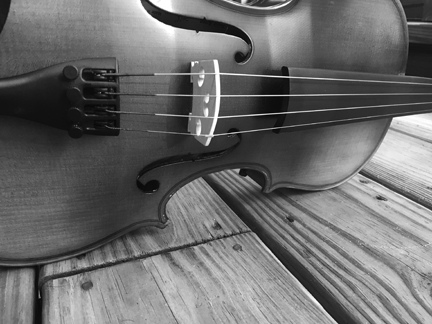
The Violin

Violin BW 2 for web

The following was inspired by true events.


“I WANT TO KEEP MY LEG.”

“Jack, we’ve been through this. Your leg is dying. If we don’t amputate, it could kill you.”

“I want to keep my leg.”

“At the risk of dying?”

“Of course not. Cut the leg off. But I want to keep it.”

“I don’t understand.”

“What’s so hard to understand? When you cut off the leg, instead of throwing it in the trash, put it on ice.”

“We don’t just throw it in the trash. We have a medical incinerator.”

“I want to take my leg home.”

“Why?”

“It’s my leg. Maybe I’ll make it into a lamp.”

“Just sign the papers. You can’t take your leg home.”

“Maybe I want to bury it. Could I take it home and bury it?”

Dr. Irving leaned back in his chair and let out a long, slow breath. “It’s really not practical. How would you even dig a hole?”

“But could I do it? Is it legal?”

“There’s paperwork. It has to be approved by Administration. They won’t likely grant your request, given your circumstances.”

“My circumstances.”

“You know.”

“I’m not crazy, Stuart. I checked myself in to get some rest.”

Dr. Irving forced a smile. There was no point in arguing. He had learned that years ago. When they were both boys.

“Where would you bury it?”

Jack thought for a moment. “I could bury it next to Monkey.”

“Monkey died?”

“Two years ago. I told you. You never listen to me.”

“I’m sorry. I forgot. I forget a lot of things anymore.”

“Monkey’s not dead. I was just testing you.”

“Why would you do that?”

“I’ll bury her next to Zsa Zsa.”

“I know Zsa Zsa’s dead. I went to the funeral.” Dr. Irving shook his head. “Who has a funeral for a cat?”

“Lot’s of people do. Don’t be so insensitive.”

“So you want to bury your leg in your pet cemetery?”

Jack didn’t answer. Dr. Irving took off his glasses and rubbed his eyes.

“Does your head hurt?” Jack asked.

“No. Just tired. I don’t sleep much these days.”

“They have meds for that, you know. New ones. I got to try a couple at the hospital. The other hospital. Bateman.”

“I just need some time off. I’m going to the beach next month.”

“The beach. I never understood that. We’re going to the beach! We’re going to the beach! All that sand. The humidity. No, thank you.”

“I like it. Nothing like sitting on the deck with a cup of coffee watching the sun rise.”

“Are the kids going?”

“No. Just me. I haven’t even told them. I’m afraid they’ll come down.”

“They worry about you.”

“I know.”

“You’re not used to being alone, and yet you’re going to the beach to be by yourself.”

“So now you’re my shrink?”

“It hasn’t even been a year.”

“Yeah.”

“Murrell’s Inlet?”

“No. Outer Banks.”

“Oh.”

“Katie loved Murrell’s Inlet. I can’t go there. I just can’t.”

Jack nodded. They sat in silence for a moment.

“Are you going to give me my leg?”

“It’s a horrible idea.”

“I’m not crazy.”

“I know.”

Jack pushed himself up in the wheelchair and lifted his leg at the knee and crossed it over his other leg. The good leg. He rubbed his knee under the hospital gown. “They say there will be phantom pain. Like the leg is still there.”

“That’s what they say.”

“I hear voices.”

“Uh huh.” Stuart turned to his computer and began typing. The office was small and sparse, not so much as a family photo on the desk. It wasn’t his primary office, just a space in the hospital to access records and process patients.

“I got a new violin,” Jack said.

“I didn’t know you were still playing.”

“I sat on my old one. Just flattened it.”

“So you got a new one?”

“I had that violin since junior high.”

Stuart turned and faced Jack. “The same one?”

“I couldn’t fix it this time.”

“I’m sorry.”

Jack looked down at his leg, black and brown and blue and scaly and crusty.

“Sometimes I wonder what my life would have been like had you not come along that day. They would have certainly finished the job on the violin, and then started in on me. Maybe I just needed a good beating. Maybe that would have toughened me up.”

“Nobody needs a beating.”

“I went to Bateman for the first time after that. I was fourteen.”

Dr. Irving went back to typing. “I didn’t know that.”

“My first trip to crazy.”

“Stop it, Jack.”

“I know. It’s just an illness. Like the flu or diabetes or a rotting leg. But there is a difference.”

“There shouldn’t be.”

“So you say.” Jack touched the dead skin, checking for pain. He felt nothing. “My poor, sorrowful leg. It’s dying. You’re going to cut it off, and you’re either going to burn, or I’m going to bury it, or maybe I’ll just keep it my deep-freeze for a while. Doesn’t really matter. It’s just an appendage. Notice how I refer to it? It. Third party. Objective.”

“You can’t keep it in your freezer.”

“But up here,” Jack said as he tapped his forehead, “that’s me. My mind. My thoughts. My fears. My hopes. Me. Not it. It’s so hard to be objective and say that I just need medicine or therapy or electricity. I had that once, you know.”

“Electroconvulsive therapy can be effective, and overall, I think your treatments have served you well. You’re a bit of an odd-ball, but you’re not crazy. And if you need to drop by Bateman every now and then to get it all sorted out, so be it. You go to Bateman, I go to the beach.”

Jack laughed. “I think you’re the one who’s crazy.”

“You’re probably right.”

“Even so,” Jack said.

“Even so, what?”

“My leg is part of me, too.” He uncrossed his leg. He wheeled to the window that overlooked the parking lot. “Nice view.”

“Even so, what?”

“I don’t have much. No family. Just Zsa Zsa, now. I’ve had two real friends in my life. You and my violin. Now it’s gone. Well, it’s not gone, just a pile of broken wood and strings. My new one is nice, but it has no history with me. And now my body is leaving me, piece by piece.”

“Just your lower leg. Every other body part is fine.”

“That’s easy for you to say.”

“Ok, Jack.”

“Ok?”

“Yeah. I’ll do the paperwork for your leg.”

“You think the hospital will approve it?”

“They will. And if they don’t, we’ll figure something out.”

“Thank you, Stuart.”

“Two conditions, though. First, we’re going to keep it here until you’re discharged. Then the day you go home, I’m coming over to your house and I’m going to bury your leg.”

“That sounds so odd when you say it out loud, Doctor. Even a little nutty. What’s the second condition?”

“You’re coming to the beach with me.”

Jack turned from the window and looked at his doctor, his old friend. Stuart was still pecking on the computer. He wouldn’t look back. It wouldn’t be proper. Not for friends like Jack and Stuart.

“Go on back to your room. I’ve got to make my rounds. I’ll see you in the morning.”

“Thank you, Stuart.”

Jack wheeled himself to the door and started down the hall.

“The beach,” he said in a whisper. “I’m going to the beach.”


copyright 2016, joseph e bird

A Prayer for Rain

Prayer for Rain Cover - reduced size

Trevor Larson’s future looks bright. He’s a young and gifted singer-songwriter ready to chase the dream and make his mark in the world of music. But a devastating accident takes it all away, and leaves him physically and emotionally scarred.

As he rebuilds his life as an architect, he wrestles with his own self-worth. When he discovers new ways to express himself musically, his physical appearance gives rise to a new musical persona which propels him into a world for which he is not prepared. Ultimately, he must decide if his renewed dream of stardom is worth sacrificing his true identity as an artist and a person.

Set to an eclectic sound track as people come and go in Trevor’s life, A Prayer for Rain deals with the timeless themes: Respect. Contentment. Friendship. And of course, love. It delivers hope when all seems lost.


Available now at Amazon.

It’s an honor to be mentioned.

A Prayer for Rain
Honorable Mention, Book Length Prose, WV Writers Competition, 2016

Song of the Lost
Honorable Mention, Book Length Prose, WV Writers Competition, 2016

Words matter.

One of my writing mentors, Sol Stein, once told me to avoid melodrama in my fiction, melodrama being characterized by exaggerated scenes or characters that are intended to appeal to the emotions.  The damsel in distress tied to the railroad tracks. The villain twirling his mustache.

I’ve been editing A Prayer for Rain, and even after great input from several readers, my manuscript is covered with red marks of my own doing.  Much of what I’m finding are sentences and phrases that make me cringe. Phrases that I thought were good when I wrote them, but now jump out at me as melodramatic. Even a simple word choice can make a sentence melodramatic.

In one scene, Trevor has an exchange with Jess, a young woman who works at a convenience store. Since his accident five years before, he has had very little physical contact with anyone, and when they shake hands for the first time, he has this reaction:

He took her hand in his and though it was only for a moment, he relished the soft touch of her skin on his.

The word in question is relish. By definition, it’s accurate enough. It simply means to take pleasure in something. But in reading it afresh, it strikes me as a little bit of an over-reaction.  I picture Trevor going “ahhhhh” and quivering like a bowl of jelly. Come on, man. Get a grip. It seems melodramatic to me now.

Here’s the current version:

He took her hand in his and though it was only for a moment, he appreciated the soft touch of her skin on his.

I’m not sure appreciated will be the final word choice, but it definitely takes away the melodrama. Trevor notices her in a unique way, but he’s not about to melt into a pile of butter.

I said to the guys at the Shelton College Review the other day that sometimes I’ll open my manuscript to a random page and read a couple of sentences and get embarrassed by the poor quality of the writing. I think what I’m seeing when I do that is the amateurish, melodramatic passages. Recognizing the problem is the first step to recovery, right?

That’s why there’s red ink all over my pages.

Words matter.


The Long Shadow of Hope

Founding member of the Shelton College Review, Andrew Spradling, has just published a new novel, The Long Shadow of Hope.  Here’s my review:

Football, I think it’s fair to say, is primal. Speed and strength and aggressive ferocity matter. Coaches like to talk about game plans and strategy, but nine times out of ten, the faster, stronger players win. And make no mistake, winning is everything. There may be talk of building character and lessons learned in losing, but such subtleties are just that – talk. It’s a man’s game, in every sense of the archaic phrase.

So it is with Andrew Spradling’s novel, The Long Shadow of Hope.

His prologue paints the scene. If you’ve ever watched a college football pre-game show, you’ve seen it. The fans, the cheerleaders, the tailgating – and the players who still display a naive enthusiasm for a multi-billion dollar business that masquerades as a game.

Spradling’s book is a behind-the-scenes look into that world. There’s no Rudy who sticks with the game against all odds. There’s no underdog team battling for a championship. It’s a story of how selfishness and greed can ruin lives and it’s told with the same direct, unflinching fierceness that is on full display on Saturday afternoons every fall.

In Long Shadow, story is everything. It’s pretty clear who the good guys and bad guys are. In fact, Chap Roberts is one of the more despicable characters I’ve met in a long time and he has little time for inner reflection. And the men in Long Shadow, being the primal sorts that they are, are susceptible to the lure of illicit relationships and their encounters are described with direct clarity. Things are happening, surprises are brewing, and there are more twists in the story than the road up Lookout Mountain.

Like a good football game, you don’t know who is going to win until the end. It will leave you shaking your head, and hoping that college football isn’t really that bad.


The Long Shadow of Hope.  Find it now on Amazon.

Almost

desk b&w grain for web

One brick.
Another.
Carefully.
Thoughtfully.
Almost.
Just a few more.
Stop.

Forty years ago.
Graphite lines
on vellum
give shape.
Buildings begin
with a stroke
of my pencil.

Turn off.
Unplug.
Gather.
Solemnly.
Almost.
Just a few more.
Stop.

Forty years now.
Wisdom guides
the architect
and builders
so kids
can play
in school.

Resume’.
Send.
Wait.
Anxiously.
Almost.
Just a few more.
Stop.


copyright joseph e bird, 2016


The weak story.

I’m editing my novel, A Prayer for Rain.

I had a great set of beta readers who all have given me excellent feedback. Thank you, betas. Their comments have made me think and I’ll share some of my thoughts on their thoughts in upcoming posts. Just in case you’re having trouble sleeping at night.

I came across an excerpt from Story Fix, by Larry Brooks. He said this:

“Not every story idea is worth pursuing, even in the skilled hands of the world’s finest authors, and not every story written by a well-intentioned, even skilled, writer should be published.”

Sobering advice for the would-be writer. Before we just jump in and start slinging ink (or arranging electrons), we need to evaluate the entire story idea. I hope to learn that skill from Brooks’ book.


The 1% lie.

According to surveys, about 80% of us believe we have a book in us.

Let’s play with some numbers.  The US population is about 320 million.  That means that about 256 million Americans believe they can (should) write a book.

Now let’s apply the 80-20, just for fun.

Of the 256 million who think they have something to say, only 20% of those will ever get around to actually trying to write a book.  That’s 51 million.

Of those, only 20% will finish their book.  That’s a little more than 10 million.  That’s a lot of books.

According to my non-scientific research, there are about 300,000 books published in the US each year, not counting self-publishing in all its forms.  Of the 300,000, about 100,000 are some sort of fiction.

Now 100,000 sounds like a lot.  Surely your novel can be one of the 100,000.

Let’s look at it another way.  Of the 10 million books that are written each year, only 1% get published.  The best 1%.

Maybe you’re in the top 10%.  That would earn you an A in school.  You’re better than 90% of the others.  But it’s not good enough to get published.  You need to be in the top 1%.

Here’s the part that’s not true.

The 1% doesn’t necessarily represent the best writers.  It represents the most marketable, the books that publishers are willing to take a chance on because they believe they can sell product.  Sometimes lesser writing is marketable.

So not only do you have to be a good writer, you have to have a sense of what is marketable if you want to get published.

The odds are against you.  But then again, it’s not about the numbers. It’s about the words.

Tell your story.  Even if it’s just for you.


Blog at WordPress.com.

Up ↑