Search

Joseph E Bird

Let's talk about reading, writing and the arts.

Category

Writing

Writing Tip: Talk it Out

writing

I’m fortunate to belong to the Shelton College Review, a small group of writers who gather once a week to offer critique and encouragement – both are enormously important for writers – on our works in progress.

In reviewing one of my recent submittals, Larry was saying that he had been so caught up in the narrative, that he forgot that he was critiquing and was simply enjoying the story.  Until, that is, I threw in heaping helping of backstory.  His engagement came to a screeching halt.

I know better than to do that.  It’s one thing to sprinkle in a paragraph or two of backstory, but I took the reader out of a dramatic moment – in the back of an ambulance! – to tell about Heather’s life in high school.  Duh.

Thanks, Larry, for pointing that out. And as painful as that was to hear (that I could be so dumb), it was even harder to fix.  I’ve spent several hours setting things right, hours that I could have been using to write something new.

How did I fix it?

First, I spread it around a little.  Backstory in small doses (a couple of sentences) is acceptable.

Then I let the dramatic scene in the ambulance play out.  After things had calmed down, I worked some of the backstory into dialogue.  Things are still happening.  There’s still tension. There’s still character development as Heather and Lucas talk.  And the reader learns a little bit more about Heather and why she is the way she is.

And then there’s the little problem about coincidences.  More on that later.


chipping a channel out of bedrock

Long time writing friend, Elizabeth Gaucher, posted an essay by Loren Eaton, wherein he posits that writing is sometimes like “chipping a channel out of bedrock with a pen.”  You can’t expect the initial passion of a project to propel you to 80,000 words.  It takes hard work.  A little every day.  Especially if your writing involves something more than a Tweet or a Facebook post.

You don’t wake up on a Saturday morning and decide to run a marathon.  You’ve got to put in the miles.  Every day.

You don’t pick up a guitar for the first time and play Classical Gas.  You’ve got to practice.  Every day.

Don’t make excuses.

Write a sentence today.  It will likely turn into a paragraph.  And a page.  And a chapter.

Keep chipping at the bedrock.


the long walk

pier for web

There were a few people on the beach, walking slowly, their heads down, scanning the sand for surprises from the deep that always appeared after a storm. A yellow umbrella pitched in the sand near the surf caught her eye and though she couldn’t see, she knew there was an old man underneath, his skin dark and leathery from his years in the sun, his shirt – a short-sleeved button-up, despite the cool weather – bleached a pale blue. There was a tackle box by his side and an always empty creel, though surely he would catch something sometime. Surely. He would sit in his beach chair and smile anyway, as if he knew he were part of the scene, part of what the people from the city expected to see when they came with their pale flesh, soon to be pink flesh, to walk on the hard, grainy sands and evaluate their lives and make big plans that would carry them back to their tedious jobs and their monotonous neighborhoods with a feeling of hope that would last a couple of weeks, maybe three, before comfortable complacency engulfed them once again and relieved them of any responsibility of living a more meaningful life. And it always happened on days like this one, not in the bright of a too hot day where the heat and lotions and kids crying in the distance worked to produce nothing better than a brief nap, followed by a short walk to the water to cool the feet, maybe venture in up to the knees, but never farther. No, the deep contemplation happened on the overcast days where the obligatory roasting in the sun was excused and those with no inclination for inner reflection went to the mall, while those who still had hope went on the long walk to the pier.


copyright 2018, joseph e bird, from the novel Heather Girl.

and the darkness he called night

“I guess I misjudged how quickly the darkness falls.”

— Heather Roth, from the novel Heather Girl


copyright 2018, joseph e bird

i can’t work like this

Adena Springs

Yesterday I drove from Lexington to Louisville along the Bluegrass Parkway.  It was mile after mile of picturesque, bucolic, pastoral scenery, on what had to be the most beautiful day of the year. It is impossible to have gloomy thoughts while making this drive on a day like that.

Utterly impossible.

How can one ponder the human condition when the day is perfect?

How can a writer let his imagination wander to the struggles of mankind when the grass is so green?

Writers need the the grit of the dark alley.

Writers need the longing promise of the empty train platform.

Writers at least need some rain, or run-down barns, or the crusty old farm hand thinking about his past.

There’s another part of Kentucky – eastern Kentucky – that’s ripe for stories.  But not this stretch of highway.

No way.


Photo Credit: Walt Roycraft.  The photo is the property of GRW, my employer.  The architects of GRW design, among other things, equine facilities.  This is the site of one of our projects, the Adena Springs Horse Farm in Paris, Kentucky. Very much like the scenery I passed on my way to Louisville.

how to squander your right to vote

I tried to vote today.

Of course that’s not the story.  I vote in every election, if I’m able.  Last year (I think it was last year) I voted by filling in circles with an ink pen, just like I did on high school tests back in the olden days.

But technology has finally arrived to the backwoods corner of my world.  This morning at 7:15, I arrived at the polling place to find brand new touch screen voting machines.  The poll workers felt obligated to teach me how to use them.  Not that I couldn’t figure it out by myself.

So I slide in the ballot to get things going and start touching away.  I knew some of the candidates, but rather than vote for people I don’t know anything about, I’ll skip to the next office until I see a candidate in which I have some confidence. On these new machines, it meant I touched “Next”.  I did that a lot.

I finally finished and then the machine started making me review all my choices.  I didn’t have time to do that.  I had to drive to Lexington.  More on that in a little bit.  I needed to end the voting exercise.  So I hit “Exit.”

And out came my ballot.

I took it to the next station where it was inserted into the magic vote counting machine. The magic machine spit it back out.  They tried again.  Same result.

“Did you hit Exit?”

“Yes.”

“You weren’t supposed to do that.”

“Oh.”

“You should have hit Print.”

“Oh.”

“Hey, Jimmy.  He hit Exit.  What do we do?”

“He should have hit Print.”

“That’s what I told him.”

“Try it again.”

“We did.  It didn’t work.”

They huddled to consider the options.

“Nevermind.  I have to go.”

“But sir.  We’ll figure it out.”

“I don’t have time.”

They were still huddled when I left.

It’s ok.  The people I vote for never win anyway.

this morning

fog for web

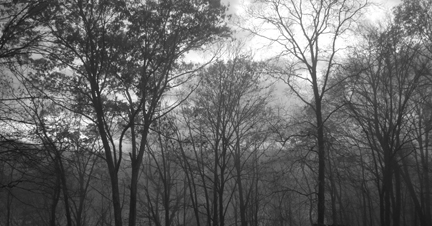
this morning the skies are gray and the air is warm and dry like a mid-summer day.

this morning i stopped at Tim Horton’s and got a cup of oatmeal and a black coffee.

this morning i sit in my office planning for a day of phone calls and emails, and too little design.

this morning when i was young i worked outside tilling the soil and tending the plants and earning callouses on my hands.

this morning the birds call out in the quiet, reminding me of the days i worked the earth and toiled in sweat.

this morning it’s quiet inside, but soon the phone will ring and my day will start and i’ll forget this thought.

this morning i want to go outside and hoe the ground and smell the richness of the compost and eat lunch in the shade.

this morning the train rumbles on the tracks two blocks away and the bus roars by and and a siren wails.

this morning, like any other morning.


copyright 2018, joseph e bird

dystopia

kmart for web

what’s that building?

it used to be a store.

a store?

people used to go there to buy things.

what kind of things?

clothes.  paint.  medicine.  watches.  televisions.  tools.

why didn’t they just order it?

it was different then.  people wanted to see what they were getting.

why?

i don’t know.  something about feeling the heft of a hammer in your hands.  seeing how a watch looked on your wrist.  or shoes on your feet.

seems like a lot of trouble.

i guess.  sometimes they’d sell hot dogs out front. or brownies.

why?

cheerleaders raising money for uniforms.  veterans helping veterans.

what’s a veteran?

people who went to war defending our freedom.

war is bad, isn’t it?

yeah.  it can get complicated.

why is there so much pavement in front?

people used to drive cars.

you mean ride in cars?

no.  they actually drove cars.  everybody had a car.  they’d keep it at home and drive it to the store.

no way.

yes. and they’d leave their cars all over the pavement while they went in the store and shopped.

that’s just crazy.

maybe.  but it worked.  i met your grandmother in that store.

was she shopping?

no.  she was a cashier.

what’s that?

we used to buy things with money.  dollar bills.  coins.  we’d pay the cashier before we left with whatever we bought.

grandma was a cashier?

i went to the store a lot.  bought things i really didn’t need just for the chance to talk to her.

why didn’t you use an app?

you can’t flirt with an app.

why do you need to flirt?

you don’t.  it’s just part of the dance.

you danced, grandpa?

oh yeah.  we danced, all right.

so what’s with the rocket?

beats me.  we never did figure that out.

rocket for web


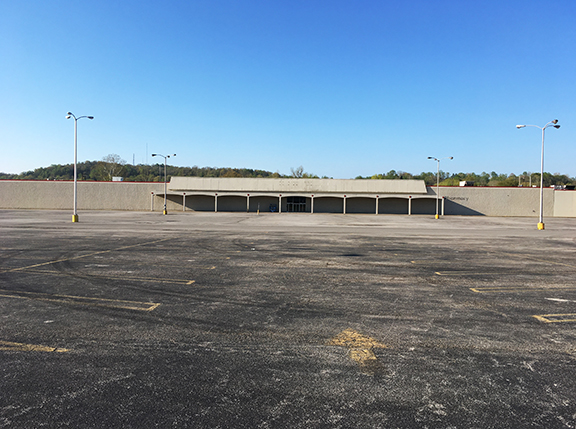
The first photo is the former K-Mart in my small town, closed just a few weeks ago.  It’s unsettling how deserted the parking lot is now.  To the right, just out of the frame, a Kroger store continues to thrive, so it’s not quite the apocalypse.  Not yet.  The sign in the second photo is soliciting tenants for the vacant building.  In the background, across the highway on the riverbank, is the rocket of St. Albans.  I’ve lived here all (most) of my life and have no idea why we have a rocket on the riverbank by the highway.


images and story copyright 2018, joseph e bird


it’s a west virginia thing

The temperature and humidity were rising as she drove farther south and just outside of Montgomery she stopped for gas at a convenience store, filled her tank, and went inside for a cold drink. When she came back out, she paid no attention to the car parked at the pump behind her.

“West Virginia, almost heaven.”

She turned to look. A black man, about her age, wearing a tattered ball cap. He was smiling,

She gave him a friendly look and unlocked her car.

“Your license plate.” He pointed to the back end of her car. “I’m from there.”

She stopped. She couldn’t resist.

“Where?”

“McDowell County.”

It was a West Virginia thing. If you’re from southern West Virginia, you’re identified with your county, not your town. Mingo County. Boone County. Lincoln County. McDowell was the poorest of the poor. She didn’t have to ask why he left. The decline of the coal industry affected everyone in southern West Virginia. As the jobs left, the drugs came in. Anybody with any hope for the future left. At least that’s the way she saw it.

“I’m from Charleston.”


copyright 2018, joseph e bird, from the novel, Heather Girl

Blog at WordPress.com.

Up ↑