Search

Joseph E Bird

Let's talk about reading, writing and the arts.

Category

Music

Joe Dobbs

Joe-Dobbs-1442935608

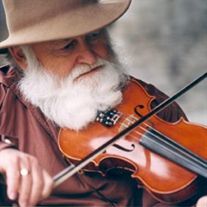
When was the last time you enjoyed a funeral? I did last night, at the funeral of Joe Dobbs.

I arrived ten minutes before the service was supposed to start. Ron Sowell, the leader of the Mountain Stage band, was front and center with his guitar, singing a melancholy spiritual. At one point the song morphed into Amazing Grace, and everybody joined in.

What else do you need to know?

Joe Dobbs was the owner of Fret n Fiddle, a music store in my small little town of St. Albans, West Virginia, that attracted real musicians as well as rank amateurs like me. The kind of store where honest-to-goodness jam sessions take place.  I didn’t really know Joe.  My wife bought my guitar there years ago and I would stop in every so often to look around.  I was too intimidated to pick up a guitar when Joe was around; too cheap to buy one when he wasn’t.

A couple of months ago my wife said she wanted to learn an instrument. She decided on the violin and we went down to Fret n Fiddle.  Joe was there. He was busy repairing an instrument and let us browse.  We found a reasonably priced violin and as we walked to the counter, I asked a dumb question.  “Do you think she can learn to play the fiddle?”  Joe’s answer, “Of course she can. I sell fiddles.”

I didn’t know his whole story, but his obituary filled in a lot of the blanks. The funeral even more.  As tends to be true with musicians, Joe Dobbs lived a colorful life.

After Ron Sowell finished, one musician after another came in from the make-shift “green room” and sang.  After each one the audience – yes, we were an audience – applauded.  A woman with a strong and unique voice led us in an a capella version of I’ll Fly Away.  Twenty minutes later all the musicians returned, and led by Jim Snyder, sang Will the Circle Be Unbroken, complete with guitar, dobro, harmonica, autoharp, mandolin, and drum solos.  A true musicians’ send-off.

After that, friends and family told stories of Joe.  Great stories.  Unexpected stories.  Again, I didn’t know Joe, but he would have loved it, I’m sure. Who wouldn’t?  Air Force Chaplain Matt Lanham, a one-time student of Joe’s and former employee at the store, gave a beautiful benediction.

And then one last song.

In maybe Joe’s last surprise, he had revealed that one of his favorite songs was not a bluegrass standard, but Louis Armstrong’s classic, What a Wonderful World.

A fitting end to a wonderful tribute.


Footnote:  I borrowed the photograph from Joe’s obituary.  I’m sure I’m violating copyright laws and I don’t do that lightly.  I would rather ask permission and give credit but I don’t know the photographer.  But you had to see Joe.

Walking in Memphis

My current novel in progress is heavily influenced by music.  In the scene I’m working on right now, Dani travels to Memphis on business.  I was reminded of the Marc Cohn song, Walking in Memphis. You can hear the song below.  But what’s interesting is that apparently the song is 100% autobiographical.  You can read the rest of the story here:

https://en.wikipedia.org/wiki/Walking_in_Memphis

I’ve got this friend.

One of my other blogger friends MY OBT, posted about the Civil Wars a few days ago.  The Civil Wars no longer exist as a musical duo. They will always be one of my favorites.  Here’s an example of why.

Texas Flood

This is an excerpt from my novel in progress. Trevor was a singer-songwriter until an accident forced him to give up his dreams of music. Now living in Nashville and working as an architect, he is with a group touring a part of the city they hope to redevelop when he happens upon a music store. The group moves on, but Trevor looks inside.

They moved on without Trevor, who was watching through the window as an old man sat playing a horizontal steel guitar. Another man sat behind the counter reading a magazine. He could hear the guitar through the glass windows. It was what he would have expected from a steel guitar, the kind of muisc he had heard before on an old country music show that he would see on television every now and then back in West Virginia. The man playing must have sensed Trevor watching and he looked up, waved, and kept on playing.

The group was a block away. Trevor opened the door and went inside.

There were about a dozen acoustic guitars hanging from the walls, another dozen electrics, a few dobros, and on the floor, maybe half a dozen steel guitars. He took one of the dobros off the wall and strummed it, more or less out of habit.

The man playing the steel looked up and said howdy, without missing a note. He was slight of frame and sat a little hunched over. He was wearing a short-sleeved dress shirt open at the collar, and on his wrist was a drug-store watch. He wore glasses with simple frames, and though his hair was thoroughly gray, he had a lively air about him that contradicted his elderly physical appearance. He could be anybody’s grandfather but most grandfathers would be sitting in front of the television watching afternoon game shows. This one was going from one song to another, his head bobbing to the beat as his mottled hands plucked the strings and slid up and down the fretboard. He ended a song that Trevor didn’t know with a long slide up, followed by a quick slide up and down that sounded more like an old whistle than a guitar.

“Yes, sir!” the man said. He looked up a Trevor and laughed, obviously enjoying his own music. Trevor smiled back. “How you doing, son?” the man said.

“Me? I’m fine.”

“You a picker or a slider?”

Trevor laughed. “Never really thought about it in those terms. I used to be a picker. Guess I’m a slider now. Or trying to be. I really just started.”

“Dobro?”

“Yeah. I bought one a couple of months ago.”

“What kind of music do you play?”

Trevor shook his head. “I’m still trying to figure what I can play on this thing.”

“Country? Blues?”

“Blues,” Trevor said. “At least that’s what I’m starting out with. Blues are kind of natural for a slide guitar.”

“Yeah, I know a little blues. Let me think. Yeah, how about this.” He started picking and sliding what sounded to Trevor like a standard blues opening.

“I know that one,” he said.

“A little Stevie Ray,” the man said.

“Yeah. I’ve heard that.”

“Texas Flood.”

He broke into the hard run just before the verse. Trevor couldn’t take his eyes off the guitar. Until the man started to sing. He could play, but he couldn’t sing. He sang the entire first verse and then started laughing.

“Now you know why I’m a guitar player,” he said. “I leave the singing to someone else.”

The man behind the counter shook his head and laughed without looking up.

“Let me hear you hit that a lick,” he said, looking at the guitar Trevor was holding.

“No, I can’t, really. I’m just learning.”

“Come on. Humor an old man.” He looked up with a smile that Trevor couldn’t resist. His enthusiasm reminded him of Jackson Little.

“Sure,” Trevor said. “I’ve been practicing playing old hymns. Do you know any hymns?”

“Goodness sakes, young man, I’ve forgotten more hymns than you’ll ever know. Lay one on me, now.”

“Ok. How about this one.” He started playing Softly and Tenderly. He was shaky at first, but midway through the first verse he found his rhythm and started to play with more confidence. By the time he reached the refrain, the man was playing along on the steel. He played the verse and the steel guitar faded to the background, but when they hit the refrain again, he was playing answer to Trevor’s call. It was haunting. Even the man behind the counter put his magazine down on his lap and listened.

By the third time through, they had found each other’s style and both were instinctively playing to the crescendo to end the song, until the last two lines of the refrain. The man stopped, and Trevor slowly picked the last line. The final note faded into the silence of the store.

The man behind he counter applauded.

“Oh, son, that was beautiful,” the guitar man said.

“Thanks,” Trevor said. “I just….I don’t know.”

The man behind the counter spoke. His voice was deep and carried resonance. “Coming from him, that’s one hell of a compliment, boy.”

“What’s your name, son?” the guitar player asked.

“Trevor. Trevor Larson. I’m an architect.” He felt silly for stating his occupation. The man laughed.

“Maybe you are,” he said, “but you’re a musician.” He stood as he reached his hand to Trevor. “I’m Maxfield Martin.”

“It’s a pleasure to meet you, Mr. Martin. But no, I’m not a musician. I just mess around a little.”

“Mess around a little, huh. How long you been playing?”

“Dobro? Not that long. A couple of months, maybe.”

Martin studied on Trevor, looking him up and down. “You were in a fire, I reckon.”

“I reckon.”

“How long you been in Nashville?”

“A couple of weeks,” Trevor said. “How about you?”

“Me? I guess it’s been sixty years or so.”

Trevor was surprised by the answer and didn’t know how to respond.

“Let me help you out,” Martin said. “I’m eighty-five. I came here from
Abilene when I was twenty-four.”

“Are you in the industry?”

Martin laughed as he sat back down behind his guitar. He plucked the strings and moved the slide, making a sound that was as close to real laughter as an instrument could get. “Don’t you reckon I’m old enough to retire?”

“I reckon.”

“You talk like you’re from Texas, son.”

“West Virginia.”

“I’m not completely retired. I play some with Hank Willard’s band. He’s from Ashland, Kentucky, right across the river from West Virginia. We play a lot of the small places. Wheeling, Milton. Played in Charleston a few times.”

“That’s where I’m from. Well, down the river a bit.”

“And you didn’t move to Nashville to play music?”

“No. I gave up on music.”

Martin stroked the strings of his steel guitar, then whipped the slide up and down the fretboard, creating a wailing, howling song, then broke into the intro of Hot Rod Lincoln, his head nodding again as his fingers moved in a blur. Then he bounced his slide up and down on the strings, alternating with his finger picking, and created a machine gun staccato effect. He finished with another dramatic slide.

“That’s pretty good,” Trevor said.

“Aw, shucks. I’m just messing around,” Martin said with a smile, echoing Trevor’s words to him.
Trevor put the dobro back on the rack. “I guess I’d better catch up with my group.”

“I’m playing with Janelle next week at the Empty Glass,” Martin said. “You should come by.”

“Who’s Janelle?”

“I think you’d like her. She sings a bluesy, Bakersfield kind of country.”

Trevor shrugged. “I’ve never really been a fan of country. No offense.”

“You ain’t heard Janelle.”

“Fair enough.”

Trevor walked to the door, then stopped and looked back. He asked the question that popped into his mind when Martin told him how old he was. “You ever hear of guy named Jackson Little?”

Martin looked up from his guitar. “Little?” He looked down and to his right, thinking. “Little. Jackson Little.” He sat for a few more seconds, then looked up, his expression questioning. “Black feller?”

“Yeah.”

“Played guitar, mostly, I think. Maybe a little fiddle.”

“I don’t know about the fiddle, but he said he played here years ago.”

“Yeah,” Martin said. “Jacksie. Tall guy. He did a lot of session work. That was back when Nashville was country. It was hard for a black man to get work in a band, but Jacksie was good. He was primarily a studio man.”

“Did you ever play with him?”

Martin shook his head. “Have you heard of Percy Rivers?”

Trevor had heard the name. Maybe on the late-night infomercials selling boxed sets of old artists. “Sure,” he said with more confidence than his answer deserved.

“I played with him almost exclusively for twenty years. That’s when old Jacksie was in his prime. But, no, I never played with him. You know him?”

“I did. He lived in Charleston in his later years.”

“Oh. He died, I reckon.”

“I reckon.”

He didn’t tell him the story.
Hello, Dani.

Here’s what’s fun about writing.

First, the concept of my work in progress, the log line, if you will.

Trevor Larson is a promising young singer-songwriter until an accident leaves him unable to play, and as he finds a new direction for his life, he is plagued by poor decisions as he clings to his dream of being a musician.

I painstakingly outlined the story from beginning to end in three acts. I developed the main and secondary characters in detail and the roles they would play in the story.  I created chapter summaries. As I began working on the story, I’ve made minor changes to everything along the way.

Around Chapter 8 or 9, I introduced a few tertiary characters who served a purpose, but were supposed to go away. Most of them did. But Dani insisted on showing up again in Chapter 10.  And Chapter 11.  And she’s still there in Chapter 12.  She went from tertiary to secondary a long time ago.

The fun part is that she is developing a very interesting relationship with Trevor.  This wasn’t supposed to happen.  But there’s a chemistry between the two that’s undeniable.  Good old-fashioned girl meets boy.

Just like Trevor’s life, this story is taking an unexpected path.  This is why I like to write.

You Gotta Move, he sang.

This is the way it was meant to be played.

Parker Millsap.

He’s coming to play at the levee in Charleston on June 20th.

First Lesson

He sat in the break room, feet up on the table, guitar across his lap, and played the same riff over and over.  It was a tricky combination of finger-picking and a shuffle strum that would take him a while to learn.  He could make it easier: slow the rhythm, alter the chord progression, or change the tune altogether.  It was his own composition, after all.

He played it three more times, each time, a little faster and a little smoother.  There was no rush.  It wasn’t on his playlist for that evening; most of those songs he could play in his sleep.   But he knew when it was ready, when he was ready, it would be worth all the work.

The speaker on the wall of the break room crackled.

Customer needs assistance in electrical.

“That’s you, Chet,” Doyle said from his chair on the other side of the room.

He stopped playing and looked at Doyle.  “Chet?”

“You’re too young,” Doyle said. “Chet Atkins.  He was the guitar player when I was a kid.”

“They had guitars on the Mayflower?”

“Let me see that thing.”

Trevor dropped his feet to the floor and walked across the room to Doyle.

“Can you play?”

“No.”

Doyle held the guitar and ran his left hand up and down the neck, his fingers buzzing on the strings while his palm slid along the varnished maple.  With his right thumb, he strummed the strings, muted by his left hand.  He lifted his fingers and strummed again.  Even though he played no chord and there was no tune and no music whatsoever, Doyle couldn’t help but smile.

“I can teach you.”

Doyle looked up and down the guitar, admiring the curves and shine and worn strings and that distinctive aroma that all musical instruments possess.  Then the smile disappeared.  “I’m too old.”  He held the guitar by the neck and pushed it back to Trevor.

“You’re never too old.” Trevor put the guitar back on Doyle’s lap and arranged his arms and hands in the proper position.

“What are you doing?”

Trevor twisted Doyle’s left hand so that his fingers hovered over the fret board.

“Take this finger and put it here.”  He positioned his ring finger on the second fret of the fourth string.  Doyle’s fingers were thin and bony.  Had they been more plump, Trevor’s experiment might have failed, a realization that came upon him a bit too late.  He placed his middle finger on the second fret of the fifth string, and his index finger on the first fret of the third string.

Customer needs assistance in electrical.

“Now press,” he said.

“You better go,” Doyle said.

“See how your fingers are flat against the strings?”

Doyle nodded.

“Straighten them up.  More vertical.”

“It hurts.”

“Yeah.”  Trevor moved Doyle’s fingers slightly, making sure they weren’t touching any other strings.  “Now hold that.”  He stepped back.

Doyle looked hard at his fingers, willing them to stay in position.

“Now strum.”

He did.  Doyle played his first chord.  He strummed again.  And again.

“Got to go,” Trevor said.

Doyle strummed again.

“That’s an E chord, by the way.  You wouldn’t believe how many songs start out with that chord.”  He wasn’t sure if Doyle had heard him. He plucked the srings one by one.  His first arpeggio.

copyright 2015, joseph e bird


The preceding is the opening of my current unnamed work in progress.  It will likely change as the writing progresses and the inevitable editing occurs. More to follow.


I don’t believe you understand the gravity of the situation.

Guitars and music on my mind.

I’m not really a big John Mayer fan but he knows his way around a guitar and this song can get stuck in your head.  In this clip, he teams up with another guy with pretty good skills, Keith Urban.

Laid back and bluesy.

He plays the guitar.

There’s a guy I know named Maxfield Martin. Just met him. He’s in his 80s. Plays the guitar. But not just any guitar, the steel guitar. You know, the kind that sits on a stand horizontally across the lap. A steel slide in the left hand, picking the strings with the right.

Anybody remember Roscoe Swerps? That’s what he played way back when. Sad country songs.

But not Maxfield Martin. Man, that guy can play. I mean, yeah, he can make that guitar cry, but he can flat-out tear it up with screaming foot-stomping rockabilly phosphorescent bluegrass.

Maxfield Martin told me a story.

I’ll share it with you some day soon.

Blog at WordPress.com.

Up ↑