Search

Joseph E Bird

Let's talk about reading, writing and the arts.

Tag

Travel

gentle assault

sunday afternoon
at the home on top of the hill,
the first of two.
trying to make small talk
with the neighbor we never really knew.
but he can’t speak
and the effort is unrewarding
for any of us.

down the hall
we smile at the new faces,
say hello to the old.
the old man who used to
believe he owned the home
and offered help to visitors
now sits and mumbles to himself
and stares ahead.

our friend is awake
but looks so frail.
she remembers and talks
though all is not clear.
we offer snacks and she says
put them in the drawer
which is now full of unopened
packages and soft drinks.
thanks for coming,
and we leave.

we drive two hours
to the top of a mountain
where these homes always seem to be.
an alarm whistles and never stops.
down the hall a man screams
and screams
and screams
ignored by all because
nothing can be done.

my brother asks for a cola
which we have brought,
and applesauce and pudding.
on the other side of the curtain
a football game is in double overtime.
a man in bed watches,
his son sits in his wheelchair.
a lady also sits in a wheelchair
not knowing if she belongs there.
and down the hall the man screams.

it’s an hour before supper
and meds are being distributed
and laundry dropped off
and cleaning, always cleaning
of the spills on the floor.
we leave the room and pass doorways
where sounds and smells and sights
we don’t want to experience
gently assault.

through the over-sized door
and into the courtyard
that is seldom used
because in this courtyard
you can’t light a cigarette.
there are plants and flowers
and hummingbirds and sculptures
and the quiet hum of the air conditioners.
there are no smells no desperate souls no screams.
a breeze blows in from the mountains
and there is peace and
we pray and give thanks
for all that is good.


copyright 2017, joseph e bird
 

The cabaret was quiet, except for the drilling in the wall.

Remember when you used to sit and listen to music with your headphones on, the 12″ x 12″ album cover in your hands as you went track to track? You’d be mesmerized by the cover art. You’d study the liner notes. You’d follow along if the lyrics were printed on the cover. After a few days, you’d know every song by heart.

No. Most of you don’t remember because that was before your time.

But back to our story.

The festival was over. The boys were planning for a fall.

Something’s up. Then we’re introduced to the ringleader.

He was standing in the doorway, looking like the Jack of Hearts.

Back in the golden age of vinyl, songs didn’t have be under three minutes. And everyone knew that serious music, serious songs, ran at least five minutes. Those were the songs you never wanted to end. American Pie comes to mind.  Chicago’s Ballet for a Girl from Buchannon ran a glorious thirteen minutes.

Backstage the girls were playing five card stud by the stairs.
Lily drew two queens, she was hoping for a third to match her pair.

It was always best if you were alone. Total absorption into the music.

Big Jim was no one’s fool, he owned the town’s only diamond mine.

If you wanted to hear a track again, you’d have to wait. You can’t (or shouldn’t) pick up the tone arm and place the stylus in the same groove that had just played. You’d risk distorting the vinyl and degrading the sound quality. You had to let the grooves cool.

Rosemary combed her hair and took a carriage into town.

You had to let the grooves cool.

You couldn’t wait to play the song again, but you had to. Made you want to hear it that much more.

The hanging judge came in unnoticed and was being wined and dined.
The drilling in the wall kept up, but no one seemed to pay it any mind.

And those songs would tell a story as good as anything you ever read in a book. No music videos, you had to paint the scene in your head. You were the casting agent, the set and costume designer, the director. It was all yours. You just had to follow along.

The story I’ve been telling is a Bob Dylan classic, Lily, Rosemary and the Jack of Hearts, more than eight minutes long.  It had hidden in my memory until it came up on my Pandora station during a four-hour trip yesterday. It’s a great driving song.

I won’t tell you what happens.  If you want to know, click the link below. But wait until you can listen without distraction.  It’s just better that way.

She was thinking about her father, who she very rarely saw.
She was thinking about Rosemary, she was thinking about the law.
But most of all, she was thinking about the Jack of Hearts.


Savannah

new york

you want to be
where the lights are so bright

where life lives on
through the night

and songs fill your heart
with delight

oh Savananh
is that where you’ve gone
my Savannah
i’ll see you at dawn

carolina

i know the sand
and the beaches call for you

the warm sunshine
and soft breezes, too

a time to reflect
and renew

oh Savananh
is that where you’ve gone
my Savannah
i’ll see you at dawn

i’ll pack my bags and be on my way
drive all night and into the day
grab some coffee, put gas in the car
if i could find out where you are

california

where dreamers go to find
what might be

and watch the sun set
by the sea

leave their troubles behind
and be free

oh Savananh
is that where you’ve gone
my Savannah
i’ll see you at dawn

i’ll pack my bags and be on my way
drive all night and into the day
grab some coffee, put gas in the car
if i could find out where you are


copyright 2017, joseph e bird

one more moment

rain sunset 1 for web

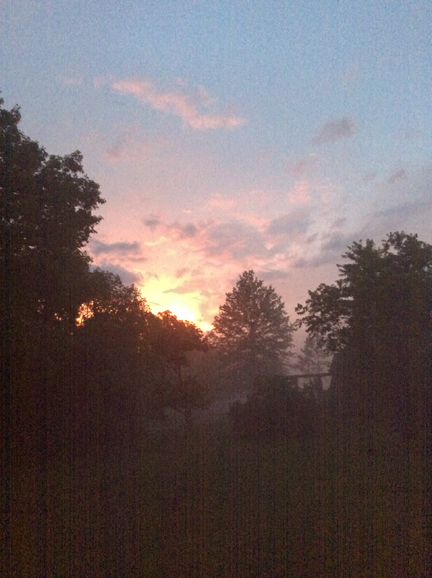
In this time
just after dawn
I can smell the dew
lifted from the grass
by the early morning sun
as the birds call
to one another
and the cool air
moves across my face.

My coffee is never better
and the peace never so serene
and the problems so far away
in this time just after dawn.

Time is limited
and there are
words to write and
songs to sing and
work to do and
people to see so
I have to move
from here
and get about
the business
of getting about.

Even the robins will
fall silent
and the wind
will be still
and the grass
will dry
in the heat
of the day.

And the pavement
will burn
as the trucks
roll past
and the heels
will click
in the heat
of the day.

So one more
moment
in this time
just after dawn.


copyright 2017, joseph e bird

Who are you?

You are who I think you are.
I know you by your words.
I know you by your actions.

You are who you think you are.
You know by your imaginings.
You know by your dreams.

You are who you really are.
And no one knows.
Because you tell no one.

You are who you will be.
Though the day may obscure.
You will look back and know.

Who are you?
Who will you be?
Tomorrow.


copyright 2017, joseph e bird


Privilege

He’s pretty much lying on his back on this unique contraption, part wheelchair, part gurney. He’s in the sun, because when it’s not too hot, it’s good to get out of the building, out of the darkness, out of the smells. A lot of people are out. Some are by themselves, smoking, some are just sitting. They all acknowledge visitors, maybe with a smile or a sideways glance, but they all notice. Even the guy on his back, strapped in so he won’t fall off, follows me with his eyes.

He’s wearing a Cowboys jersey. I offer a quick hello as I walk by. He returns the greeting.

Are you a Cowboys fan? I ask.

Yes, sir.

I can’t tell if he can move his head or his arms, but he pushes the joystick with his fingers and his chair moves to face me.

They looked pretty good at the end of the season, I say. They have a good quarterback.

I want to talk specifics, but I can’t remember the quarterback’s name.

Yeah, he says. Dak Prescott. He’s going to be good.

And the running back? What’s his name?

Elliott, he says.

Then he says the defense has to get better.

I say something about how the Cowboys are fun to watch, but my knowledge of the team is limited. Like all conversations with strangers, this one has run its course.

I’d better get inside, I say, not really wanting to. I turn to go and remember to ask.

What’s your name?

Del.

Hey, Del. I’m Joe. I’ll see you around.

After my visit inside, I leave, but Del’s no longer outside.

I see him again a few weeks later, in the same chair, the nurses taking him in for rehab. I wanted to say hello but before I reached him, they had pushed him on down the hall.

I go on and make my visit. The usual ten minutes.

Then I leave this world of offensive odors, vacant looks, cries of loneliness, incoherent conversations, and people who depend on others to help them eat pureed food or drink juice through a straw, and guys like Del who have no other options.

I walk to my car and drive away. A few minutes later, I stop for coffee, maybe drive around a bit because it’s such a nice day. It’s Sunday, and I have no other obligations. For me, it’s a day of rest.

I think about privilege, and how that term is used today. It’s become a pejorative. I have able-body privilege. I have sound mind privilege. I have the privilege of good health and mobility and the privilege of being able to make my own decisions and act on those decisions.

I have all of that. Del doesn’t. And there’s nothing I can do about it.

coming home

washington avenue sunset

She turned right onto Virginia Street. As a child, in the back seat with Wayne, coming back from the family vacation or a visit to Grandma’s or a Friday night out to eat, turning onto Virginia Street had meant they were home. The street, where they rode their bikes and played kickball and walked to their friends without worry or fear of anything other than staying too late, was as much their home as the big brick house, where on cold winter nights they sat on the worn out couch in the living room and watched television on the boxy console, where they did homework on the dining room table next to the folded dish towels and rolled up socks, and where she had dreamed of places faraway in a bedroom covered with posters of rock bands and pop stars. And though it had only been two weeks since she had left for Texas, she felt her body relax, and the tension that she didn’t know she had been carrying, slipped away.


copyright 2017, joseph e bird

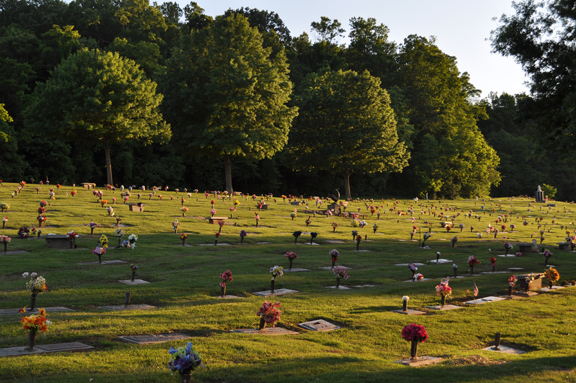
Even the marble fades.

cemetery 1 for web

“Like the vast bulk of people, the captives would pass from the earth without hardly making any mark more lasting than plowing a furrow. You could bury them and knife their names onto an oak plank and stand it up in the dirt, and not one thing — not their acts of meanness or kindness or cowardice or courage, not their fears or hopes, not the features of their faces — would be remembered even as long as it would take the gouged characters in the plank to fade away. They walked therefore bent, as if bearing the burden of lives lived beyond recognition.” – Charles Frazier, from Cold Mountain

IN THE LATE 1860s, a tradition of decorating the graves of fallen Civil War soldiers began. In 1868, General John Logan formalized the tradition by declaring May 30 as Decoration Day.  Decoration Day gradually become known as Memorial Day, and after World War I, Memorial Day began to commemorate soldiers who had died in any war. In 1968, the U.S. Congress passed the Uniform Monday Holiday Act, and in 1971, Memorial Day was established as the last Monday in May. 

Although the emphasis of Memorial Day is still to honor those who died in service to their country, graves of all loved ones are now traditionally decorated on Memorial Day.

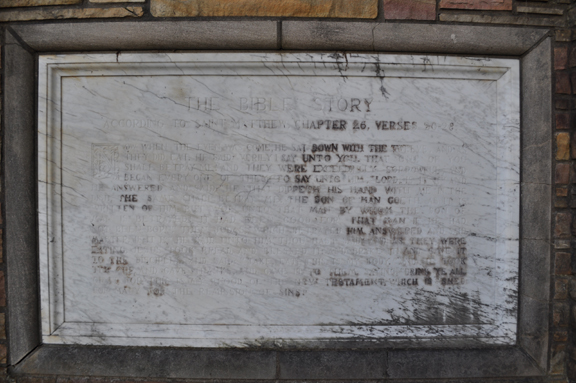
Many of my family and friends have their final resting place in Cunningham Park, a pastoral cemetery in the rolling hills of my home town of St. Albans. But as beautiful as it is, visits are always times of quiet reflection. My mother is there. My grandparents are there, and my great-grandmother, who passed away when I was 21, is there. My sisters and my cousins are the last generation to have known her personally. When we’re gone, my great-grandmother will likely have no more visitors. The memory of her, like the marble etching at the top of the cemetery stairs, once so vivid and clear, will fade away.

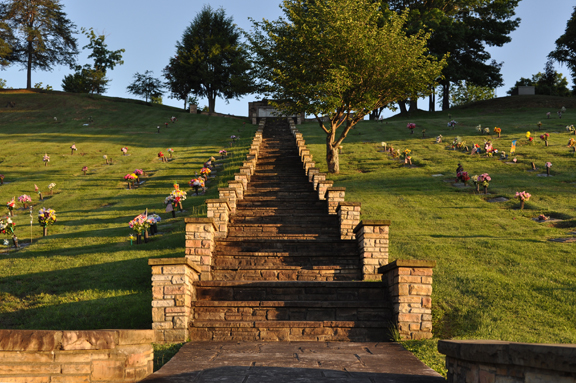
stairs for web

The stairs are a long, hard climb. Do they symbolize life’s struggles? Or the final path to the hereafter?  At the top are symbols of the Christian faith. But time is no respecter.  Even the marble fades.

marble plaque

Every day is a gift and every memory a blessing.


And we danced.

We danced.
And we fell in love.
Not with each other.
There was too much
reality between us
for something as
foolish as that.

We danced.
And we fell in love.
With the future.
With the possibilities
and potentials
and why nots
that might ever be.

We danced.
And we fell in love.
Because there was joy.
With just that
simple act of moving
and swaying and touching
as the music played.

We danced.
And fell in love.
Not forever, of course.
The music would end
and we would sit
and our troubles
would return.

We danced.
And I fell in love.
Yes. With you.
Because our moment
was timeless
and your laughter
is with me always.


copyright 2017, joseph e bird


Al Pacino’s character in Scent of a Woman, Frank Slade, is a retired Army colonel who’s having a tough time dealing with the loneliness in his life. He hires a college student (played by a very young Chris O’Donnel) to take him around for one last hurrah before he gives up on life. Did I mention that Frank Slade is blind? In the scene below, he dances the tango with a beautiful young woman and for a moment, remembers the joy that is possible.

That’s what dancing can do.

Blog at WordPress.com.

Up ↑