Search

Joseph E Bird

Let's talk about reading, writing and the arts.

Tag

photography

A young woman dances.

A young woman dances.
She sees her future
and the possibilities
seem limitless.
Her joy is exuberant
and must be expressed.
So she dances.

A young woman dances.
I becomes we,
dreams are shared
and the path is changed.
Her joy is deep
and must be expressed.
So she dances.

A young woman dances.
Her life is not
as she thought
and there are limits.
Her joy is mature
and must be expressed.
So she dances.

A young woman dances.
She creates art
with pigments and
fabric and clay.
Her joy is in beauty
and must be expressed.
So she dances.

A young woman dances.
She is carefree and
moves with rhythm
and vitality.
Her joy is alive
and must be expressed.
So she dances.

A young woman dances.
The years have passed
but hope lies ahead
for all that is
good and pure.
Her joy is her faith
and must be expressed.
And so she dances.


copyright 2017, joseph e bird

The garage.

I recently attended the Design and Equipment Expo in Charleston and met a local photographer, Emily Shafer, who specializes in industrial photography. She has a creative sensibility and transforms ordinary images from the blue collar world in to works of art. Like a set of greasy Craftsman tools.

The next day I walked across the street to the mall and saw signs outside the Sears store announcing its closing. I went in and browsed a little, but there wasn’t much left. Empty shelves where the Craftsman tools used to be. With all of that, I couldn’t help but think of a scene I had written in my novel, Heather Girl.

Heather is traveling to Texas to see her father, who has just been paroled. She stops for gas in Montgomery, Alabama and has car trouble. A man and his son are watching (and eventually offer to help). As she’s trying to figure out what the problem is, she remembers learning about cars in her father’s garage.


She turned the key and the engine turned slowly a couple of times but didn’t start. She turned the key again. Same thing. And again.

She popped the latch on the hood and got out of the car. The boy looked up, then looked away. She opened the hood and looked at the battery.

Always start with the battery.

Her father’s voice. What was it now, thirty years ago?

Easiest thing to check, easiest thing to fix.

The smells of the garage came back to her. Warm, oily smells. There was a gas heater on the back wall and in the winter, there was always a hint of unburned fumes, but most of the time it was tools and parts and greasy rags that made the garage feel heavy and comfortable. The same garage that now is more of a storage locker. Her father’s tools went with him when her parents moved across town, then were sold when they moved south to escape the cold winters of the mountains. She and Robert bought the family home.  Robert took over the garage as his own workshop, complete with a table saw and other carpentry tools. His tools are still there, but are never used. Boxes of boys’ forgotten toys and yard sale finds make it nearly impossible to even see them. She keeps the lawnmower by the door, along with a few garden tools, and every spring makes the same promise that she’ll never keep to throw out the junk and put some order to the mess.

Despite everything, she found it hard not to think back to when the garage was truly a place for parking the family car, and for the weekend project of rebuilding the brakes or cleaning the carburetor or putting in a new radiator. Her dad had a natural genius for such things, part of the reason he was a good engineer. She loved being around him when he was working. It was when he seemed most content. Anything could be fixed.

She learned by watching, and when it became apparent that her brother Wayne had more interest in music than cars, she became her father’s tomboy grease monkey. She never learned enough to really diagnose a car’s problem, but she could change the oil, put in new spark plugs, and even tinker with the timing. She also learned why he enjoyed that kind of work so much, aside from the peace of the garage. Parts that didn’t work properly were thrown out, never to be seen again. Repair manuals didn’t lie. And the tools were always faithful.

If she had one of those old crescent wrenches, maybe the big one that had been used so much that the brand imprinted on the handle had worn away, she could tighten the nuts on the battery terminal. Though she knew that wasn’t the cause of the problem. She looked at the engine and tugged at the battery cables. They seemed tight. Not much corrosion. More than likely the battery was dead.


copyright 2017, joseph e bird

ephemeral

sunset darkened 11-2-15 for web

i could write

or watch a ballgame

or work on a project

but it’s October

and every evening

my backyard is lit

in brilliant yellows

and reds

and colors that defy description

another sunset

and another tomorrow

except that’s not true

stop

take it in

because it’s a gift

and it’s ephemeral


copyright 2016, joseph e bird

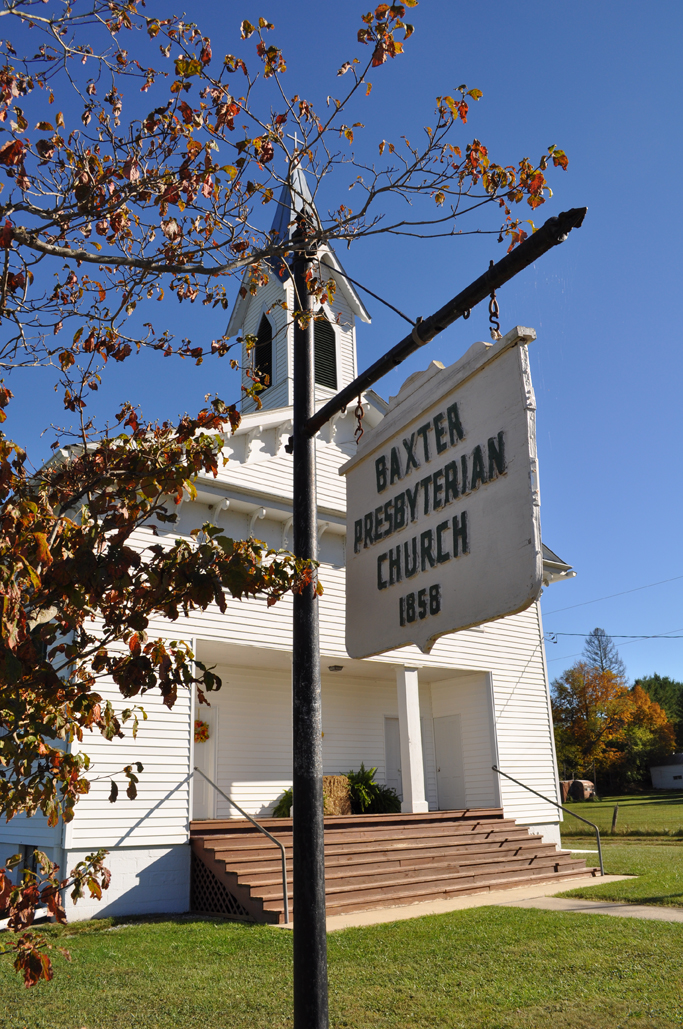
Sunday Morning

church-for-web

church-sign-for-web


copyright 2016, joseph e bird

the great white north

cranberry-glades-for-web

Actually, no, it’s not Canada. This is the Cranberry Glades in West Virginia. They say that eons ago a glacier created a geographic and climactic anomaly in the high mountains of Pocahontas County. As a result, plant and animal species are found farther south than conventional wisdom would suggest. There are, in fact, cranberries growing in the bog, but if you’re expecting those two guys in hip waders surrounded by thousands of red berries, you’re going to be disappointed. Still, the scenery in this area is spectacular.

And watch out for bears.


copyright 2016, joseph e bird

Our Exotic World

Many of you who stop by here for a word or two are from this area (West Virginia) or near enough to be familiar with the locale. Some of you visit from lands far away. This occurred to my friend, fellow writer, and neighbor a few doors down, Larry Ellis, and he has written a nice little essay about our neck of the woods. You might enjoy getting to know this area through his words and photos.  If so, click here and jump on over to his site.


rest

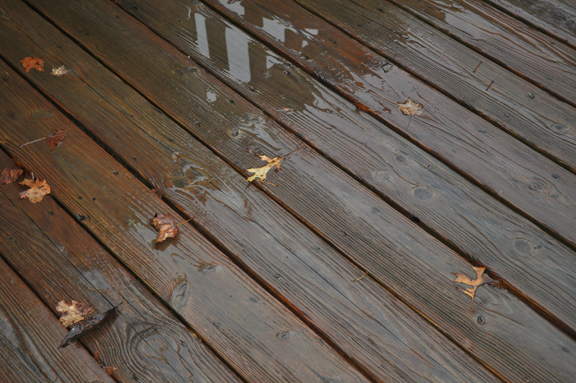
rain-for-web

the road glistens from last night’s rain
trees still dripping
the deck boards soft and brown

she looks out across the fields
let’s go to town
might as well, he says
it’s too wet to plow
.
steady patters in the gutter
birds talk across the yards
leaves lie resting, brown and shiny

he slides the eggs on the plate
today we should rest
she sips her tea and nods
the work can wait
.
the rain light and steady
as the pan in the corner catches
the occasional drop through the roof

he nibbles on flatbread and drinks warm water
a crow stands at the open door
he tosses a crumb
the bird plucks it from the ground
and flies away


copyright 2016, joseph e bird

They once lived here.

mountains

It’s morning, one hundred years ago.

The men are in the mine. Or working the tipple. Or loading the rail cars.

The women are at home with the children. Or teaching school. Or at the company store.

Deep in the New River gorge, coal mining began in 1873 in the remote town that bears the name of its founder, John Nuttall. For more than 80 years, families lived, worked, and died in Nuttallburg. By 1958, it was all over.

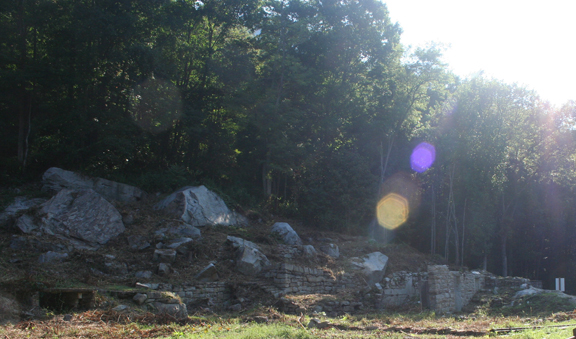
All that remains are the ruins. You can still go there, but the trip itself is a harrowing descent down the steep hills that will burn the brakes of your car. And once there, the isolation is eerie. You can see the coal tipple and almost hear its noisy operation echoing through the valley. There’s nothing of the company store other than its foundation. Likewise with the houses that once grew from the hillside. Try to imagine the mothers and kids playing on the dusty paths as they scraped together a life that was as hard as the sandstone their husbands used to build the town. There was probably a doctor to tend to the illness and injuries, and a preacher to tend to those who didn’t recover.

Listen. Hear their voices. They once lived here.

tipple.jpg
From the tipple, the conveyor disappears into the forest, where the men of Nuttallburg loaded coal that would help power the country.
tracks.jpg
The natural process will not be stopped.


company store.jpg
All that’s left of the company store.
morning
And the sun still rises where children once played.

Over at True North Nomad, Lily Burgess writes about her adventures through wild and wonderful Canada. The other day she published a story about a ghost town in Ontario which reminded me of my visits to Nuttallburg.  Check out her work.

grass over graves

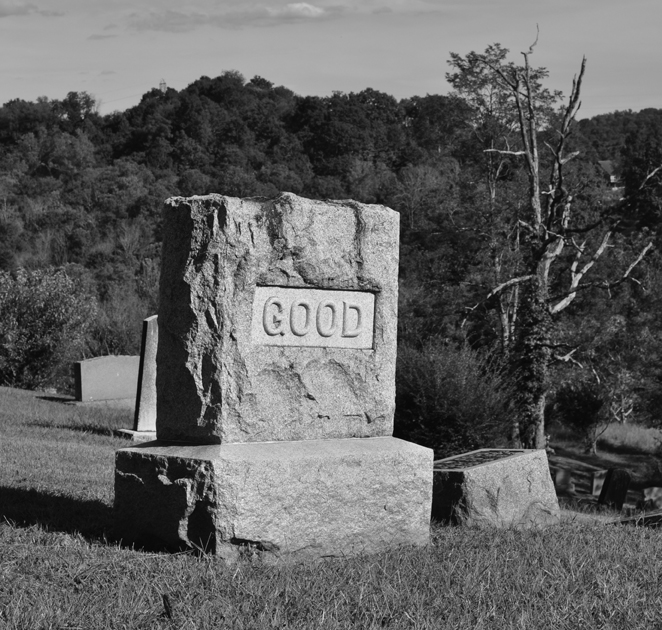
good-grave-for-web

Some day, a preacher will stand before a few people and say nice things about me.

Depending on when this occurs, the preacher may not know me very well and have no choice but to sprinkle generic platitudes in his eulogy. Not that it really matters.

Consider this quote from M.L. Stedman’s The Light Between Oceans:

“Soon enough the days will close over their lives, the grass will grow over their graves, until their story is just an unvisited headstone.”

A bit too gloomy?

That’s not my intent.

My wife is not a regular reader of this blog. She’ll log on every now and then and see what I’ve done. She took a look several months ago and was surprised at how much I had written. “You certainly have a lot to say,” she said.

Maybe.

But why all the words? Why do I do it?

I started because everyone was saying that to be a successful writer, you need a platform, a way for readers to get to know you and your work. I guess I still hope for that, but as time goes on, I find myself expressing things that no one really cares about but me. Yeah, it feels good when something I do connects with other people, but that’s becoming less important. Maybe it’s an age thing, maturity making itself known after sixty years.

I subscribe to more than seventy blogs, though most are inactive, so it’s not as daunting as it sounds.  There are a dozen or so that I look forward to reading, and as I do, I get to know the people behind the blogs. Some are writers, some are poets, some are photographers, some are artists. I don’t always comment on their work. I don’t always Like. (Which doesn’t mean I don’t like it, but if you Like everything, you devalue the Like itself.)  Most of my blogger friends will not find fame and fortune, despite their wonderful work. But several times a day, they make my life a little better by what they do.

If I can do that every now and then for someone, that’ll be icing on the cake. Even if I don’t, there’s something about being creative and having the nerve to put it out for others to see that is fulfilling. Like maybe there’s evidence of a life lived in the pursuit of purpose and meaning. Evidence that may endure after the last visit to my headstone. That would be good.

And who knows, maybe the preacher will find something to use.


photography copyright 2016, joseph e bird


Blog at WordPress.com.

Up ↑