Search

Joseph E Bird

Let's talk about reading, writing and the arts.

Tag

photography

a birthday

sids birthday for web

“For through wisdom your days will be many,
and years will be added to your life.”


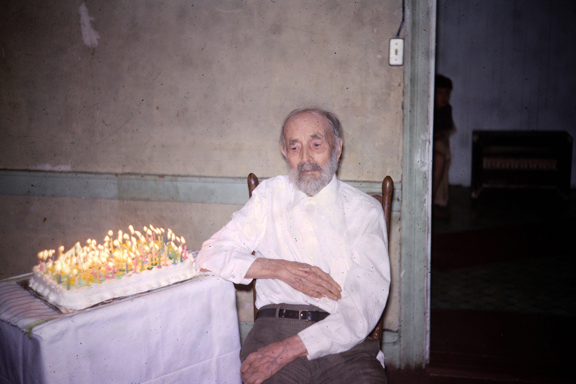
The photo is of A. S. “Sid” Morgan, maybe taken in 1973, maybe his 90th birthday.  I suppose I could try to count the candles.  If it was 1973, he would die less than a month later.

This is the kind of photograph that inspires stories, spurs the imagination of a writer.  But Sid lived the adventures.  He built boats and floated down the Mississippi on hunting expeditions back in the early 1900s.  In 1926, he opened a museum that over the years became legendary.

You’d never guess he lived that kind of life from the picture.  He looks tired.  The house he’s in, once a proud mansion on the bottom land near the Kanawha River, looks tired. I was in the house many times as a child and the memories are still strong.  Unusual memories.  The smell of the soft, slowly decaying wood of the front porch, patches of tin covering the holes.  The feel of the air in the house.  Cool, until you walked into the kitchen and the gas heaters overwhelmed with stuffy warmth and lingering fumes. And the quiet.  Sometimes the house was full of people, full of kids, but I remember the times where it was only Mom and Sid, our family visiting quietly, the stillness of it all unsettling.

It’s gone now.  The house demolished shortly after Sid’s death.  Across from where the house sat is the massive John Amos Power Plant.  No hint of what happened there years ago.

But the stories are still there, just waiting to be written.

pack your bags and leave right way

Come for the scenery, stay for the food.

I could have been shot dead.

cigarette red glow for web

And that’s no exaggeration.  Bullets flew that night.  Things like that go bad all the time.

People die.

It could have been me.

*   *   *

Seems like every night it’s something else.

A loaf of bread.  A gallon of milk.  Something sweet.  Cookies, probably.  Chips Ahoy.

Not that I really mind.  Gets me away from the craziness of the apartment complex.  And I enjoy the walk.  It’s been cooler than usual for late summer in Houston.

Everybody’s out.  Either in the courtyard or on their balconies.  They’re always out.  Kids running everywhere.

Marvin and Shirley are sitting in their lawn chairs, their feet up on the railing.  I say hello and make my way to the steps at the other end of the balcony.  One of the twins sticks her head through the railing and watches, smiling.  Randy climbs over the rail and slides down the pole, then runs off across the courtyard.  Music is blaring from one of the apartments.  The Beatles, I think.  I never cared much about music.  But everybody’s crazy about the Beatles.

The 7-11’s just down the street.  Another couple of blocks away is the freeway.  I can hear the whine of tires on pavement.  It’s a busy neighborhood, but there’s never been much trouble.  At least not in the two years we’ve been here. I like Houston.  A lot different than the hills of West Virginia where I’m from, and where my family longs to return.  But I like it here.

I leave the apartment complex and walk down the sidewalk, the green and red sign of the store just ahead.  A kid on a motorcycle flies by.  He pops a wheelie.  Impudent snob. A man approaches.  He stops in front of me and I brace myself, not sure what’s about to happen.

“Hey, buddy.”

“Hey,” I say.  I don’t know this guy.  I don’t know why he calls me buddy.  We’ve never met.

“Got any spare change?”

Spare change?  Like change I don’t need?  Change I was just going to throw away when I got home?

He’s acting kind of squirrely.  I reach into my pocket and give him what I had in spare change.  Fifty some-odd cents.

“Thanks, brother.”

Brother?  Not hardly.  He heads on down the sidewalk.  I figure I’ll see him at the 7-11 in a few minutes buying beer.

There are a few cars in the parking lot.  Everybody needs something.  Everybody’s got to be somewhere.  At least that’s Duane’s line.

Duane lives down on the ground level of the apartments.  Always has a story to tell.  Like the time he was fooling around with another guy’s wife and the guy comes home unexpectedly.  Duane hides in the closet, but eventually the husband finds him, opens the closet door, and there’s Duane.

“What are you doing in the closet?”

“Everybody’s got to be somewhere.”

And then Duane laughs.  Laughs hard.  The story is made up, just for the punch line.  That’s Duane.

I pull open the door to the 7-11 and go inside.  I turn right, heading for the cooler where the milk is.

And then I see Duane.  Lying on the floor.  Flat out on his stomach.  Like he’s sighting something.  And he’s smoking a cigarette.

I’m just about to ask him what he’s doing when someone yells.

“Get down on the floor!”

I turn and look and see this guy.  He’s scruffy, week-old beard, long, stringy hair, eyes on fire.

He has a gun.  He points it at me.

You think I would have complied with his request, being the rational engineer that I am.  You think I would have immediately understood the situation, processed all of the information available, and joined Duane on the floor.

But, no.

For some reason my brain goes into lockdown.

“What?”

“I said get on the floor!”

He glares at me.

Ok. Yeah. On the floor.

“Hey, Duane.”

I didn’t actually say that. But we make eye contact.  Duane is still smoking his cigarette.

I still don’t know what’s going on.

“Open the safe!”  Same guy, yelling at the clerk.

Now I get it.  It’s a robbery.  A hold-up, as they used to say in the old black-and-white tv shows.  He could have just said that. It would have saved a lot of confusion.

This is a hold-up!

They should make that a rule.  Put it in the Handbook of Convenience Store Robbery: Best Practices for Hold-ups.

I hear the clerk answer.  “I can’t open the safe.”

Hmmm.  Not good.

“Open it!”

Then a ruckus.  I can’t see what’s going on.

Then three shots.

Bang! Bang! Bang!

You have no idea how loud a gun can be until you hear one fired inside a 7-11.
My ears are ringing.  And now I realize how bad this could be.  I picture the clerk bleeding on the floor.

Duane and I are next.

Shot in the back, execution style, the article in the Houston Post would read.

The cigarette falls from Duane’s mouth.  It’s lying on the floor, smoke trailing up in a soft swirl.  Duane’s scared. I can see it.

Another shot.

Did he just shoot someone else?

I hear something mechanical.  Ka-chunk, ka-chunk, ka-chunk.

“Dang it!”

For a robber, he sure uses polite expletives.

Then I see feet and legs running to the front of the store.  The robber, I’m guessing.  He bursts through the door, runs across the parking lot, and disappears down the street.

All is quiet.  So quiet.

I look back at Duane.  He’s completely pale.

“Is everybody ok?”

It’s the clerk.  I raise my head and look around.  I look up at the counter.

“He’s gone,” the clerk says.

By the time I get to my feet the clerk is on the phone calling the police.  Duane’s nowhere to be seen, his cigarette still smoking on the floor.  Everybody’s got to be somewhere.  Duane’s somewhere is somewhere else, apparently. Can’t say that I blame him.

The clerk’s off the phone now.

“He was trying to get in the floor safe.”

He points to a small, square steel plate on the floor.  I can see dings where the bullets hit.

“Wow.”  Not much of a comment, but it’s all I had.

“I thought he was going to shoot me,” he says.

“I thought we were all goners.”

He reaches under the counter and produces one of those curved bottles of liquor that fit nicely in the inside pocket of a jacket.  He takes a long swig.

“Want a shot?”

“I don’t drink.” I have to admit, I was kind of wishing I did, right about then.

“Cops are on their way.”

“Yeah.”

The front door opens.  A guy walks up to the counter.  Asks for a pack of Marlboros. The clerk pulls the pack from the rack.

“37 cents,” he tells him.

The guy pays and leaves the store.

Ok. Back to normal.

Loaf of bread.  Gallon of milk.  Almost forgot the cookies.  Chips Ahoy.

*   *   *

I could have been shot dead.

I told the story when I got back to the apartments.  Told it to Marvin and Shirley.  Told it to my family.  But I walked in carrying cookies and milk. How bad could it have been?

Fifty years ago, this happened.  Fifty years.  Where has the time gone?

I can tell the story for fun, now.  Play it up for the laughs.  Duane on the floor.  Me not getting it at first.

My hearing’s bad; my memory’s worse.

But I still remember.  I still hear those shots.  I was never so glad to get back to the craziness of the apartments.


story copyright 2018, joseph e bird
photo copyright 2018, joseph e bird
cigarette courtesy of downtown jeanne brown


Note: The story you have just read is a fictionalized account of a true event.  While living in Houston, my father was witness to the 7-11 robbery.  And Duane (not his real name) was really lying on the floor smoking a cigarette.  Shots were fired.  No one was injured.
life above the common

Mohler1911
Mohler House, St. Albans, WV, 1911

Life above the common.

I really like that phrase.  I stole it from Larry Ellis.  It’s the theme of his novel-in-progress about Rachel, a young woman, who, upon the death of her husband, faces a choice.  She can either take her life insurance proceeds and live the good life sipping margaritas on the beach, or do something far more risky in the hope of building a life with meaning and purpose, one whose legacy will endure long after she is gone.   For Rachel, there is no choice.

She’ll buy the house – the house that once was a symbol of everything that was right and good about her town – and sink her savings into its restoration.  Not for her own vain pleasure, and not for the sake of an unrealistic nostalgic vision, but for the people of Walhonde, who may see in its restoration as a home, who may see in its revitalization as a community cornerstone, a shining example of what can be achieved when the choice is made to live life above the common.

It’s not the easy choice.  It’s the idea reflected in the West Point Cadet Prayer.

“Encourage us in our endeavor to live above the common level of life. Make us to choose the harder right instead of the easier wrong, and never to be content with a half-truth when the whole can be won.”


Larry’s novel is inspired by the real-life Mohler House, located in our small town of St. Albans, West Virginia.  In the novel, the name of the town is changed to Walhonde.  Though a tale of fiction, Larry weaves historical facts about the house into the narrative which occurs in the present, but is supported by the legacy of the men and women who shaped the town – and the world – in the early 1900s.   You can read excerpts here.

nantucket sleighride

Snyder Family 1 for web
The Snyder Family Band in St. Albans, WV

A warm summer’s evening in Small Town USA, and some of the best music you’ll hear anywhere.  And that, my friends, is no exaggeration.  There will be no bad video uploads from me to taint the amazing musicianship of this family.  Look them up yourself.  You know how do to that.  Or take a look at Zeb’s take on Turkey in the Straw.

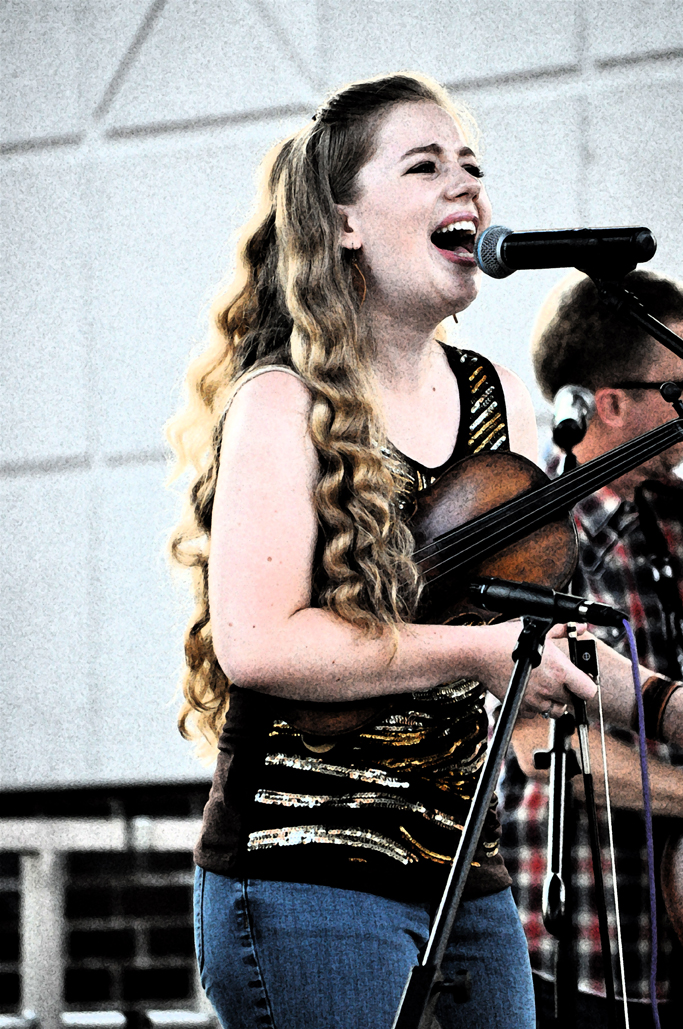
But they’re more than just another bluegrass band.  Zeb introduced one number as a prog rock (progressive rock) that Samantha wrote, and you could definitely hear the classical influence.  And Zeb’s got more than a little southern rock in his soul.  I don’t know if the two write together, but their play together is so tight, even as they take turns with virtuoso solos.  And there’s Dad – Bud – in the background, the glue that holds everything together as he puts down the bass line and keeps the rhythm.  The star of tomorrow?  Yeah, that’s Owen, who at twelve years old has a stage presence well beyond his years.  Mom?  She shows up onstage in some of the old photos on the internet, but she’s behind the scenes now, doing what all moms do, I imagine, and that’s keeping everybody in line as she manages the group.

In Small Town USA, they don’t care if you run all over the place taking pictures.  And backstage is just behind the yellow caution tape, where I got a chance to talk to Zeb and Owen and tell them how much I appreciated their music.  A great night, for sure.  Check out my photos below.

Zeb and Samantha 1 for web
Samantha and Zeb
Samantha Fresco for web
Samantha sings.
ZEb Fresco for web
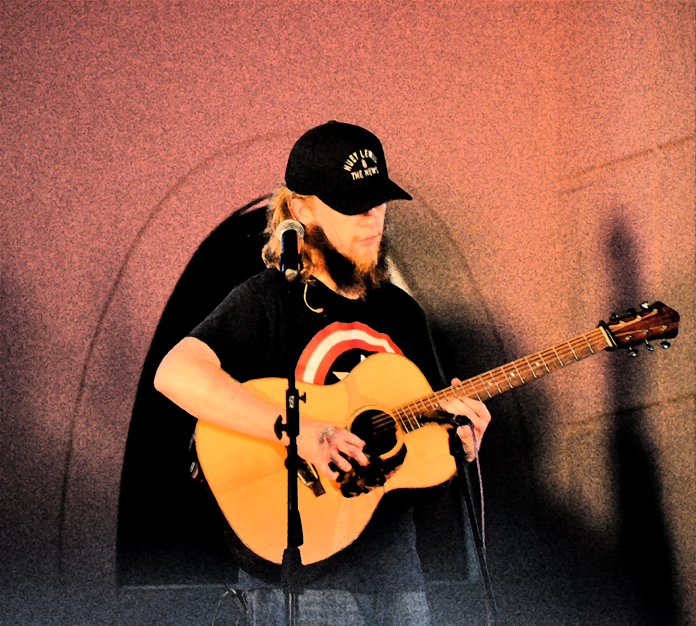
Zeb high up on the fret board.
Owne Snyder plays for web
Young Owen.  You know you’re good when you can close your eyes while you play.
Bud Snyder for web
Bud is the rock, in more ways than one.  Happy Father’s Day.

I wanna be a cowboy.

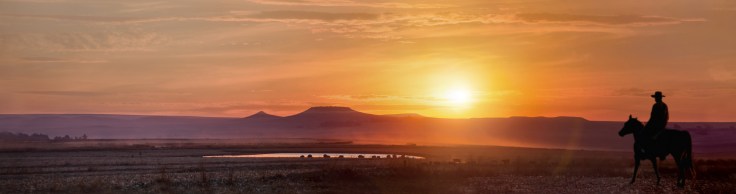
Sunset panorama in Durban

Are you a surfer or a cowboy?

What?

Are you a surfer or a cowboy?

Uh…cowboy?

Loaded question. Especially for me as a fifth grader from West Virginia, living in Houston, Texas. The wrong answer gets you in trouble. Gets you beat up.

Not really. At least not in the fifth grade. It was more of a starting point for a friendly argument. But what the heck did I know about being a cowboy or a surfer?

Cowboys are tough guys. Wear hats and boots. Eat beans by the campfire. Drink coffee in a tin cup. Ride the range on a horse.

Surfers are hip. Catch the wave and hang ten. Get all the cool girls. Tool around the beach in a dune buggy.

But in the fifth grade, I’d never ridden a surfboard.  Still haven’t. I had a cowboy hat and boots.  So yeah, I was a cowboy.

Tribalism. Even back then.

But there’s something about the cowboy lifestyle that’s still appealing to me. It’s simple.  Not a lot of flash. Lots of time for thinking things out as you do your job.  It’s the kind of life suited for someone who doesn’t mind being alone now and then. And the hats. Yeah, pull the brim down when you ride into town. And for the cowboy, love is strong and forever.

The fire had burned to coals and he lay looking up at the stars in their places and the hot belt of matter that ran the chord of the dark vault overhead and he put his hands on the ground at either side of him and pressed them against the earth and in that coldly burning canopy of black he slowly turned dead center to the world, all of it taut and trembling and moving enormous and alive under his hands.

What’s her name? said Rawlins in the darkness.

Alejandra. Her name is Alejandra.

— Cormac McCarthy, from All the Pretty Horses

photo credit: iStock Photography

the long walk

pier for web

There were a few people on the beach, walking slowly, their heads down, scanning the sand for surprises from the deep that always appeared after a storm. A yellow umbrella pitched in the sand near the surf caught her eye and though she couldn’t see, she knew there was an old man underneath, his skin dark and leathery from his years in the sun, his shirt – a short-sleeved button-up, despite the cool weather – bleached a pale blue. There was a tackle box by his side and an always empty creel, though surely he would catch something sometime. Surely. He would sit in his beach chair and smile anyway, as if he knew he were part of the scene, part of what the people from the city expected to see when they came with their pale flesh, soon to be pink flesh, to walk on the hard, grainy sands and evaluate their lives and make big plans that would carry them back to their tedious jobs and their monotonous neighborhoods with a feeling of hope that would last a couple of weeks, maybe three, before comfortable complacency engulfed them once again and relieved them of any responsibility of living a more meaningful life. And it always happened on days like this one, not in the bright of a too hot day where the heat and lotions and kids crying in the distance worked to produce nothing better than a brief nap, followed by a short walk to the water to cool the feet, maybe venture in up to the knees, but never farther. No, the deep contemplation happened on the overcast days where the obligatory roasting in the sun was excused and those with no inclination for inner reflection went to the mall, while those who still had hope went on the long walk to the pier.


copyright 2018, joseph e bird, from the novel Heather Girl.

i can’t work like this

Adena Springs

Yesterday I drove from Lexington to Louisville along the Bluegrass Parkway.  It was mile after mile of picturesque, bucolic, pastoral scenery, on what had to be the most beautiful day of the year. It is impossible to have gloomy thoughts while making this drive on a day like that.

Utterly impossible.

How can one ponder the human condition when the day is perfect?

How can a writer let his imagination wander to the struggles of mankind when the grass is so green?

Writers need the the grit of the dark alley.

Writers need the longing promise of the empty train platform.

Writers at least need some rain, or run-down barns, or the crusty old farm hand thinking about his past.

There’s another part of Kentucky – eastern Kentucky – that’s ripe for stories.  But not this stretch of highway.

No way.


Photo Credit: Walt Roycraft.  The photo is the property of GRW, my employer.  The architects of GRW design, among other things, equine facilities.  This is the site of one of our projects, the Adena Springs Horse Farm in Paris, Kentucky. Very much like the scenery I passed on my way to Louisville.

let’s go to havana

he comes from the land down under, this Lignum Draco.

and he travels.

and he takes amazing photographs.

he just finished an intriguing series from havana.

you have to see.

one click on the link below and you’ll be transported.

Lignum Draco.

Blog at WordPress.com.

Up ↑