Search

Joseph E Bird

Let's talk about reading, writing and the arts.

Tag

Literature

He don’t have good sense.

It was an early evening.  The wife and I had been too busy for dinner at home, so we drove to KFC for something to go.

I don’t like the drive-through of any restaurant.  The lines are usually long and I get quicker service by going inside.  And with the drive-through, you don’t get to see the menu until you’re up to the speaker.

But it was past the dinner rush and there was no line at the drive-through so I pulled up to the speaker.  On the menu board, KFC was pushing their Georgia Gold Chicken. Now I’ve seen the ads on television with the latest incarnation of the Colonel covered in gold praising the new Georgia Gold Chicken, but I still didn’t know what it was.  It went something like this:

KFC Speaker Person (female): “Welcome to KFC.  Would you like to try our chicken pot pie?”

Me: “No thank you.”

At this point I pause.  I want to ask about the Georgia Gold Chicken but I’m not sure what I want to ask.  I see that there is no one ahead of me and I thought it might be easier to have a conversation about chicken face to face with the KFC representative.

Me: “Can I come up to the window to talk to you?”

Wife: “Joe!!!”

There is a long, long pause from the Speaker Person.  And then,

Speaker Person: “No, you can just order at the speaker.”

Wife: “I can’t believe you said that.”

Me:  “What?  I just want to talk about chicken.”

When I tell this story in person, it’s at this point that everyone’s eyes are wide in disbelief.  They can’t believe I said such a thing to the poor Speaker Person.  Everyone has had the same reaction.

So I order the Georgia Gold Chicken and pull up to the window.  The window slides open and the female Speaker Person, now the Window Person, tells me how much I owe her, and the Colonel, without making eye contact.

Me:  “I’m sorry. My wife says I shouldn’t have asked to come up and talk to you.  I just thought it would be easier that way.”

Window Person: “That’s ok. We never know what kind of people are in line.  We have to be careful.”

I apologized again, took our chicken, and went home.

Here is what I’ve learned: I don’t have good sense.

I still don’t see why asking to talk at the window is a big deal.  I obviously have poor judgment.  And that makes me question everything else I do in the public realm.  I may be committing other social transgressions without realizing it.

Such as complimenting someone’s tattoos.  When I do so, it’s because I really like your rose tattoo, not because I’m trying to put any moves on you.  I will refrain from complimenting tattoos in the future.

Or telling someone who passed me at the end of a race that they ran well.  That’s what friends and relatives are for.  Not creepy strangers.  I will refrain from offering encouragement to sweaty people.

Or commenting on a blog post of someone I don’t know. Yes, I know people put their posts out there so others will notice, but when my comments are ignored, I wonder if they think I’m a stalker. I’m not.  I’m just trying to be encouraging.  But I will refrain from commenting on blogs of people I don’t know.

There’s more, but you get the point.  He don’t have good sense.  Apologies to all.

And the chicken wasn’t all that good.


This is no good at all.

Ever say that about your work? Consider this:

Self-doubt can be an ally. This is because it serves as an indicator of aspiration. It reflects love, love of something we dream of doing, and desire, desire to do it. If you find yourself asking yourself (and your friends), “Am I really a writer? Am I really an artist?” chances are you are. The counterfeit innovator is wildly self-confident. The real one is scared to death.

Steven Pressfield

Appalachian Spring

Larry Ellis posted this over at Home Economics. It’s a great description of where we live, in the heart of Appalachia.

At the end a character is introduced and then left standing there. The story of Jack Sampson is told in Larry’s award-winning novel, In the Forest of the Night.
_________________________________________________________

His ancestors settled in the central Appalachians without a thought for aesthetics. They came not for the beauty or value of this place, but only to escape from servitude and second-class citizenship in those cities to the north where their own forebears had landed as indentured servants. This new land to the south was steep, overgrown and not particularly amenable to the plow, but it was away from those engines of commerce and social institutions that had benefitted those to whom they were beholden and had just as certainly kept them a class away from full participation in the new nation’s economy.

The weather here was no more inviting than the soil. The winters were long and damp and made of days and weeks of snow so deep that travel was nearly impossible and in the summers the heat and humidity and insects were relentless. No one who had the luxury of considering the comforts a location might afford would have chosen to live here. There were no beautiful waterfronts and no rolling, thousand-acre spreads of black soil. All of life was closed in to narrow valleys and closed off to the flow of goods and information common to the new cities on the coast.

Those who came to escape the cities paid no heed to the hardships the land and the weather imposed, but lived their short lives together on subsistence farms, learning how to hunt and what to gather in the vast forests that surrounded their villages.

The generations brought change, of course. When those in the north learned that this land was rich in coal, oil and gas, industry came to Appalachia and the tiny villages became small towns and small cities and some made enough money to move themselves back into the mainstreams of commerce and society in the cities of the eastern plain..

It was, and is, an unromantic place. There are no ancient gardens or master artworks on display. There are no homes of famous artists or statesmen and no classic myth to fill the air with mystery.

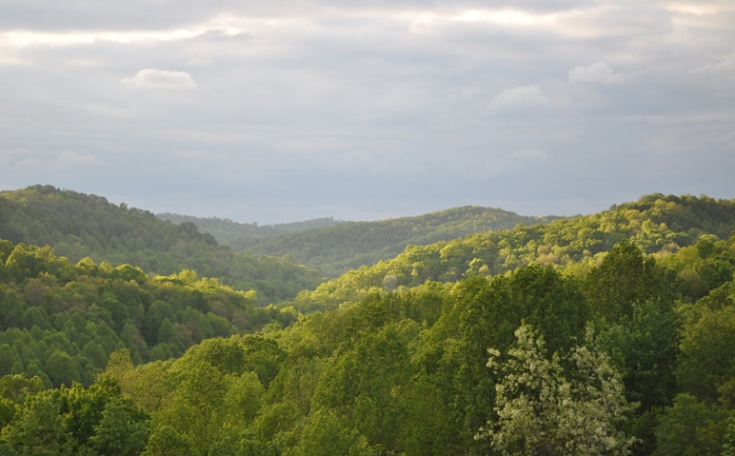
But in the spring, something happens that no one who settled here saw coming and no one who has not lived here knows of or could even imagine. There are days in April when the scent of the blossoms all over the forests – the tulip poplar flowers, the lilac buds, the honeysuckle, the white blooms of the apple and plum trees, the new buds of the sycamore and the birch – all are lifted from the mountainsides in the softest breezes and the new warmth of the spring sun dries the stones on the edges of the creeks and branches and sends into the air cleansing mineral aromas and the trees on every hillside unfold in new green and soft rains fall and the forest floor thaws and releases the essence of the earth into the air. There are a thousand varieties of tiny plants that sprout under the canopy of the forest in these days. Only the Shawnee knew them. Only the Shawnee had given them names. They are tender and live only for days and in those days they release their own perfume, each a different, subtle taste. The clouds part and the grey of winter disappears and the sky is clear and high above the hawks soar and wheel on the gentle, warm thermals. The sun glistens on the rivers and those rivers run for those few days green and blue like the purest emeralds and sapphires. It is a season all its own, hidden from those who give names to such things, and in those few days the romance of this rugged place is enough to fill the longings of men’s souls and to ignite in their hearts even deeper longings.

It was in this time, in the middle of these days, that Jack Sampson fell in love.


Copyright 2017, Larry Ellis

The garage.

I recently attended the Design and Equipment Expo in Charleston and met a local photographer, Emily Shafer, who specializes in industrial photography. She has a creative sensibility and transforms ordinary images from the blue collar world in to works of art. Like a set of greasy Craftsman tools.

The next day I walked across the street to the mall and saw signs outside the Sears store announcing its closing. I went in and browsed a little, but there wasn’t much left. Empty shelves where the Craftsman tools used to be. With all of that, I couldn’t help but think of a scene I had written in my novel, Heather Girl.

Heather is traveling to Texas to see her father, who has just been paroled. She stops for gas in Montgomery, Alabama and has car trouble. A man and his son are watching (and eventually offer to help). As she’s trying to figure out what the problem is, she remembers learning about cars in her father’s garage.


She turned the key and the engine turned slowly a couple of times but didn’t start. She turned the key again. Same thing. And again.

She popped the latch on the hood and got out of the car. The boy looked up, then looked away. She opened the hood and looked at the battery.

Always start with the battery.

Her father’s voice. What was it now, thirty years ago?

Easiest thing to check, easiest thing to fix.

The smells of the garage came back to her. Warm, oily smells. There was a gas heater on the back wall and in the winter, there was always a hint of unburned fumes, but most of the time it was tools and parts and greasy rags that made the garage feel heavy and comfortable. The same garage that now is more of a storage locker. Her father’s tools went with him when her parents moved across town, then were sold when they moved south to escape the cold winters of the mountains. She and Robert bought the family home.  Robert took over the garage as his own workshop, complete with a table saw and other carpentry tools. His tools are still there, but are never used. Boxes of boys’ forgotten toys and yard sale finds make it nearly impossible to even see them. She keeps the lawnmower by the door, along with a few garden tools, and every spring makes the same promise that she’ll never keep to throw out the junk and put some order to the mess.

Despite everything, she found it hard not to think back to when the garage was truly a place for parking the family car, and for the weekend project of rebuilding the brakes or cleaning the carburetor or putting in a new radiator. Her dad had a natural genius for such things, part of the reason he was a good engineer. She loved being around him when he was working. It was when he seemed most content. Anything could be fixed.

She learned by watching, and when it became apparent that her brother Wayne had more interest in music than cars, she became her father’s tomboy grease monkey. She never learned enough to really diagnose a car’s problem, but she could change the oil, put in new spark plugs, and even tinker with the timing. She also learned why he enjoyed that kind of work so much, aside from the peace of the garage. Parts that didn’t work properly were thrown out, never to be seen again. Repair manuals didn’t lie. And the tools were always faithful.

If she had one of those old crescent wrenches, maybe the big one that had been used so much that the brand imprinted on the handle had worn away, she could tighten the nuts on the battery terminal. Though she knew that wasn’t the cause of the problem. She looked at the engine and tugged at the battery cables. They seemed tight. Not much corrosion. More than likely the battery was dead.


copyright 2017, joseph e bird

morning conversation

mountains for webDo not go gentle
into
that good morning.

Isn’t that supposed
to be good night?

But it’s morning.

And why not
go gentle
into
that good morning?

The day is coming.
And it has teeth.
Lamb to the slaughter.
That kind of thing.

So.
Be the wolf,
not the lamb?

Just be ready.
Be on your toes.

I’m not a dancer.

It’s an expression.
But of course you know that.
You’re just being obstinate.

I’m listening to jazz.
I can’t be a wolf while
I’m listening to jazz.

See those gray clouds?
They’re a portend
of things to come.

But its warm.
And breezy.
I might just sit
outside
and watch the squirrels.

Don’t say
I didn’t
warn you.

Ok.

Listen.
Takuya Kuroda.
I’d rather go gentle
into
this
good morning.

Music of my day.

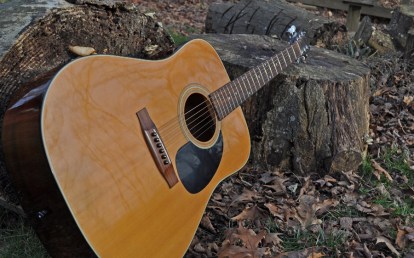
guitar 2-6-16 for web

Listening to the music of the Wonder to escape
Digging words and stories cause he always tell it straight
Life be scarred and dogs bite hard, to that I can relate
Soulful grooves, the spirit moves, tells me it ain’t too late

Driving horns lay down the tune, I’m hearing now the Tears
David Clayton Thomas sings, it’s not the dying that he fears
Spin the wheel, cut the deal, find wisdom in the years
Blues sung hard, and hope stands guard, a triumph for the ears

Singing with a nasal twang and tangled up in blue
The poet tells his story ‘bout the people that he knew
Stars are crossed and loves are lost, his heart we see straight through
A simple song to sing along, to change our point of view

A banjo picks the intro with a groovin’ upright bass
A nice and easy song of love, till the breakdown sets the pace
Toes are tapping, hands are clapping, the cello plays like grace
They sing of love and God above, our worries are erased

I play the C, I play the G, play the A chord in the minor
I write the words, scratch out a tune, plan it out like a designer
Find the truth, a touch of youth, up the beat to make it finer
But truth is cold, cause it ain’t gold, I know I ain’t no rhymer

Thank God for voice and stories told and those who came to play
The soft piano soothes the soul and carries us away
They give the beat and words complete, to speak what we can’t say
Turn it up and fill my cup, play the music of my day.


Copyright 2017, Joseph E Bird

i hear the voice

i hear the voice
it’s yelling at me
i hear the voice
but i don’t agree
to argue is pointless
our words are in vain
i can’t understand
and you can’t explain
can we sit and be calm
and maybe break bread
i’ll listen again
perhaps i misread
and i hear the voice

i hear the voice
calling me to speak
i hear the voice
to say for the weak
is anger so righteous
that respect doesn’t matter
our cause is just
it’s yours we must shatter
walk with me now
let’s talk and be friends
to find the true answer
we must make amends
and i hear the voice

i hear the voice
telling me not to fear
i hear the voice
saying peace is still near
the strife of the world
is now and has been
and will be tomorrow
again and again
so let’s stand for the lost
and fight the good fight
but let’s do it together
for that is what’s right
and i hear the voice

i hear the voice
it’s soft like a dove
there’s no sound that i hear
does it come from above
i hear the voice
and you hear it too
let’s listen together
there is so much to do


copyright 2017, joseph e bird

Writer’s Log – Insomnia

Last night was one of those nights.  Fell awake around 3:00, finally decided to quit fighting it around 3:30.  I made a cup of tea and sat down in front of the computer. My imaginary friend, Heather, has been stuck in a waffle house for a few days now.  I’m sure she wishes I’d get her out of there.

So at 3:30, I was going to make something happen.

But.

4:00, and she was still there.  I had managed to go back and tweak a few things, made a couple of sentences better. But I was still blocked.

Maybe this is the end.  Maybe Heather never gets out of the waffle house. Maybe nobody cares what happens to her.

I’m 10,000 words in.  Not that much, really, in word count. I’ve abandoned novels at 40,000 words. Except that I’ve taken my time with these words, tried to write them better as I go. So it would be disheartening to pull the plug.

There’s a mother and a kid – a screaming kid – in the waffle house, too. At first, the mother was sitting with her back to Heather. I rearranged the furniture. Now they’re sitting beside Heather, facing each other, so that when Heather hears the kid scream and turns to look, she makes eye contact with the mother. It was an uncomfortable moment.

And then.  And then.  And then.

At 5:00, Heather was still in the waffle house. But things had changed dramatically. I was unstuck.  I went to bed.  I still couldn’t sleep, but it was a more restful insomnia.

Lesson 1: Maybe insomnia has a reason.

Lesson 2: Sometimes you just need to rearrange the furniture.

Lesson 3: Sometimes being uncomfortable is good.


Finding Ricky.

This won’t mean much to anyone except my family. My apologies.

Today I read that the Kennedy Space Center is going to start displaying the Apollo 1 capsule as a tribute to the three astronauts – Gus Grissom, Edward White, and Roger Chaffee –  who lost their lives in the launchpad fire fifty years ago. Around that time my family was living in Houston and my dad took me to the Johnson Space Center there to look at the rockets.

Today I went to Mapquest to see how long it would take to drive to the Kennedy Space Center.  13 hours, more or less. Then I checked Houston. 18 hours. While I was on Mapquest, I zeroed in on the old neighborhood. The apartments we lived in are long gone, but I recognized the streets. Japonica. Ilex. Redwood. Rustic Lane.

I thought about my Houston friends, and like I have done in the past, I searched the internet for clues of their whereabouts. Mostly I struck out. Then I found one. In an obituary in Louisiana.

Ricky.

the-band-3-for-web

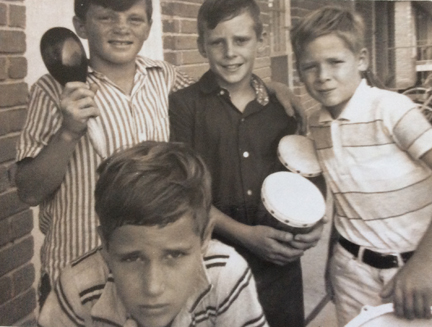
He’s the one with the maracas.

I wasn’t sure it was him until I watched a memorial video on the funeral home website. The pictures of him as a kid were unmistakable.  The obituary said he lived in Louisiana for almost fifty years. That left little time for living in Houston, probably the few years that my West Virginia family lived there. We were all transients, apparently.

So many of our friends disappear and we never hear from them again. We wonder whatever happened to them.

Looks like Ricky lived a good life and had a loving family. Which is exactly what I hoped I would find.


Blog at WordPress.com.

Up ↑