Search

Joseph E Bird

Let's talk about reading, writing and the arts.

Tag

literary writing

Camaraderie of the broken.

She stood for a moment, taking it in, but her father brushed beside her, flipped on the light, and went over to the workbench where all of his tools used to be, where the greasy parts would sit for weeks at a time until the project was finished or until he would finally toss them into one of the wooden bins under the bench, even the parts that were no good, because you never knew when you might need to scavenge a part from a part, or look at the old part to see how the new part is supposed to go together, or, more likely closer to the truth, the parts had become too personal, had served so long and so well, that they deserved a fate more fitting than a trip to the dump in a trash truck with the rotting lettuce and soiled diapers, and so they were dropped into the wooden bin with a dull clunk, where they would be with their own kind, a camaraderie of the tough, the loyal, and the broken down, who, by the weight of their own existence in the hand of a knowing mechanic, would still have value in some as yet unknown way.


copyright 2017, joseph e bird, from the novel Heather Girl.

i miss you, darlin’.

clown 2 for web

Halloween’s never been my thing. With all the genuine evil in the world, do we really need to be celebrating the dark side? I’ll pass on the make-believe macabre, the bed-sheet ghosts, and ouija board spirits. Who needs that when you have real hauntings? It’s a rhetorical question, of course. One that I wish I didn’t have to consider. But it’s not my choice.

It’s been five years now. Three since I moved to Arizona.

We lived in Ohio at the time, Carolyn and I. Chillicothe. We’d been married for a couple of years and life was good. You know, the honeymoon that never ends. We were a good match. I’m a practical guy. Sensible. Reasonable. Just this side of boring. Maybe not even this side. Carolyn was anything but. Everyone loved Carolyn. She was a real free spirit. I loved that about her.

It was fall. For me, that meant football. I would have been happy staying home watching games all weekend, but Carolyn was restless and wanted to get out. She needed a change of scenery, away from the unrelenting flat land of Ohio.  The mountains, she said. The leaves would be at their peak and the weather promised to be nearly perfect, with just a slight chance of rain. I never could resist her enthusiasm. We got up early on Saturday morning, threw a change of clothes in a duffel bag and headed across the border to West Virginia.

We drove for hours, stopping now and then at scenic overlooks, taking pictures of everything. We got to one of the state parks around noon and had lunch in the lodge, then walked it off with a hike to the falls.  There was another park about three hours away and we thought that would be a good place to spend the night, so we jumped in the car and headed west, chasing the sunset, as it were.

We never made it to the park.

River Mills. Such a nice sounding town. Carolyn had been reading the tourist flyers while I drove and she thought she remembered reading something about the town. A restaurant, maybe. She flipped through her stack of flyers, looking for the one that mentioned River Mills, but she never found it. Or course she wanted to stop anyway. I wanted to go on. I was beat. A lumpy state park mattress was calling my name. But it was Carolyn. Her persuasion was hard to resist.

We got off the four-lane and as we drove the seven miles on the winding highway toward River Mills, the sun hid behind thickening clouds and after a few minutes, a light rain began to fall. A mist rose from the warm asphalt.

A worn, wooden sign welcomed us to River Mills. We passed a gas station, closed since forever. Not a convenience store, an honest-to-goodness gas station with a two-bay garage and a glassed-in office where the owner would sell tires and ring up the sale on a cash register and the old men of River Mills would gather and gossip worse than the women ever did. The windows were broken. The gas pumps were gone.

Then another dilapidated building. More busted windows. Faded white paint on red brick spelled out River Mills Hardware.  I began to calculate how long it would take us to backtrack and get to the park.

Just a little farther, Carolyn suggested. I didn’t argue.

Up ahead I saw a traffic light. I took that as a good sign. That traffic light is gone now. At least it was the last time I was in River Mills.  That was four years ago.

The streets were empty.  Not completely empty, but there was a uneasy quiet about the place. Most of the storefronts were vacant. Some of the buildings had been gutted, stripped of walls, floors and even the roof, so that all that was left was the facade and the back wall. We drove past a second-hand shop that might have still been in business, but it was hard to tell for sure. Another store had mannequins clothed in old wedding dresses. There was no sign out front, no name on the glass, nothing to indicate what that was all about.

street for web

We drove on.  Carolyn was sure there was a place to eat. Another two blocks and we came to what looked like an old courthouse. Closed, of course. It was nearing six o’clock, after all, and there was no sign of life anywhere.

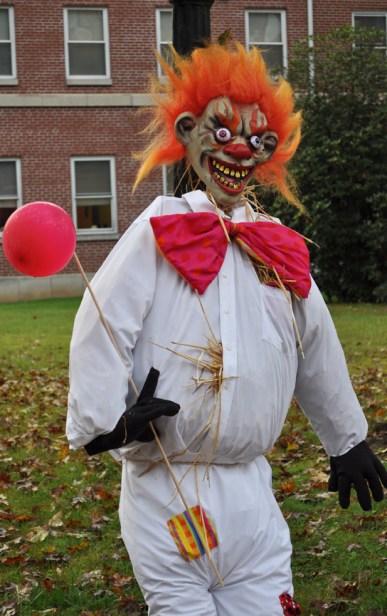
And then this.
clown 3 for web

Yeah, Halloween was a couple of weeks away, but this seemed a little over the top for a small town. A little too scary. We both forced a laugh.

They really get into the spirit here, Carolyn said.

Looking back, I think that spirit had always been there. And I know it still is.

The town completely creeped me out. I think Carolyn was feeling the same thing, and just as I was about to suggest that we go on to the park, she saw what she had been looking for. The River Mills Cafe. The lights were on. There were people inside. So Carolyn was right again. Except this time she wasn’t.

We parked out front and went inside. Helen greeted us and showed us to a table. I didn’t know Helen’s name at the time, but I found out later. Helen King. She wore an old-fashioned, yellow shift dress. She smiled as she seated us and then winked at me. She asked us what we’d like to drink. Coffee for me. Carolyn asked if they had hot tea.

Sure thing, honey.

She touched Carolyn’s shoulder. Her hand lingered. Then she left and Carolyn gave me a look that acknowledged the weirdness.

She winked at me.

She winked at you?  What does that mean?

I was going to ask you.

I’ve got to find a bathroom.

She left. Helen brought my coffee.

Where’s Carolyn? she asked.

How do you know her name?

You said, tea for you, Carolyn?

But I hadn’t. At least I didn’t think I had. Maybe I did.

She left and returned with a small porcelain tea pot, a matching cup, and a box of assorted teas. I remember these things distinctly. Ordering hot tea at small diners can be surprising. So I noted the tea pot, the cup, and the box of teas. I remember thinking that Carolyn would be pleased.

Carolyn returned and smiled at the arrangement set at her place. Maybe this would be ok.

I excused myself for my turn to the bathroom.

Hurry back.

I thought nothing of those words at the time. Now I think of them every day.

Hurry back.

After I washed my hands, I looked at myself in the mirror, knowing I was little tired, but thinking I might be able run my fingers through my hair, maybe freshen up a bit for Carolyn’s sake. My reflection was hazy, as if the mist from outside had somehow settled on the glass of the mirror. I pulled a paper towel from the roll on the wall and wiped the glass, but the haze was still there. I tossed the paper in the trash and headed back to the dining room. The haze came with me. I could barely make out Helen standing behind the counter. I stopped and rubbed my eyes and blinked hard. Helen gave me a strange smile. I half expected her to wink again. The haze was slowly clearing from my eyes, but there was soft edge around Helen. A soft, fading edge.

I made my way back to our table. Carolyn wasn’t there.

I looked around. Maybe she went back to the bathroom. Or maybe she saw a gift shop and wanted to check it out. I sat at our table and took a drink of coffee.

The tea was gone. The tea pot, the cup, and the little box of teas. All gone.

Are you ready to order? It was Helen.

Where did Carolyn go?

Who?

Carolyn. My wife.

I’m sorry?

What are you talking about? She was here with me. You brought her hot tea.

Hot tea?

With the tea pot and tea cup.

Helen took a step back. We don’t have hot tea here.

I looked around, knowing that I’d see her. She had to be there. Then I noticed the others were gone, too.

Where’d everybody go?

Everybody?

The other customers. My wife. Where is everybody?

It’s been a little slow today. You’re our only customer this evening.

She must be in the bathroom.

I got up, almost running to the bathroom. I banged on the door and it swung open.

Carolyn?

No answer. I checked the stalls. Nothing. I went back to the dining room.

Where is she? Where is she?

Through the door to the kitchen. An old lady stood over a pot on the stove, stirring. There was no one else. Back to the dining room.

Where is she? My heart was racing.

I went out to the car. There was no sign of her.

Back to the dining room. Helen stood, her arms crossed.

Sir, you came in alone. I would have noticed if someone else was with you.

Why are you doing this? Is there a gift shop close by?

I didn’t wait for an answer. Up and down the streets I ran, looking for some place she might have gone. When I got back to the cafe, a deputy sheriff was waiting for me.

What seems to be the problem, son?

He didn’t believe my story.

I gave him my I.D. and showed him our duffel bag in the car. The flyers. Told him about our trip. How she insisted on stopping in River Mills. He looked me up in the system and confirmed that I was married. But my wife was missing. Last seen by anyone but me a hundred miles away. And just like that, I was a suspect in my wife’s disappearance.

The deputies looked all over River Mills but they were more interested in retracing where we had gone after we had left the park. I spent the night in a run-down motel just outside of town. The next day was more of the same. More searching, more questions, but no answers.

Another night and another day. Then another. Then another.

The deputies grilled me pretty good, but friends back home vouched for our relationship. I know the sheriff’s office thinks I killed Carolyn, but lacking a body, evidence, or a motive, they had no choice but to rule it a missing persons case. For them, a dead end.

I stayed two more nights.

She was gone.

I went back to Ohio, but called the sheriff’s office every day for two weeks. Not a trace, not a clue. I knew I would never see her again. I knew I would never know what happened.

It was a long, cold winter, the kind that keeps you inside and makes you think about things. I couldn’t just give up on her. After the first of the year, I went back to River Mills. I had to find something, anything, that would give me answers. Up and down the snow-covered roads. The town hadn’t changed a bit. The cafe was still open. I saw Helen through the window serving customers wearing that same yellow shift dress. I parked across the street and watched for a couple of hours. I stayed in River Mills all night, cruising the streets, in and out of town. As dawn broke, I found myself sitting on a bench overlooking the river that runs along the highway. Cold, tired, and utterly alone.

Back in Chillicothe, I tried to go back to living a normal life. Well, not normal. There was no such thing as normal anymore. But Carolyn’s words wouldn’t leave me alone.

Hurry back.

I could hear her voice.

Hurry back.

It was more than just something to say. There was tension in the way she had said it. The more I played her words back in my mind, the more I thought about it, the more I knew that it was fear in her voice.

Hurry back.

Did she know? Was it a premonition?

It was fall when I returned. The Halloween decorations were out again. Another scary clown stood staked in the courthouse lawn. And the stoplight was gone.

I spent all day and all night there. This time I talked to Helen. She stood with her arms crossed. Her answers to my questions were cold and unsympathetic. She wanted me gone. I searched the cafe as I had the year before and again found nothing. The old woman in the kitchen sat on a stool, her hands clasped in her lap, and just stared.

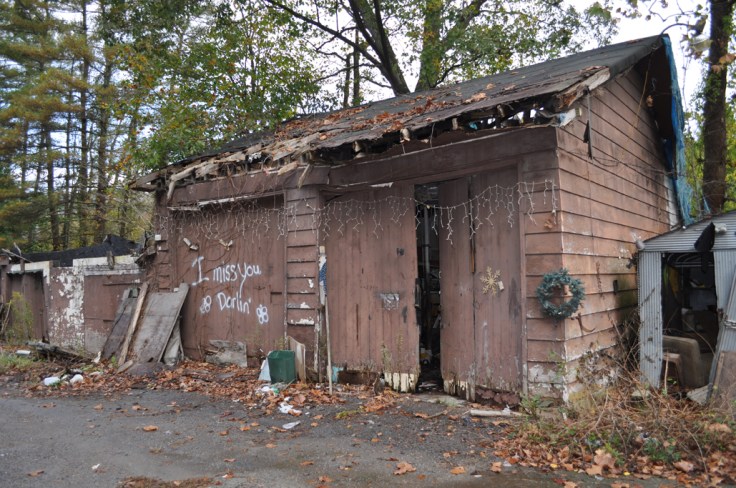
I spent the night in a motel in the next town over and the following day I made the rounds through River Mills again. And again, I found nothing. Heading out of town, I passed the same dilapidated buildings. The old hardware store. The gas station. The ramshackle shed that looked like it would fall with a strong gust of wind. I’d passed it probably dozens of times in the last year. But something was different. Graffiti on the side of the shack. Writing. I had gone by too fast to read it so I turned around and drove by again.

I miss you, Darlin’.

Carolyn.

My heart stopped.

It’s what she called me, sometimes. Darlin’. With the g dropped. Country style. Darlin’.

And the butterflies under the message. Her favorite doodle. Butterflies.

I pulled onto the gravel in front of the shed, almost hitting it with my car.

Carolyn!

I stuck my head in the door. It was dark and all I could see was trash and rotting timbers.

Carolyn!

I ran behind the shack, calling her name as I went.

I found a piece of pipe and went back to the front. I kicked the door open and with pipe in hand, made my way through the shack. A black snake hung from rafters. But that was the only sign of life.

I called the sheriff’s office and told the deputy that Carolyn was alive and that they needed to search the area out by the highway.

Just kids, he said. They paint their little love notes all over town.

But the butterflies.

Yeah. Butterflies. 

I stayed three more days. I came back a month later and the message was gone. Not painted over, just gone.

Hurry back.

But I coudn’t. I just had to let it go. For the sake of my sanity.

No more River Mills. No more mountains. No more fall colors. No more hauntings.

But it hasn’t helped. I still hear her. In the still of the desert air, on the cool nights, with a million stars overhead, I still hear her.

Hurry back. I miss you Darlin’.
darlin for web


This story is a work of fiction. Names, characters, places, and incidents are either the product of the author’s imagination or are used fictitiously, and any resemblance to actual persons, living or dead, businesses, companies, events or locales is entirely coincidental.

copyright 2017, joseph e bird

the secret hidden

close your eyes
so you don’t see
the browning leaves
or the yellow ones
that have fallen

and

cover your ears
so you don’t hear
the dry grass
or the leaves crunch
beneath your feet

and

ignore the scents
of the pumpkins
and spice
that sing of
the last days of harvest

and

feel the warmth
of another summer day
that burns the skin
and brings forth sweat
so late in its glory

and

dream again
of all that is possible
and what you can do
and who you can love
in this gift of a day

and

think little
of the secret
hidden in the breeze
from the mountains
which portends the future

and

worry not
of the chill that will be
or the winds that will howl
for today it is warm
and that is enough


copyright 2017, joseph e bird

Darnell, aka Booger

From my novel in progress, Heather Girl.  You’ve read part of this before, but I kind of like this guy, Booger.  I hadn’t met him before he showed up at the funeral home. He wasn’t planned; he wasn’t in the story outline. Of course I didn’t really know much about Heather’s father, George.  He had been in prison for ten years for the murder of his wife, Heather’s mother. I’m friends with Heather, but she never went to see her father in prison, so she was just as surprised as I was to see Booger show up at her brother’s funeral. And there he was, this fast-talking, not-so-bright Texan, telling Heather things she didn’t really want to hear. She had already made her mind up about her murderous father. She has no use for the other side of the story.


There was little to talk about. All had been said in the days before, so they sat quietly and waited. Heather closed her eyes.

The double doors to the large room were in the back and had been propped open, so there was no tell-tale squeak that she might have otherwise heard.  The carpet muffled the footsteps that on hardwood or tile would have given notice as his worn cowboy boots clopped down the aisle. But as it was, she had no clue that anyone had entered the room, much less that he had managed to position himself just a few feet away, until she heard her father speak.

“Booger.”

She thought it was just an expression of frustration of some minor annoyance that had caught his attention. Maybe a button was loose on his suit jacket. Maybe one of the lights in the ceiling of the funeral home was burned out. Maybe he was just bored. She didn’t even open her eyes. Then the voice she didn’t know.

“Hey, Pops.”

He spoke in an energetic clip, combining the two words into one. By the time she opened her eyes he had slapped her father on the shoulder and was in the midst of a frenetic monologue that didn’t require any acknowledgement from George to keep going.

“You doing ok? Look at you in a suit. Beats that orange all to hell, don’t it. Me, I’m more country and western. Check this out.” He stuck his thumb in the gap of his shirt where the buttons usually are and pushed it toward George. “See them snaps? Mother of Pearl. Pretty slick, huh. That’s as bout as fancy as I’m going to get. Anyways, I got out a few days after you did and once I got settled down a bit, I wanted to look you up, make sure you was doing ok and all. I got a hold of your PO and she told me you was up here in Virginia and she told me all that happened and I came up here to tell you how sorry I was bout your boy. You was real good to me in lockup, Pops. Helped me keep my head on straight.”

“West Virginia.” She had been watching him, this ex-con, who was holding a new, stiff cowboy hat in his right hand and waving it as he spoke, as if he were trying to swat a fly. He seemed a little daft, this long-haired middle-aged man who hadn’t bothered to shave in at least a week, and she quickly surmised that he was very likely to return to lockup for getting in a bar fight or smoking weed on a street corner. Just didn’t seem all that bright. She looked back at the coffin in front of her.

“Beg pardon, ma’am?

“West Virginia, not Virginia.’

“Yes, ma’am. I’m sorry. I never was very good with geography.”

“Hey, Booger, you going to preaching today?”

Booger turned back to her father.

“No, Pops. Ain’t no preaching today. It’s Tuesday.” Then to Heather, “He never could keep his days straight. Course that ain’t unusual in lockup. You tend to lose perspective, you know.”

“I suppose.”

“I’m Darnell, ma’am.” She had no choice but to shake his hand and was surprised by his delicate, almost feminine touch. Prison tattoos, letters that looked like they were scrawled with a felt-tip pen spelled GOD on the first three fingers on his right hand, followed by an exclamation mark on his little finger. She tried to steal a look at his other hand but couldn’t see what she was sure would be the first half of the message.

“Heather.”

“You his daughter?”

She nodded.

“Never knowed Pops had a daughter. Course he couldn’t much remember his boy, either. Pops was real good to me. You have a fine father, ma’am.”

“How?”

“How what?”

“How was he good to you?”

He studied on the question and she could tell she wasn’t going to get much of an answer.

“It’s a bit of a story, ma’am.”

“We have time.”

“Ok. Well let’s see, then.”

There was a chair between Heather and Micah, and Darnell sat in it without asking.  He reeked of cologne.

“These must be your boys.” He turned and shook their hands. “Call me Booger. I been called that since I was a kid. You can probably figure out why. Bad nickname but it stuck.”

The boys forced a smile but didn’t offer anything to the conversation besides their names. Booger leaned back in his chair and folded his arms.

“Anyways, let me tell you about Pops.  I got into a little bit of trouble.”  He stopped and laughed.  “I guess that’s how all prison stories start, don’t they.”

Booger was the only one who found that amusing.

“So yeah.  I ain’t never been in trouble like that before, but I got into some drugs and got busted a few times but I kept going back for more. And them drugs, Lordy, they get hold of you and won’t let go. You do anything to keep that feeling going. That’s where I was, just staying high all the time. Course them drugs, they ain’t free and even if I could have held down a job it wouldn’t had paid enough for what I needed, so I took to stealing. I just took stuff that people didn’t need anyways, least that’s what I told myself. Leaf blowers and trimmers and things like that. I was out one night, just coming down off a high and running around a neighborhood seeing what I might could take, and this feller comes up on me. Scared me. I had a shovel in my hands. Never could remember why I had a shovel. I couldn’t sell a shovel for nothing. Just never made no sense. But he scared me so bad I swung around and whacked him in the head. I didn’t ever want to hurt nobody and had he not snuck up on me I probably would have just run off. I wish I had.”

He stopped talking and Heather looked at him, then her father, who had fallen asleep with his chin on his chest. Darnell closed his eyes and bit his lip, and sniffed a little before he opened his eyes and continued.

“I didn’t kill him. Might have been better if I had. Messed up his brain real bad. That poor man ain’t worth nothing no more. If I’d killed him, maybe his family could get some insurance, and maybe they’d just put me on death row and I’d be dead by now, living with my Lord and Savior Jesus Christ, praise God.”

He looked toward her father and saw that he was asleep.

“He does that a lot. Anyways, they sent me up and I knowed I was going to have a tough time. I mean I was scared like I never been scared before.  I ain’t no criminal and don’t know how to fight so I figured I’d just be somebody’s girlfriend, if you know what I mean. I don’t think I could of took that. So when I get there, I see old Pops, sitting by himself in the mess and I went over and sat with him. Best thing I ever done.”

“Why is that?”

“I didn’t know it at the time, but Pops was protected.”

“Protected?”

“Yes, ma’am. Both ways. He paid the hacks and they passed some down to the cons and rounders. Pops was the gravy train, yes, ma’am, he was. Only I didn’t know it. I just sat down with Pops cause I didn’t think he would shank me right off.”

“Hacks?”

“The guards, ma’am.”

“He paid the guards money?”

“Well, yes ma’am, in a indirect way, I guess you could say. It was arranged on the outside.”

She shook her head. “McGhee.”

“Beg pardon?”

“George’s attorney. His trustee. McGhee. He’s the one on the outside that sent the money.”


copyright 2017, joseph e bird

Run slow to run fast.

Runner athlete running on forest trail.

If you’re a runner, and you want to shave a few minutes off your 5k time, slow down. I know this is counterintuitive, but if you want to run fast on race day, slow down on your training runs. Take it easy. And those long runs you’ve been putting in on Sunday mornings don’t do you any good either. Sleep in. Save your energy. Then on race day, you’ll be fresh and run faster than you ever have before.

Train smart, not hard.

No, not really. I’m lying.

If you want to run fast, you have to train fast. Not everyday, but you’re going to have to run fartleks or intervals or speedwork at the track. And yes, you still have to get up early on weekends and put in the extra miles. That’s the truth, kiddos. It’s hard work to run fast. It’s no walk in the park. More like torture in 90 degree heat, lungs about to burst. Or slogging through the rain or fighting the wind. Aching legs that keep you up at night. Is it worth it all just to run fast?  That’s for you decide.

But if you want to be good at something, you have to train hard. There ain’t no shortcuts. And you have to want it pretty bad.


Photo credit: iStock Photography

How to win a Nobel Prize for Literature

In the early 1960s Bob Dylan heard Robert Johnson for the first time.

“From the first note the vibrations from the loudspeaker made my hair stand up. The stabbing sounds from the guitar could almost break a window. When Johnson started singing, he seemed like a guy who could have sprung from the head of Zeus in full armor.”

In his book, Chronicles, Volume One, Dylan comes across not as a musical genius, but as a man who was always doubting, always searching, always trying, always learning. When the music of Robert Johnson shook his soul, he needed to know why. Dylan had this to say:

“I started meditating on the construction of the verses, seeing how different they were from Woody’s [folksinger Woody Guthrie]. Johnson’s words made my nerves quiver like piano wires.”

Of course there is some measure of genius in Dylan, but it wouldn’t have come forth had he just sat back and waited for inspiration. But he didn’t have to be told that creativity involves hard work, because part of the reward of being creative, is in the toil it takes to create.

“I copied Johnson’s words down on scraps of paper so I could more closely examine the lyrics and patterns, the construction of his old-style lines and the free association that he used, the sparkling allegories, big-ass truths wrapped in the hard shell of nonsensical abstraction – themes that flew through the air with the greatest of ease.”

And this:

“I didn’t have any of these dreams or thoughts but I was going to acquire them.”

And look where it took him.


one more moment

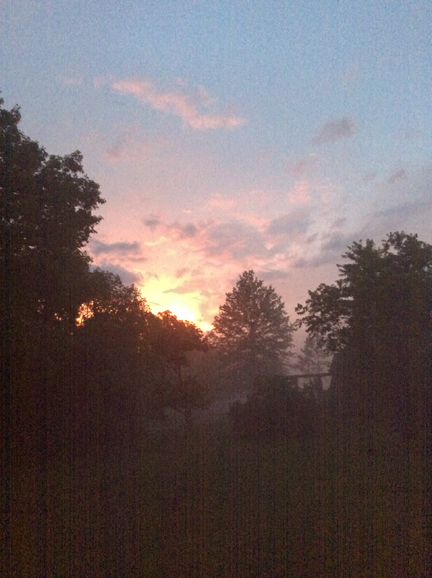
rain sunset 1 for web

In this time
just after dawn
I can smell the dew
lifted from the grass
by the early morning sun
as the birds call
to one another
and the cool air
moves across my face.

My coffee is never better
and the peace never so serene
and the problems so far away
in this time just after dawn.

Time is limited
and there are
words to write and
songs to sing and
work to do and
people to see so
I have to move
from here
and get about
the business
of getting about.

Even the robins will
fall silent
and the wind
will be still
and the grass
will dry
in the heat
of the day.

And the pavement
will burn
as the trucks
roll past
and the heels
will click
in the heat
of the day.

So one more
moment
in this time
just after dawn.


copyright 2017, joseph e bird

Mom and Pop

mom and pop

They were the definition of simple folk.

My grandfather, Justus Jennings Bird, died shortly after his 100th birthday.

His wife of 70-some years, Bettie Pearl, was 97 when she passed away.

I never knew my grandfather when he worked. By the time I was old enough to remember anything, he was retired and spent his time gardening. In the neighborhood, he was known as the man with the greenhouse. He would sell tomatoes and corn and green beans from his front yard in the shade of the tall oaks with the white-washed trunks. What he didn’t sell, Betty Pearl canned. They had home-grown vegetables all through the winter.

They had pride in their work.  Pop’s rows in the garden had to be straight. Mom’s apple pie crust had to be perfect. It was good, healthy pride, not like the kind in the Bible that makes you bad, to borrow a phrase from an Avett Brothers song.

Of course there was no social media in their day. They would have enjoyed seeing photos of their family, but there would have been no pics of prize-winning tomatoes, no snap-shot of the perfect pumpkin pie. They were appreciative if someone liked what they did, but it wasn’t why they did it. Pop liked to grow things. Mom liked to cook.

Simple folk. Simple ways. A lifetime of contentment.


Photo by Rick Lee.


You can call me Jim.

There are people I have known for years – no, make that decades – who have trouble remembering my name.  ”Hi, Bob,” someone will say.  No, Bob’s my uncle.  Or “Hey, Rob, are you back in town?” Well, you’re thinking of my cousin who lives in Florida. I’m Joe. I’ve been here all along.

I can’t tell you how many times I’ve been called Jim. Yeah, Jim is close to Joe and it’s an understandable mistake for someone I don’t see very often. But time and time again I have to re-introduce myself to the same person who thinks they’ve never met me.

You could take the old Nat King Cole classic, Unforgettable, and change it to So Forgettable, that’s who I am.

I’m a quiet guy in person. I don’t stand out. I used to imagine that my laconic nature would be perceived as brooding and mysterious. But no, just boring.

I’m not very outgoing. I used to watch the way my mother could talk to anyone and have them laughing within minutes. Why couldn’t I be more like her? I’m better than I used to be, but I can’t help but to fall back into my loner tendencies.

I’m not one to shout about my beliefs and political leanings. I think such things are complex and multi-layered and don’t lend themselves to slogans or sound bites. If you want to have a long, serious conversation, I’m in. But of course, ain’t nobody got time for that.

I write stories. You like them? Cool. Not getting it? That’s ok.

I write poems. Dig the rhymes? Groovy. Free verse not you thing? NBD.

I write novels. Well, the truth here is that it seems that I’m the only one who gets something out of them.  That’s ok, too.

We all want to be known and appreciated. We want to know that our lives, our work, our being here, is meaningful in some way.

We cross paths with hundreds, probably thousands of people in our lifetimes. Some we know, some we don’t even catch their names. Some we see face to face, some we only see what they’ve done.

There’s a painting hanging on the wall of the pizzeria in South Hills by an artist whose name will never be known outside of her family. For a moment, it takes me to a different world, one that I wouldn’t know without her painting.

A fiddle player plays a mournful solo, for the moment upstaging the star, only to step back from the spotlight and return the glory to the charismatic singer.

An old man, who stops and looks inside every dumpster and eats at the church kitchens, whose clothes are dirty, nonetheless walks with dignity and greets you with a warm smile and an unashamed hello, and gives hope, that despite our circumstances, we can show love and respect.

So you can call me Jim. Maybe you’ll remember me, maybe you won’t. And maybe something I do will make a difference to someone.


Blog at WordPress.com.

Up ↑