Search

Joseph E Bird

Let's talk about reading, writing and the arts.

Tag

Fiction

lonely for a while

Mercy sakes. That woman scares me. She sure don’t smile much.  Not that she should be smiling at her brother’s funeral, but she can hardly muster even a polite smile.

She got a little bit of her daddy in her. At least what I seen of him when I first got locked up at Estelle. He was always kind of quiet and respectful, but George had a side to him, mainly if the guards tried to give him any grief. They was bought and paid for and he let them know. Sometimes with just a look. I can see that in her.

Didn’t even know he had a daughter. It’s a curious thing he never mentioned her to me. Course, looking back, I can see that he only talked about his boy cause he came to visit now and then. But she was her daddy’s girl. I can see that, in spite of how she feels about him now.  Reckon I can understand her feelings.

There’s a little something that’s not quite right. She’s ailing in some way. I can see it in her eyes. And she’s a little twitchy. But that ain’t the worst of it.

She got that dark speck growing in her. It’s the way she talked to me. I’m a aggravation to her. She’s bitter at George and I’m part of that. Fair enough. But I can tell she’s lonely, too. Been lonely for a while, if I’m guessing right. No man with her, not even at her brother’s funeral. That’ll put you in a bad way. Not that she couldn’t have a man if she wanted. Maybe she don’t want it. Maybe she had enough of men. Bad husband, maybe. Bad father. Don’t know much about the brother, but I’m guessing there was something there, too.

It ain’t too late, though. Maybe she’ll soften on George. Maybe soften on life a little. I can tell she was a looker in her day. Still got enough to attract a man.  The right kind of man. I been without for a long time now and I know that cloud of lonely. But that woman’s not for me. She scares me. I need a woman that can give me some gentleness. A woman that I can sit with on a porch swing and listen to the crickets. A woman that can take hold of today, live in the moment and not be ate up with the past or fretting about the future.

That Heather, I’ll pray for her. Pray that she finds some relief from her demons. Maybe she can forgive old George. Maybe she can find her smile again.


from the novel Heather Girl
Darnell, also known as Booger, has just met Heather

copyright 2020, joseph e bird

i touched her hand

Heather dropped by today.

I make it sound like it’s no big deal, but she drove two hundred miles. She’s on her way to Texas to fetch the old man and I’m in the general direction of heading south, but she had to veer a little east and tack on another couple of hours of driving time, so it’s something, even if it’s not a big deal.

She’s looking a little rough. Tired. She’s wrinkled around the eyes and her hair has lost its fire. But look at me. A little more belly than I ought to have and my whiskers come in with more grey than brown, and who am I to talk about hair? Then again, I’ve got twelve years on her.

She pulled into the driveway mid-afternoon. I’d been to the store that morning and picked up a couple of steaks, among other things, not because I was expecting company, but they sell them by the pair and that would take care of two meals for the week. So here comes Heather and I grab the steaks from the fridge and act like I’m Emeril and douse the steaks in olive oil and sprinkle on some salt and grind a little pepper and I can tell she’s digging this man-at-home-in-the-kitchen act. But it’s no act. I don’t have much of a choice if I don’t want to eat out every night. I scrub a couple of potatoes and wrap them in wax paper and put them in the microwave. I offer her an iced tea.

Tea?

Yeah.

That’s all that needs to be said. In the old days we would have shared a few beers. She’s probably a wine drinker now. I’m sober and aim to stay that way. Maybe if I’d quit ten years ago, things would be different.

I drop the steaks in the skillet and they sizzle and pop and release a faint cloud of steam that fills the room with the primal smell of meat on a fire and as I look at Heather sitting at the counter sipping her tea, I imagine we’re on the roof of that building on Westwood with the sun setting across the bay behind us. Me grilling and Heather reading a book, and I wish I had a beer. Funny how smells can throw you back in time.

Remember Westwood?

She smiles.

And she’s twenty years younger and her eyes look softer and her hair is smoother. I’m still in my thirties. And I really wish I had a beer. I’d give it all up, start over, just to go back in time with Heather.

He’s staying with Owen, she says.

Abrupt change of subject. She’s not interested in the way we were. Smart woman.

She’s talking about the old man. He’s been paroled. Going to stay with her brother, apparently.

How’s Owen feel about that?

They wouldn’t be letting him out if he hadn’t agreed to it. He’s an idiot.

I decide not to argue with her.

The boys have moved out of her house. Robbie’s got a family of his own. Micah’s finishing up school. I think, anyway. Don’t hear much from him. Don’t hear much from any of them.

Which is why Heather dropping by was as big a surprise as they come.  Good surprise, though.

The old man killed her mother. Mercy killing, though the judge didn’t see it that way, or if he did, he didn’t give a crap. She was suffering bad. Huntington’s disease. Now they’re letting him go.

Like I said, I’m older than Heather. She was a kid when we met. We ran off to San Francisco doing dope and drinking all the time. Then here comes Robbie. So we got married and tried to act like family, but we were still partying. When Micah was born we left California and moved back to West Virginia. Heather straightened up and I tried, but my roots were deeper than hers. It took me a while. She ditched me and I moved to Charlotte. And there you go.

I think Heather has Huntington’s. She’s never come out and told me but I can put the pieces together. Her hand was all trembly. Her right hand. Or maybe it was her left. And she looked so tired. I reached across the table and touched her. She drew back. I guess she thought I was making a move. She doesn’t know how much I still care about her. She told me she was seeing a photographer, but I don’t believe her. She’s driving to Texas. Alone. That’s why I touched her hand. She’s alone. I’m alone. I needed to feel her skin, feel her warmth. She needed the same thing. I know her better than she knows herself, even though we’ve been apart for so long. And I know we’ll never be together again. But she’s still my Heather girl.


copyright 2020, joseph e bird

so says john grady cole

There aint but one truth, said John Grady. The truth is what happened. It aint what come out of somebody’s mouth.

-Cormac McCarthy, All the Pretty Horses

cuckoo’s nest for writers

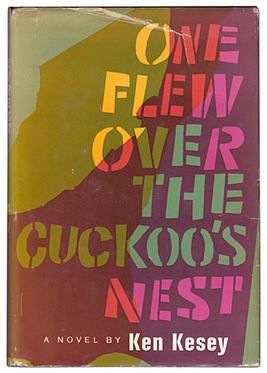
Want to know how to write a novel? Read One Flew Over the Cuckoo’s Nest, by Ken Kesey.

I saw the movie…40 years ago? I just read the book.

There’s so much to talk about. It’s a great book (but not without controversy) and another day we’ll get into what the book’s about.

If you’re a student of the craft of novel writing, you know the rules. And as you try hard to stick the rules, you see so many successful novels that break them. Cuckoo’s Next follows the rules. And is brilliant for it.

Plot Summary:

Randle McMurphy is serving a sentence at a prison work farm and gets himself committed to a mental hospital in hopes of doing his time in a cushier setting.

The Beginning:

McMurphy arrives at the hospital. No backstory. No set-up. No character development. No prologue, just story. In medias res. The way it’s supposed to be.

Point-of View:

The rules say to tell the story from one perspective. Yes, modern sensibilities allow for multiple points-of-view, but that approach is fraught with potential trouble. One point-of-view is the safe choice.

Cuckoo’s Nest is told from the point-of-view of mental patient, Chief Bromden, a Native-American. Everything is told from his perspective. If Chief doesn’t see it, we don’t see it. Chief can only surmise character motivations based on what he sees and what others may tell him. The author doesn’t jump around and tell us what the other characters are thinking. It’s all from Chief’s point of view. No omniscient narrator. And because we know what he thinks, we know much more about him than any other character.

The Protagonist:

McMurphy is the protagonist. That doesn’t mean he is the most virtuous character in the book. That’s probably Chief Bromden. McMurphy is the classic anti-hero. He’s not a good guy, but he’s very likable. And as he hustles his fellow patients, he does it in a way that lifts their spirits. Everybody loves him. Everybody but Nurse Ratched.

The Antagonist:

Sometimes the antagonist in a novel isn’t a person, but something keeping the protagonist from reaching his/her goal. McMurphy fighting the system? Well, yes, but the antagonist in Cuckoo’s Nest is not so amorphous. It’s Nurse Ratched. No doubt about it. One of the most unlikable characters I’ve ever met. She’s not evil in a Bond villain kind of way; she’s just cold and mean and against McMurphy in every way. The lines are drawn. The reader wants McMurphy to win. And Ratched to lose.

The Ending:

I’ve read that in classic literature, there is comedy and tragedy. The comedy isn’t necessarily funny; it’s prime characteristic is the happy ending. The tragedy is just the opposite.

Cuckoo’s Nest is a tragedy. The happy ending may give you a moment of contentment, but the tragedy stays with you, haunts you, makes you think. What might have been? What if McMurphy had won? What if Nurse Ratched had lost? Could it have made a difference for Billy Bibbit? And what of Chief Bromden? Did he ever make it home?

If you read this 50 year-old novel, you’ll be jarred by some references that are considered offensive today. But is it Kesey or his characters making the references? The characters, of course. They’re flawed. But does that give Kesey license to let them say what they do? We’ll get into that in more detail later. What Kesey does that’s indisputable is craft a story that takes you to the edge of realism at a pace that seems perfect. In the second half of the book, when the story rolls like a boulder down a mountain, he does nothing to get in the way. It’s a great example of plot and character development in perfect sync.

Read and learn, fellow writers.

i could see it coming.

And then comes Lawrence.

He cruised in on his bicycle, coasting to a stop at the top of the hill, looking down on us.

I had no idea who he was, this older, skinny, scraggly guy with no shirt, riding a bicycle with streamers on the handle bars and a horn on the front. He was older, but I know now that it was by no more than ten years. Still old enough to not be riding around on a pimped-out, beater-bike, old enough to have better things to do than look for company with school kids, old enough to have enough sense to recognize real trouble in the form of Brando and Kevin, who had enough mean in them to put some serious torment onto the meek and the lowly, and all it would take was the sniff of arrogance, the notion that Brando and Kevin, though physically superior to almost all who crossed their paths, were not on the same playing field intellectually, or that over time, righteousness would reign and the meek and the lowly would indeed inherit the earth, and the beast would be cast into the lake of fire. As I would learn much later in life, God’s plans are fulfilled in God’s time where a day is like a thousand years and though justice would eventually prevail, it might not come soon enough for the victims of Brandon and Kevin. The scars of their torment could linger for years.

And so I wondered, what of Lawrence?

But I could see it coming.


copyright 2019, joseph e bird

This is an excerpt of a story in progress and is fiction, although it is based on true events. Names, characters, places, and incidents are either the product of the author’s imagination or are used fictitiously, and any resemblance to actual persons, living or dead, businesses, companies, events or locales is entirely coincidental.

solomon plays

I don’t dance
I can’t dance
I don’t know how to dance and never will
But sometimes
Things just happen

I wasn’t there to dance
At this little dinner club
Where through the old sagging glass
I watch the river flow lazy
As it always has and will forever

I’m not from here
Not that it matters
And maybe that’s why this place is special
No one knows me
No one cares

I eat alone, as always
Steak, medium well, baked potato
I don’t drink except for when I’m here
Ice cold beer
From the tap

And here
All is well, peaceful
My other life, mistakes I’ve made, mistakes to come
Is miles upriver, coming for me
But not here yet

Most everyone is coupled up
A group of four or party of six
If I’m the object of pity or curiosity I don’t care
Because the steak is good
And the solitude comforting

In a far corner
A black man named Bob plays jazz on the piano
While a skinny white boy named Solomon blows a saxophone
Lipton’s on guitar
And Jupie lays down the beat

I know their names
But to them
I’m just a guy by the window eating a steak
Maybe not even that
And that’s how it should be

Somewhere in New York
Or Singapore
The same scene is played out with different actors
But no better than
Right here, right now

Yes, another beer
So I don’t have to leave
Because across the room with the party of six
Sits a woman
Alone

She’s in the company of others
A man works to keep her attention
And though she is with him and smiles on cue
She’s not really with him
And she knows I know

And Bob plays slowly
And Jupie taps the high hat
And the couples can’t resist as they move to the center of the room
And embrace politely
And sway as Solomon plays

And Savannah dances too
Though that’s not her name
But it should be because it’s a beautiful name
They dance as two
Who will never be one

She knows I’m watching
And I smile
And she smiles and we both sense the same thing
And we both know
That possibilities are impossible

And the song ends
And most sit
As the tempo changes and dancing is less forgiving
They, like me
Don’t dance

My glass is empty
My time is done
And I look to her table and she’s not there
And as I lay my napkin beside my plate
I look once more

I see her as I walk across the room
Walking toward me
And we meet in the center of the room, the music daring us
And I accept the dare
And reach for her hand

Her right hand in my left
My hand on her waist
And we move slowly to the beat, and she is smiling
And I don’t know what I’m doing
But it feels right

I pull her hand in front of us
And her momentum
Sends her into a soft twirl, her hair flying toward me
And as she comes back, I pull her close
And I kiss her

She blushes
And behind me I hear gasps
From the table of six and I can imagine their looks
Though I’ll never know
Because hers is all that matters

The music plays
But I release her soft hands
And I won’t even turn to look as I walk away
And I know I’ll never go back
As Solomon plays


copyright 2019, joseph e bird

This story is a work of fiction. Names, characters, places, and incidents are either the product of the author’s imagination or are used fictitiously, and any resemblance to actual persons, living or dead, businesses, companies, events or locales is entirely coincidental.

no place for a young girl

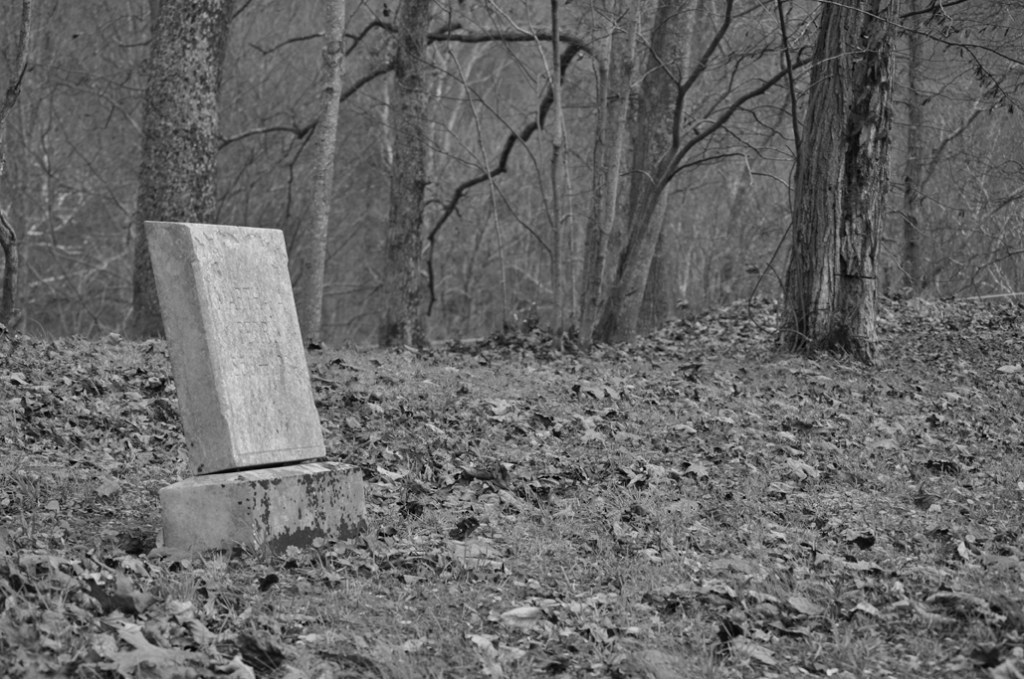
Every year about this time we go to the cemeteries and clean the graves of those who have gone before. It makes you realize how fast time flies. Has it really been that long? And then there are all those forgotten graves. What was their story? Maybe this.


she wasn’t supposed to go there by herself.
up the steep gravel road,
through the woods
to the clearing
where the old grey headstones
were covered in moss
and leaned toward the earth
as if they were too tired
to stand up straight,
for so long they had stood in testament to
the forgotten lives
of those whose names were
were worn from the stone
by the unrelenting and unforgiving
passage of time.

she wasn’t supposed to go there by herself.
because there were snakes
and yellow jackets
and maybe bears.
and at night
across the hollows
voices and laughter and music
and now and then
a gunshot
would echo
from neighbors unknown,
and though the graveyard
was close
it was no place for
a young girl alone.

she wasn’t supposed to go there by herself.
but along with the grey, rough tablets
of ancient men
and their wives
and their children,
were smooth slabs
of curved and polished marble
with praying hands
and crosses
and Bible verses
written in script,
and names her grandmother knew
of this cousin and that uncle,
and her grandmother’s husband,
the grandfather she had never known.

she wasn’t supposed to go there by herself.
under the deep shade
cast by towering oaks and maples
where grass wouldn’t grow
and moss and lichens
clung easily to the old stones
and left her grandfather’s headstone
untouched by nature,
save for the pollen in the spring
that she would wipe with her finger
from the smooth marble,
that also promised
that her grandmother would
someday
rest with him.

she wasn’t supposed to go there by herself.
but her grandmother worried too much.
she had never seen a snake
and stayed clear of the bees
and the idea of bears
just seemed silly,
and it was peaceful
always peaceful.
and she would talk to God
and ask why other kids
teased her,
though she knew
it was because her clothes
were old and
she was poor.

she wasn’t supposed to go there by herself.
and she sat beside the grandfather
she knew only from photographs,
and read Psalms
from his old Bible
and drew wisdom from the words
that would stay with her
all of her days,
and give her
comfort
through her pain,
and strength
through her weakness,
and courage
through her fears.

she wasn’t supposed to go there by herself.
and when she saw him
she knew her grandmother
had been right,
and she had been foolish,
and as he came toward her
he took a drink
from a bottle
and wiped his mouth
on his sleeve
and laughed,
and she knew
that he had come
from the valley
of the shadow of death.

she wasn’t supposed to go there by herself.
but she would fear no evil
and she always carried a staff,
the old iron pipe
from her grandfather’s workshop,
heavy and cool,
and she stood
and gripped it in both hands
and drew back
and stepped toward him
and swung,
and he screamed as it struck
against his ribs,
and his bottle dropped,
and she ran off the hill.

she wasn’t supposed to go there by herself.
she didn’t tell her grandmother
and she didn’t sleep
for days,
and when the kids
teased her because
she had to tape the soles
of her shoes,
and because she lived
in a shack with her grandmother
because her mother had
killed herself with a needle,
she cried into her pillow
softly,
so her grandmother wouldn’t hear.

she wasn’t supposed to go there by herself.
and it was weeks before she went back
to find her staff,
her grandfather’s iron pipe,
which had given her comfort,
and to find the peace
that had left her.
but it wasn’t the same.
she couldn’t read
she couldn’t pray
she couldn’t close
her eyes
because he might
be out there
still.

she wasn’t supposed to go there by herself.
and though she was afraid,
she still went there by herself,
because it was there
she had learned of
peace and strength and courage.
and she would grow
and live far away
from the hollows,
and the kids who teased her,
and she would become a woman
strong in her will and
strong in her faith
and though she was never alone
she went there by herself.


copyright 2017, joseph e bird
photo copyright 2017, joseph e bird

how to write a novel

If only it were so easy.

On page 83 of Cormac McCarthy’s novel The Crossing, I had a moment of realization.

In the years before World War II, young Billy Parham has trapped a wolf and is determined to take it back from where it came, the mountains of Mexico. How the wolf is trapped, how he frees it from the trap, how he manages to transport the wolf while on horseback, is in itself a captivating story. The details provided by McCarthy, the knowledge of the pre-war cowboy, the behavior of wild wolves, his knowledge of geography, his use of language is masterful.

And on page 83, I realized that he couldn’t have accomplished all of this in the first draft. Or the first major revision. As I marvel at his writing, I know, without the need for confirmation, that this part of the story required so much work. I can see a first draft getting down the basics. Then another layer of detail. And another. And another. I can see complete restructuring of scenes when something strikes McCarthy as unrealistic or implausible or maybe not the right tone.

So much work.

Yeah, it’s hard enough to get to 80,000 words. But if you think you’re done after the first draft, you fooling yourself. The first draft is not worth reading.

It will be better after your first round of revisions. But it will take more. Painful edits. Re-writing entire sections. Killing off beloved characters. New beginnings. New endings.

But the truth is, if you want to be good, you have to work hard. It’s true for anything you do.

Can you handle that?

Buck up, friends. Do the work. Don’t expect it to be easy.

city mud

The cold bites and the wind blows hard and he pulls his gray wool coat together at the front and his eyes water and the sidewalk is a moving blur and the city is alive, as it always is, with people, now just huddling masses, their faces down and wrapped in scarves, silently pulsing along on the wet concrete, and the only sound he hears is rush of air past his ears.

Two more blocks.

Snow is pushed up against the buildings and mounded at the curbs making the path he shares narrow, and though no one in the city walks slowly, on days without snow there are those with the energy of youth, and dreams unsullied and they walk with intent and dart and dodge and walk the curb for a few steps like a walker on a tightrope with no fear or hesitation because they can and tomorrow is for losers. But on this day, it isn’t so.

He’s on the wrong side, next to the street, and he begins to angle toward the buildings, stutter-stepping behind a man in a dark coat, though he’s not really sure if it’s a man. Another moving bundle sidesteps around him and he imagines it is a woman with no real reason to think that other than instinct. Not that it matters. The sidewalk is anonymous.

There are three steps up to the door, a grandfathered anachronism in a world where all are equal and everything is for everybody. One day the owners of Brewsters will be sued and because there is no practical means of providing a ramp, they’ll go out of business and move to Jersey and start all over again. He grabs the wet rail with his gloved hand, thinking for a moment that he’s wearing his dress gloves, and pulls himself up to the first step, then the second, before pushing open the door at the top.

He blinks, clearing the tears from his eyes, and he inhales deeply, relieved to have escaped the outdoors. He takes off his gloves and stuffs them in the pocket of his coat. He runs his fingers over his hair, tamping down the strands that he knows are wandering, as they have started to do as of late, even after he has adopted a more conservative style more suited to a man his age. Not that he is old. Far from it. But his rakish twenties are far behind him and middle age is on a distant horizon because it’s not really a function of life span divided by two, but closer to a traditional retirement age, which is at least twenty years off.

The line is short. In fact, there is only one person in front of him, hidden under a polyester parka, and as he/she moves to the left, the barista confirms his order without even asking and two minutes later he is putting on his gloves and pulling open the door. The wind again assaults him and he is walking, trying to keep his coat closed as coffee sloshes out of the drinking slot and onto his calfskin gloves. He takes the coffee in his other hand and slings the coffee from his glove and then wipes it on his coat.

He turns left at the next block and crosses the street and the buildings block the wind, at least most of it, and it’s no longer strafing his face but now seems to come from random directions as it’s buffeted in the man-made canyons of office towers and condominiums. Another block and he reaches his building.

He takes off his gloves while juggling his coffee, which he has yet to even sip. Gloves in the pocket, he reaches inside his coat for his proximity card. Inside the elevator, he touches the reader with his card and pushes the button for the fortieth floor. The elevator is crowded, shoulder to shoulder, but it might as well be empty.

The meeting will start in twenty minutes, just enough time to hang his coat in his closet and check his emails, then on to the conference room. He’s the first one there.

“Good morning, Breece.”

Anthony, his assistant. He returns the greeting. Anthony places a copy of the summary documents at every place at the table.

Anthony stops, points to Breece’s feet.

“You’ve got a little mud on your shoes.” Anthony goes to the sink at the bar and wets a paper napkin and hands it to Breece.

It’s not much, just a dark brown smear, but it stands out against the burgundy leather of his Edward Greens.

Mud.

Where would he have tracked through mud?

Not really mud, of course. City mud. Just ordinary grime. Dirt. Grit washed down from the buildings. Decomposed crumbs from the food carts. Spilled coffee. Pigeon droppings. Rat feces. A disgusting layer of dregs that wash away with every heavy rain, but when it snows, there is no cleansing, and then a sprinkling of salt, and the dirt turns to a chocolate batter and sticks to everything it touches, even a thousand dollar pair of shoes.

Boots. That’s what he ought to be wearing. Not polished leather with brass eyelets and buckles. Boots like his grandfather’s. Scratched and worn, mismatched laces. They were always covered with a thin dusting of light brown soil, but in the spring, when his grandfather would walk behind the Gravely and till the garden for the first time, moist earth would gather in clumps on the soles. Young Breece would follow behind, breathing in the rich aroma of life in the ground that had been buried under the long, cold winter months. Earthworms wiggled and squirmed, not at all pleased that their slumber had been disturbed. Breece would look for the biggest ones, pull them from the newly formed clods and drop them into the soil-filled coffee can where they would later be sacrificed to the small-mouth in the Coal River.

He wore sneakers back then and didn’t care about dirt or mud or anything else on his shoes or under his fingernails or the ever-present dark stain on the knees of his jeans. He was always digging through the earth or building a dam across the creek at the bottom of the holler and breaking apart the claystone in search of fossils or playing games of full-contact tackle football in the vacant lot behind the junior high school.

It was best when it was muddy, as it usually was in late October, just after the leaves had changed. And it was cool but not cold and they had played on the field so much that the grass was worn and the least little bit of rain made puddles, and a good tackle was when you brought down the kid with the ball and you slid another five yards after hitting the ground. You weren’t really playing tackle football if you were clean, and it was understood that you had to let the mud dry in thick cakes and then knock it off only after your parents yelled at you and then sprayed you off in the back yard with a garden hose.

Mud. Beautiful, glorious, thick, West Virginia mud.

And then the explosion at the plant. Five men were killed, including his father.

Shortly after, he and his mother moved to Connecticut. She remarried. He went to prep school. His grandfather died of cancer. They went back for the funeral, but didn’t even spend the night. There was no family left.

After prep school, it was on to Princeton for his undergraduate degree, then Harvard Business School. Then New York City.

He wipes the smear from his shoe and looks at the brown stain on the napkin. Anthony has left the room. He raises the napkin to his nose and breathes in, hoping to get a sniff, a hint, of what he has forgotten, what he remembers, what his sterile, well-kept life has sheltered him from all these years.

Nothing.

He looks at his manicured hands, the clean, crisp fingernails so short that he couldn’t get mud underneath if he tried.

Anthony has re-entered the room, along with a gaggle of similar well-bred elites ready to negotiate the deal that will ultimately enable them to buy expensive shoes and live in upscale apartments and summer on the island and hire a gardener to mow the lawn and trim the trees and dig the soil and plant the shrubs and let the gardener’s fingernails be the ones marred by years of honest toil and the richness of all that is basic and good and pure.

Breece looks out the window. Glass towers as far as he can see. Somewhere beyond are mountains and valleys and rich, fertile soil. Real dirt. Real mud. Real life.

He folds the napkin and puts it in the inside pocket of his suit.


This story is a work of fiction. Names, characters, places, and incidents are either the product of the author’s imagination or are used fictitiously, and any resemblance to actual persons, living or dead, businesses, companies, events or locales is entirely coincidental.

copyright 2019, joseph e bird
Blog at WordPress.com.

Up ↑