Search

Joseph E Bird

Let's talk about reading, writing and the arts.

Tag

Family

Knock knock.

r and l 1 15
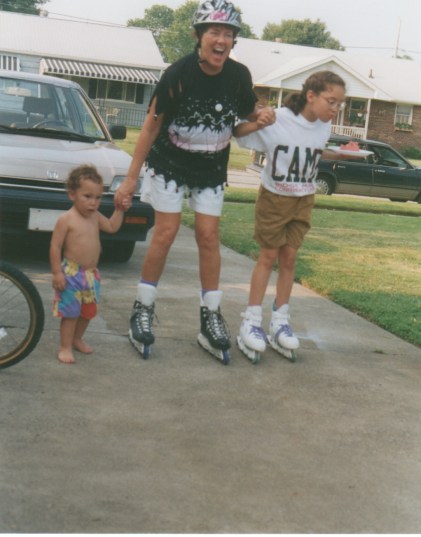
My mother’s first — and last — time on rollerblades.  

When was the last time you went roller skating?

When was the last time you ran?

When was the last time you rode a bike?

When was the last time you threw a ball?

When was the last time you swung on a swing?

When was the last time you danced?

When was the last time you told a knock-knock joke?

When was the last time you flirted with someone?

When was the last time you watched Bugs Bunny?

When was the last time you flew a kite?

When was the last time you did a somersault?

Pick one.

Do it.

While you can.

The kitchen.

tida in kitchen

I love this photo for many reasons, but the thing that intrigues me the most is the honesty.

The photo itself is a basement shoebox relic.  It’s old.  It’s bent and cracked. No Photoshop effects, here. Just a snapshot.

The subjects are familiar faces, but the photo was taken probably close to sixty years ago, before I really knew them. Maybe before I was born. Even in the older women there is youth I never saw in later years. From left to right, my Aunt Shirley; my grandmother Bettie Pearl, who I knew as Mom; my great-grandmother Tida, who we called Tidy; and my mother, Gloria, who looks to be with child.

The place, I believe, is my great-grandmother’s kitchen. If I had to guess, I would say it was breakfast.  There’s the coffee pot and toaster.  But I can’t imagine them gathering so early just for breakfast. Maybe lunch, which they called dinner.  Dinner would have included fried potatoes and tomatoes from the garden. Supper was the evening meal.  There would have been men in the picture by then.

There’s tension evident in the photograph.  Not a one could manage a smile, which is very unusual for my mother and Aunt Shirley, especially in front of a camera.  There’s a weariness, too.  Maybe they had been working.  Maybe canning tomatoes or beans.

They were all different.

My mother was the free spirit, enjoying every moment.

My aunt was sophistication personified, full of grace and elegance.

My grandmother, hardworking and kind, ready to share with everyone.

My great-grandmother, the strong, independent woman living by herself.

Maybe that was the source of the tension. Around the table love and respect, yet each one not quite understanding the other.  One dreams of this, another of that. And dreams, what are they for, anyway? another may think.  And Tidy, who has already seen enough heartbreak for all of them, keeps it to herself.

I’ll never know. They’re all gone now.  Not that any of them would give me a straight answer anyway.

I think that’ s the wonder of old photographs.  They tell a story, but never the entire story. A moment frozen in time that forces us to think about those who have gone on, to see if we can fill in the blanks. It forces us to remember them as they were, beyond the smiles and laughter. It forces us to remember who they really were.

Even the marble fades.

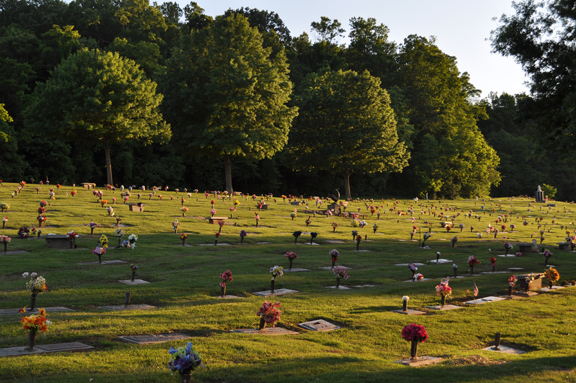
cemetery 1 for web

“Like the vast bulk of people, the captives would pass from the earth without hardly making any mark more lasting than plowing a furrow. You could bury them and knife their names onto an oak plank and stand it up in the dirt, and not one thing — not their acts of meanness or kindness or cowardice or courage, not their fears or hopes, not the features of their faces — would be remembered even as long as it would take the gouged characters in the plank to fade away. They walked therefore bent, as if bearing the burden of lives lived beyond recognition.” – Charles Frazier, from Cold Mountain

IN THE LATE 1860s, a tradition of decorating the graves of fallen Civil War soldiers began. In 1868, General John Logan formalized the tradition by declaring May 30 as Decoration Day.  Decoration Day gradually become known as Memorial Day, and after World War I, Memorial Day began to commemorate soldiers who had died in any war. In 1968, the U.S. Congress passed the Uniform Monday Holiday Act, and in 1971, Memorial Day was established as the last Monday in May. 

Although the emphasis of Memorial Day is still to honor those who died in service to their country, graves of all loved ones are now traditionally decorated on Memorial Day.

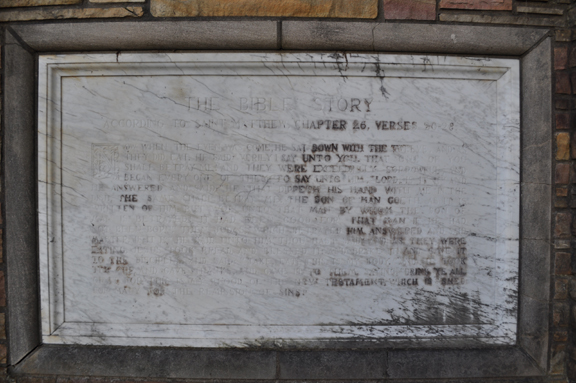
Many of my family and friends have their final resting place in Cunningham Park, a pastoral cemetery in the rolling hills of my home town of St. Albans. But as beautiful as it is, visits are always times of quiet reflection. My mother is there. My grandparents are there, and my great-grandmother, who passed away when I was 21, is there. My sisters and my cousins are the last generation to have known her personally. When we’re gone, my great-grandmother will likely have no more visitors. The memory of her, like the marble etching at the top of the cemetery stairs, once so vivid and clear, will fade away.

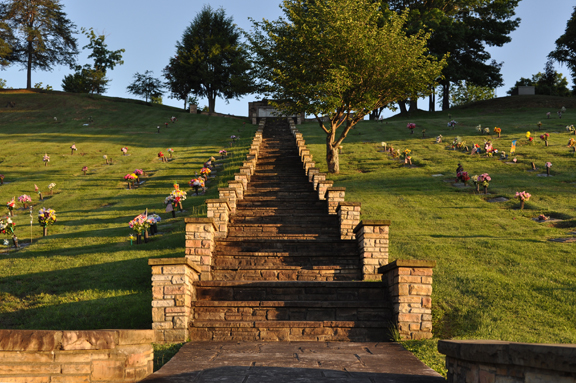
stairs for web

The stairs are a long, hard climb. Do they symbolize life’s struggles? Or the final path to the hereafter?  At the top are symbols of the Christian faith. But time is no respecter.  Even the marble fades.

marble plaque

Every day is a gift and every memory a blessing.


Finding Ricky.

This won’t mean much to anyone except my family. My apologies.

Today I read that the Kennedy Space Center is going to start displaying the Apollo 1 capsule as a tribute to the three astronauts – Gus Grissom, Edward White, and Roger Chaffee –  who lost their lives in the launchpad fire fifty years ago. Around that time my family was living in Houston and my dad took me to the Johnson Space Center there to look at the rockets.

Today I went to Mapquest to see how long it would take to drive to the Kennedy Space Center.  13 hours, more or less. Then I checked Houston. 18 hours. While I was on Mapquest, I zeroed in on the old neighborhood. The apartments we lived in are long gone, but I recognized the streets. Japonica. Ilex. Redwood. Rustic Lane.

I thought about my Houston friends, and like I have done in the past, I searched the internet for clues of their whereabouts. Mostly I struck out. Then I found one. In an obituary in Louisiana.

Ricky.

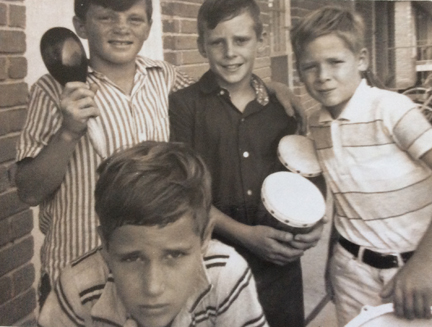
the-band-3-for-web

He’s the one with the maracas.

I wasn’t sure it was him until I watched a memorial video on the funeral home website. The pictures of him as a kid were unmistakable.  The obituary said he lived in Louisiana for almost fifty years. That left little time for living in Houston, probably the few years that my West Virginia family lived there. We were all transients, apparently.

So many of our friends disappear and we never hear from them again. We wonder whatever happened to them.

Looks like Ricky lived a good life and had a loving family. Which is exactly what I hoped I would find.


fly on the cornbread

I just returned from a trip with my family to the mountains, and yesterday, I had the pleasure of attending the reunion of my wife’s family.  The following was inspired by those two events.

Point of clarification: the cornbread, as well as all of the food, was outstanding.


there’s a fly on the cornbread
and bees in the tea
the chicken’s getting cold

but it don’t matter

the wind has a chill
the sun ain’t been shining
it’s looking like rain

but it don’t matter

.

photographs on paper
memories that are leaving
we talk about what we knew
and laugh with little grieving

we share a cup of coffee
make plans for our tomorrow
we bring our families with us
and know that love will follow

.

weary from the journey
too tired to do the hike
we just want to sit a spell

but it don’t matter

we tell the same old stories
and add some new ones, too
the conversation is light

but it don’t matter

.

photographs on paper
memories that are leaving
we talk about what we knew
and laugh with little grieving

we share a cup of coffee
make plans for our tomorrow
we bring our families with us
and know that love will follow

.

a brother or an uncle
a sister or an aunt
it’s hard to keep them straight

but it don’t matter

be it birth or be it marriage
they bring us in the fold
to share the food and time together

cause that’s what really matters

.

photographs on paper
memories that are leaving
we talk about what we knew
and laugh with little grieving

we share a cup of coffee
make plans for our tomorrow
we bring our families with us
and know that love will follow


copyright 2016, joseph e bird

the band

the-band-3-for-web

the-band-for-web
My music career started early.

When I was 11, my family was living in Houston and I got together with the guys in photo and formed my first band. Ok, my only band. We had a name but I don’t remember what it was. The guys, however, I think about all the time.

From left to right:

Ricky Penton, guitar player, I think, in addition to maracas. His nickname was Pinto Beans.

Randy Crabb, singer, bongo player. I think those were my bongos that I got on a trip to Mexico. I liked his older sister, Cheryl.

Lance Berg. He’s holding a drumstick and a snare drum, so yeah, he’s the drummer.

In center front is Scott Bert, singer. Older brother of Lance. The Bergs were talented. Scott wrote our first original song, Made a Mistake. More on that in a minute.

In the second photo, the kid holding the Polaroid Swinger camera was me. The picture was taken on my birthday and the camera was probably a gift. I’m guessing my older sister, Adele, took the picture.

I was a guitar player.

The kid in the doorway with the cat-eye glasses is my younger sister, Sarah. She’s always been on the cutting edge of fashion. Not sure if she was a fan.

We played two songs, Little Red Riding Hood (which is the same chord progression as House of the Rising Sun, so if you know one, you know the other) and Wipeout. And then there was Made a Mistake, which consisted of counting by five until Scott purposely made a mistake in the sequence. Then the hook, made a mistake, made a mistake, made a mistake. About as bad a song as one could write.

And yet, this was the peak of my musical career. That tells you all you need to know about my level of talent. I still play Little Red Riding Hood and Wipeout occassionally, and since then and I’ve learned a few more chords. But I’m just a pretender, a hack wannabe living in the glow of those glory days in Houston. We played one gig, the big going away party for our family just before we moved back to West Virginia. It was a short set.

And I never saw the guys again. That’s the way it is in the entertainment biz. Fame is fleeting. Everything is fleeting.

Carpe diem.


Family

Larry Ellis wrote this the other day and it struck a chord with me. Maybe it’s the poignancy. Maybe the familiarity of place, of people, of family. He said I could share it with you, so here it is.


Walking With My Father


As usual, he has the television up loud

And we watch our bottom-dwelling team

Go quietly in the third inning

“It’s nice out,” I tell him. “Alright,” he says

“We’ll go.”

The doorway, the step down to the porch

The step down to the walk

Are all obstacles now

Me holding the storm door open

He pushing his walker over the threshold

For a moment he is without support

But he stands


It is early evening and cool

And we step slowly along the driveway

The smooth concrete that he himself poured and finished

Thirty years ago

And then on to the blacktop road

Shuffling. The walker sticking in every crack and hole

Such effort. I wonder is there some better way

And yet we both know that every step is Grace

Every moment we have is Grace

A neighbor sees us and comes alongside

With encouragement and news

We reach the end of his road.

“You want to keep going?” I ask.

He nods. “Let’s go on.”

And we turn onto the sidewalk

As the sky turns from Robin’s egg to cobalt blue

“You remember the first time we fished Anthony Creek?”

“I’m not sure I remember the first one.

“Did we catch fish?”

“Yeah. A whole bagful. We caught fish we didn’t even know

What they were.”

“I do remember that. Andre took us in the truck

And we had to scoot down the mountainside.”


We go on and I wonder how far is too far

I tell him that we’ve gone farther than ever

Farther than ever since he got sick

But he wants to go on

“We’ll go on up to that streetlight up there

“Then we’ll turn around

“That be enough for you?”


On the way back we stop

And he rests

“Who lives in that house right there?”

“I don’t know who lives there now,” I say

“But when we were growing up

That was the church parsonage.

That’s where Dr. Weaver lived.”

“He was one of a kind,” Dad says.


As we reach home again

I point to a sprinkle of stars above the trees

Pure points of light from fires

Eight-thousand years old

“Look there, how beautiful.

There’s nothing like it.”


Copyright 2016, Larry Ellis
Tales from the home.

We were sitting in my grandfather’s room at the nursing home, talking about nothing, as you tend to do.

She walked in like a scary Joan Crawford, glancing at us before looking elsewhere as she made her way to the other side of the room.

“Are you looking for someone?” one of us asked.

She stopped cold. Her eyes widened. “Maybe I am.”

It was chilling. And later, funny. A short story that would be told often.

Her name was Joanne. She hadn’t meant to be scary. She hadn’t meant to offend. She was just disoriented. As are most people in the nursing home. That might not be an accurate statement. It’s just my casual observation.

I don’t know when nursing home visits became part of our routine, but they’ve been a fairly steady occurrence for the last twenty years or so.

My great uncle was a country preacher back in the day. A stern-looking man, very conservative, but with a good sense of humor. His last months were spent in the nursing home. He did not go gentle into that good night. He would lay in his bed and yell. And curse. At the top of his lungs.

It was scary. It was funny. But most of all, it was sad. It makes you realize that life is a struggle to be the kind of person you know you should be.

My grandmother, his sister, was in the same facility, although I’m not sure if it was the same time. She spent two years there after her stroke and was as quiet and gentle as she had been at home. My grandfather and two of his sons visited her almost every day. We would talk to her, tell her about the garden, the weather, and her great-grandchildren. Most times, there was no response. The visits were more for the visitors.

There have been more relatives, friends, and neighbors.

It can be heart-breaking, especially if you think about it too much. It helps when you realize that most of the residents are living in the moment. They all want to be someplace else. We all wish they could be.

This year, we’ve visited a friend who really doesn’t want to be there. When we would show up, she wouldn’t talk, wouldn’t even look at us. This continued for weeks.

Still, we tried.

Finally, she started to warm up. And though she’s far from normal, she at least welcomes our visits. We don’t know what brought about the change, whether it was meds (or lack of meds) or just an attitude adjustment. And we know it could go back to being icy on our next visit. Even if it does, we’ll go back.

Not because we get anything out of it ourselves. It can be taxing.

Not because we’re making the lives of those we see that much better. Most of the time they’ll forget we were even there.

Do you remember the last time someone smiled when they saw you? Do you remember how that smile made you feel? Just for that moment?

That’s it.

It’s just a better moment. For everybody.

Blog at WordPress.com.

Up ↑