Search

Joseph E Bird

Let's talk about reading, writing and the arts.

Category

Writing

vanity

tell me what I don’t know
see which way the wind blow
spinnin like a gyro
playin with the vertigo
puttin on a big show
fakin like a puppet show
hear me up in idaho
this is it, here we go

it don’t matter what it is
it don’t matter if it true
listen what i say to you
dig my words, dig me, too

leavin on a jet plane
hoppin to the south of spain
sippin on the champagne
scared to try the cocaine
stayin home it so mundane
want to be like charlemagne
livin large, i can’t complain
it ain’t real, its all in vain

it don’t matter what it is
it don’t matter if it true
listen what i say to you
dig my words, dig me, too

tell me that you like my song
yo to me, i can’t be wrong
be my posse, be my throng
if you like, you sing along
ring the bell, bang the gong
dig it man, like tommie chong
fifteen likes and goin strong
make me feel like i belong

it don’t matter what it is
it don’t matter if it true
listen what i say to you
dig my words, dig me, too


copyright 2016, joseph e bird

Static

Electronic vacuum tube

“…for in my radio with all its static I could hear, over and above Beethoven, the progress of a lightning storm a thousand miles away.” – from Prelude, by Mark Helprin.

Do you remember listening to the radio, late at night, and hearing that intermittent crackling?

Things have changed, of course, especially when it comes to how we listen to music.

Back in the day, my dad would occasionally tinker with our old-school television set when it would act up.  Televisons used to be big consoles that sat on the floor, and you would pull on a knob to turn it on, then wait while the vacuum tubes and the cathode ray tube (the tv screen) warmed up. Radios used to be like that, too, until the invention of the transistor. The glowing tubes went away.

Well, they’re back.

So are vinyl records and turntables. Audiophiles (if you play music using a turntable, you’re an audiophile) use words like “warmer” and “richer” to describe the musical experience they claim to hear.

I grew up listening to records on turntables, ranging from the cheap turntable in a cardboard suitcase that we played Beatles 45s on, to my college turntable that I bought after extensive research at all of the high fidelity stores that used to abound. As kids, we’d play a record so much that it would start sticking. So we taped pennies to the tone arm to hold the needle down so it wouldn’t jump the grooves in the record.

Of course with my high-end Yamaha turntable, the needle was referred to as a stylus and there was great debate over the merits of direct drive versus belt drive. I chose belt drive and was surprised to learn that the belt was little more than a rubber band. I wiped each record clean before and after playing with a special record cleaning pad and record cleaning solution, allowed a suitable amount of time between playing to allow the grooves to cool, and never, ever taped a penny to the tone arm.

Then along comes the CD. Digital music. Clear and perfect every time. No scratching from an overplayed record. If I wanted to play a song repeatedly, no problem. It was just as good as the first time.

Next, we started downloading music over the internet. But in order to keep files manageable, they need to be compressed. Some music quality is lost. This is when the audiophiles start to sing the blues.

Now we’ve come full circle in the quest for the ultimate stereo experience. Records, turntables, and vacuum tubes are back. And if I weren’t so cheap, I’d jump on the bandwagon, if for no other reason, than the fun of it.

But I can’t help but think that you’ll hear some crackle and pop from the stylus rumbling over the vinyl grooves, just like we used to, no matter how much you take care of your records.

I was reminded of all of this today as I was reading  Mark Helprin. His character was lamenting the bludgeoning march of progress and its effects on the simple things in life, and he says this:

“…for in my radio with all its static I could hear, over and above Beethoven, the progress of a lightning storm a thousand miles away.”

Maybe there’s truth in that.

Maybe a life is richer with a little static. And scratches. And imperfections.

Maybe perfect is too good.


photo credit: iStock Photography


American Pastoral

“I have to go write my review,” I said.

“Why do you have to write a review?” she asked.

“I don’t have to write a review.”

And then I realized that, yes, I have to. Not that anybody really cares what I, an overfed, long-haired leaping gnome, thinks about a book that’s almost 20 years old. Still, I need to get this out of my system. Let’s call it writer’s therapy.

As I said before, I can’t think of anybody in my circle of friends and family to whom I would recommend this book.  It’s just too much…of everything. And yet, I’m glad I read it. It was good exercise.

“The Swede.”

As if to answer who the book is about, the first sentence leaves no doubt.

It’s about Seymour Levov, aka The Swede, and his seemingly ideal American family set in the time of the Vietnam War. The pivotal event: his daughter blows up a post office as a protest to the war and a man is killed. The daughter goes on the run.

This plot line is slowly dripped (more slowly than my father’s decrepit coffee maker) as the author tells us everything about everybody that dares make an appearance in the novel.

Warning: Never volunteer to be a character in a Philip Roth story. He knows all and tells all.

And this is why I’m glad I read the book. It was one heckuva an exercise in character development. Layer after layer after layer.  After layer, after layer, after layer.  After layer, after layer, after layer, with enough hints at a story to keep you interested. Like the daughter has been missing for five years. And then, three-quarters into the book, he finds her.  Ok, we know the characters pretty well, so now the story is going to pick up.

Wrong, wrong, wrong.

Everytime something is about to happen, we get more dense paragraphs of exposition. Layer, after layer, after layer.

Then there’s the character Marcia Umanoff, a militant non-conformist whose duty in life is to make people uncomfortable. She’s a thinker and disdains simpletons. She’ll do anything to get under your skin. An elitist. Her actions in the novel are irritating, yet the perfect foil to the perfect world of the perfect Seymour Levov. I’m not giving away much to tell you that his world is not as perfect as it seems. Marcia Umanoff represents reality.

So here comes Joe Bird, a simple man (with a simple name) taking on a highly-acclaimed Pulitzer Prize-winning novel. Because he concludes that the book will not be in his top ten of all time, an elitist might conclude that the allegory and symbolism and sheer depth of the narrative might be too much for such a simple man. The elitist may be right.

Page 413: “These deep thinkers were the only people he could not stand to be around for long, these people who’d never manufactured anything or seen anything manufactured, who did not know what things were made of or how a company worked, who, aside from a house or a car, had never sold anything and didn’t know how to sell anything, who’d never hired a worker, fired a worker, trained a worker, been fleeced by a worker – people who knew nothing of the intricacies or the risks of building a business or running a factory but who nonetheless imagined that they knew everything worth knowing.”

Yeah. It’s like that.


Writer’s Log – 11/27/16

In novel writing, much importance is placed upon the first sentence, the need to capture the imagination of the reader – love at first sight, if you will. Certainly there are many terrific opening lines for great books. (Do you own Google search, just for kicks.) Is this one of them?

“The Swede.”

It’s the opening of American Pastoral, the Pulitzer Prize-winning novel by Philip Roth.

Ok, let’s not be so literal so as to limit the “opening line” to simply the first sentence. Let’s say we’re evaluating the opening in general. Roth follows the not-so-descriptive introduction of one of his pivotal characters with this:

“During the war years, when I was still a grade school boy, this was a magical name in our Newark neighborhood, even to adults just a generation removed from the city’s old Prince Street ghetto and not yet so flawlessly Americanized as to be bowled over by the prowess of a high school athlete.”

Are you hooked yet?  No?  Me neither.

And yet I kept reading. Page after page after page about the old neighborhood and its people. Not much action. Some conversations in a class reunion about days gone by.  in medias res?  No, not really. It’s all backstory. It’s what writing coaches would call exposition, and they greatly advise against it.

Take another look at that second sentence. It’s really long. The coach would advise to break it up, to get that comprehension level down a couple of notches. Roth also uses big words that most readers would have to look up. Again, not something they say you should do. It takes the reader out of the story.

I used to read a lot of John Grisham. Lots of story and action, and Grisham will keep you turning those pages. He follows the rules, has lots of fans, and piles of money. Roth probably does too, but he’s not exactly a household name.

Yet Philip Roth is a highly respected novelist. He breaks the rules and wins a Pulitzer.  How?

On page 86, he wrote this:

“The daugher who transports him out of the longed-for American pastoral and into everything that is its antithesis and its enemy, into the fury, the violence, and the desperation of the couterpastoral – into the indigenous American berserk.”

It took Roth 85 pages to get to the reader to the point that the meat of the sentence is understood mentally and emotionally, and so on-point that its resonance is profound.

I’m starting to get it.

It’s all about what you’re trying to acccomplish. It’s all about what you want your writing to do, and not so much about how many people read it. The truth is, the odds are greatly against any of us writing a best-seller. If you’re going to put in the hours, it had better be for something worthwhile. It had better bring at least one reader some satifisfaction, that one reader being the author.

Footnote:  The number one best-selling author from 1996 to 2000 was John Grisham. Philip Roth didn’t even crack the top 15 in 1997, the year American Pastoral won the Pulitzer.


Poison Tree

Speaking of the Milk Carton Kids, I stumbled upon this little video about a little man in a little town. I can relate.  The chorus:

I’m a little man in a little town
It’s a little cold, I’m a little down
I get a little angry, a little bit each day
A little while longer, we’ll dig a little grave

Our Exotic World

Many of you who stop by here for a word or two are from this area (West Virginia) or near enough to be familiar with the locale. Some of you visit from lands far away. This occurred to my friend, fellow writer, and neighbor a few doors down, Larry Ellis, and he has written a nice little essay about our neck of the woods. You might enjoy getting to know this area through his words and photos.  If so, click here and jump on over to his site.


fly on the cornbread

I just returned from a trip with my family to the mountains, and yesterday, I had the pleasure of attending the reunion of my wife’s family.  The following was inspired by those two events.

Point of clarification: the cornbread, as well as all of the food, was outstanding.


there’s a fly on the cornbread
and bees in the tea
the chicken’s getting cold

but it don’t matter

the wind has a chill
the sun ain’t been shining
it’s looking like rain

but it don’t matter

.

photographs on paper
memories that are leaving
we talk about what we knew
and laugh with little grieving

we share a cup of coffee
make plans for our tomorrow
we bring our families with us
and know that love will follow

.

weary from the journey
too tired to do the hike
we just want to sit a spell

but it don’t matter

we tell the same old stories
and add some new ones, too
the conversation is light

but it don’t matter

.

photographs on paper
memories that are leaving
we talk about what we knew
and laugh with little grieving

we share a cup of coffee
make plans for our tomorrow
we bring our families with us
and know that love will follow

.

a brother or an uncle
a sister or an aunt
it’s hard to keep them straight

but it don’t matter

be it birth or be it marriage
they bring us in the fold
to share the food and time together

cause that’s what really matters

.

photographs on paper
memories that are leaving
we talk about what we knew
and laugh with little grieving

we share a cup of coffee
make plans for our tomorrow
we bring our families with us
and know that love will follow


copyright 2016, joseph e bird

They once lived here.

mountains

It’s morning, one hundred years ago.

The men are in the mine. Or working the tipple. Or loading the rail cars.

The women are at home with the children. Or teaching school. Or at the company store.

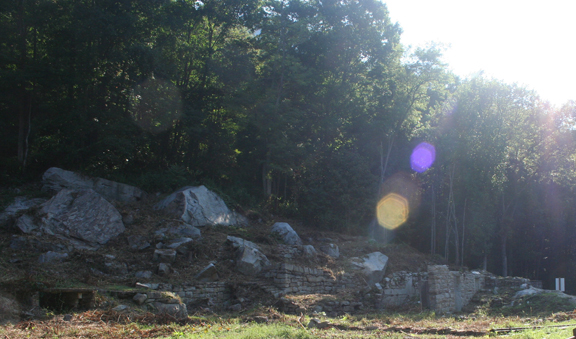
Deep in the New River gorge, coal mining began in 1873 in the remote town that bears the name of its founder, John Nuttall. For more than 80 years, families lived, worked, and died in Nuttallburg. By 1958, it was all over.

All that remains are the ruins. You can still go there, but the trip itself is a harrowing descent down the steep hills that will burn the brakes of your car. And once there, the isolation is eerie. You can see the coal tipple and almost hear its noisy operation echoing through the valley. There’s nothing of the company store other than its foundation. Likewise with the houses that once grew from the hillside. Try to imagine the mothers and kids playing on the dusty paths as they scraped together a life that was as hard as the sandstone their husbands used to build the town. There was probably a doctor to tend to the illness and injuries, and a preacher to tend to those who didn’t recover.

Listen. Hear their voices. They once lived here.

tipple.jpg
From the tipple, the conveyor disappears into the forest, where the men of Nuttallburg loaded coal that would help power the country.
tracks.jpg
The natural process will not be stopped.


company store.jpg
All that’s left of the company store.
morning
And the sun still rises where children once played.

Over at True North Nomad, Lily Burgess writes about her adventures through wild and wonderful Canada. The other day she published a story about a ghost town in Ontario which reminded me of my visits to Nuttallburg.  Check out her work.

Family

Larry Ellis wrote this the other day and it struck a chord with me. Maybe it’s the poignancy. Maybe the familiarity of place, of people, of family. He said I could share it with you, so here it is.


Walking With My Father


As usual, he has the television up loud

And we watch our bottom-dwelling team

Go quietly in the third inning

“It’s nice out,” I tell him. “Alright,” he says

“We’ll go.”

The doorway, the step down to the porch

The step down to the walk

Are all obstacles now

Me holding the storm door open

He pushing his walker over the threshold

For a moment he is without support

But he stands


It is early evening and cool

And we step slowly along the driveway

The smooth concrete that he himself poured and finished

Thirty years ago

And then on to the blacktop road

Shuffling. The walker sticking in every crack and hole

Such effort. I wonder is there some better way

And yet we both know that every step is Grace

Every moment we have is Grace

A neighbor sees us and comes alongside

With encouragement and news

We reach the end of his road.

“You want to keep going?” I ask.

He nods. “Let’s go on.”

And we turn onto the sidewalk

As the sky turns from Robin’s egg to cobalt blue

“You remember the first time we fished Anthony Creek?”

“I’m not sure I remember the first one.

“Did we catch fish?”

“Yeah. A whole bagful. We caught fish we didn’t even know

What they were.”

“I do remember that. Andre took us in the truck

And we had to scoot down the mountainside.”


We go on and I wonder how far is too far

I tell him that we’ve gone farther than ever

Farther than ever since he got sick

But he wants to go on

“We’ll go on up to that streetlight up there

“Then we’ll turn around

“That be enough for you?”


On the way back we stop

And he rests

“Who lives in that house right there?”

“I don’t know who lives there now,” I say

“But when we were growing up

That was the church parsonage.

That’s where Dr. Weaver lived.”

“He was one of a kind,” Dad says.


As we reach home again

I point to a sprinkle of stars above the trees

Pure points of light from fires

Eight-thousand years old

“Look there, how beautiful.

There’s nothing like it.”


Copyright 2016, Larry Ellis

Blog at WordPress.com.

Up ↑