Search

Joseph E Bird

Let's talk about reading, writing and the arts.

Category

Uncategorized

gone

IN THE LATE 1860s, a tradition of decorating the graves of fallen Civil War soldiers began. In 1868, General John Logan formalized the tradition by declaring May 30 as Decoration Day.  Decoration Day gradually become known as Memorial Day, and after World War I, Memorial Day began to commemorate soldiers who had died in any war. In 1968, the U.S. Congress passed the Uniform Monday Holiday Act, and in 1971, Memorial Day was established as the last Monday in May. 

Although the emphasis of Memorial Day is still to honor those who died in service to their country, graves of all loved ones are now traditionally decorated on Memorial Day.

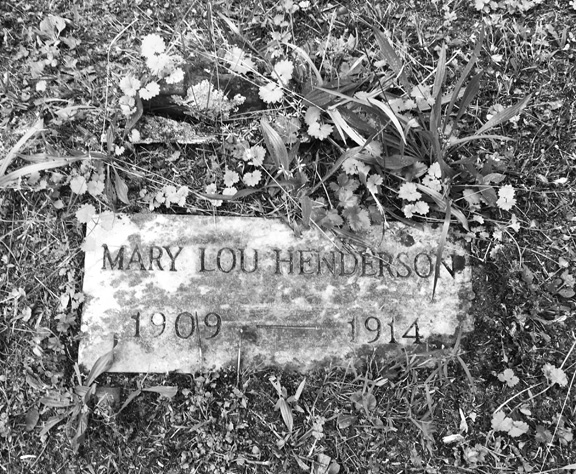
It’s an old man’s game. You seldom see anyone under 50 in the cemetery cleaning the headstones, replacing old, faded flowers with fresh ones. Our loved ones aren’t there anyway. We know that. But we’ll honor them as long as we can, until strangers come along and take photographs and wonder who they were.

Alfred J. Snyder. He was 90.
Lundy Harless Widner. Served in three wars. Died at 54, three years after the war in Vietnam ended.
You can imagine the heartbreak.
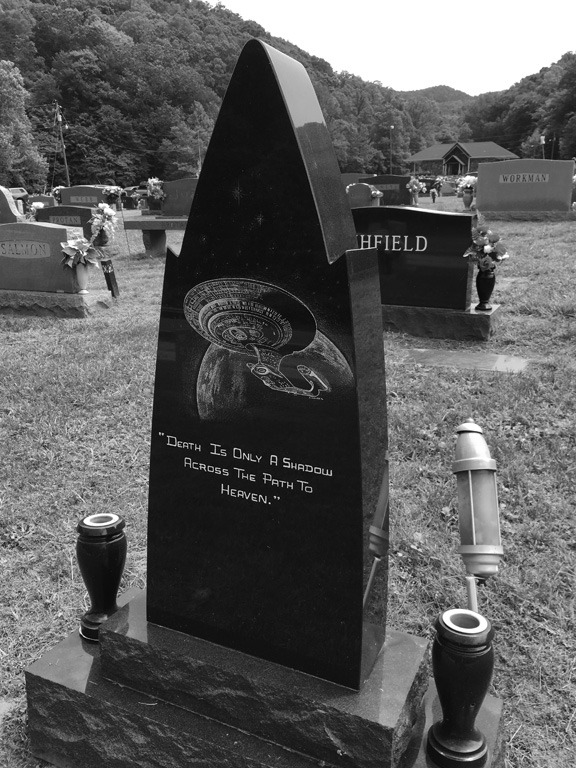
To boldly go…
“Death is no more than passing from one room into another. But there’s a difference for me, you know. Because in that other room I shall be able to see.”
Helen Keller

no place for a young girl

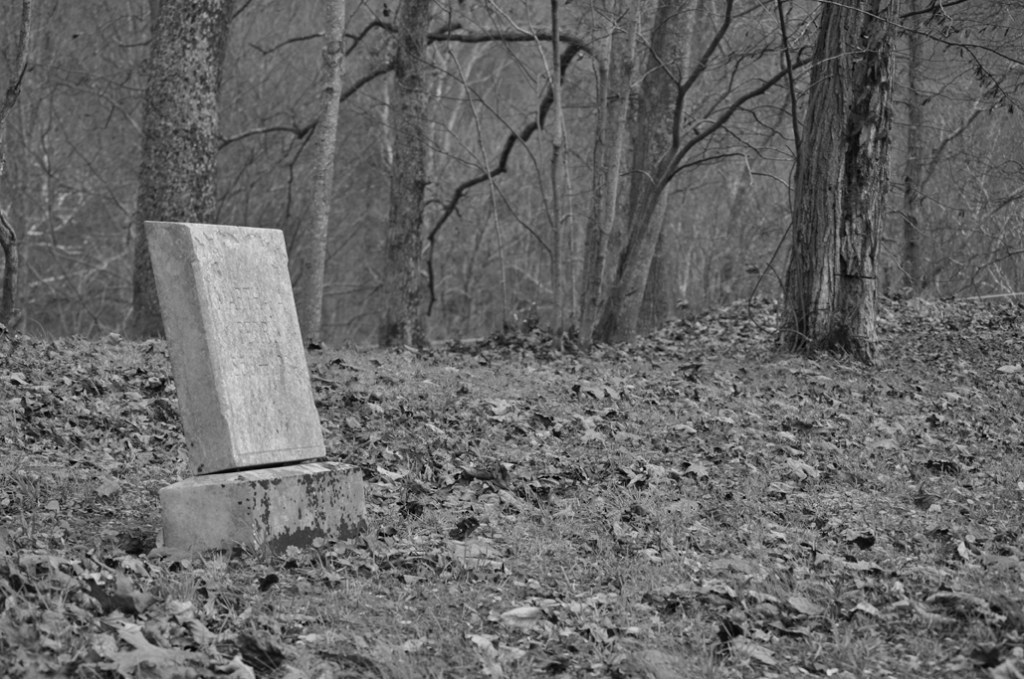
Every year about this time we go to the cemeteries and clean the graves of those who have gone before. It makes you realize how fast time flies. Has it really been that long? And then there are all those forgotten graves. What was their story? Maybe this.


she wasn’t supposed to go there by herself.
up the steep gravel road,
through the woods
to the clearing
where the old grey headstones
were covered in moss
and leaned toward the earth
as if they were too tired
to stand up straight,
for so long they had stood in testament to
the forgotten lives
of those whose names were
were worn from the stone
by the unrelenting and unforgiving
passage of time.

she wasn’t supposed to go there by herself.
because there were snakes
and yellow jackets
and maybe bears.
and at night
across the hollows
voices and laughter and music
and now and then
a gunshot
would echo
from neighbors unknown,
and though the graveyard
was close
it was no place for
a young girl alone.

she wasn’t supposed to go there by herself.
but along with the grey, rough tablets
of ancient men
and their wives
and their children,
were smooth slabs
of curved and polished marble
with praying hands
and crosses
and Bible verses
written in script,
and names her grandmother knew
of this cousin and that uncle,
and her grandmother’s husband,
the grandfather she had never known.

she wasn’t supposed to go there by herself.
under the deep shade
cast by towering oaks and maples
where grass wouldn’t grow
and moss and lichens
clung easily to the old stones
and left her grandfather’s headstone
untouched by nature,
save for the pollen in the spring
that she would wipe with her finger
from the smooth marble,
that also promised
that her grandmother would
someday
rest with him.

she wasn’t supposed to go there by herself.
but her grandmother worried too much.
she had never seen a snake
and stayed clear of the bees
and the idea of bears
just seemed silly,
and it was peaceful
always peaceful.
and she would talk to God
and ask why other kids
teased her,
though she knew
it was because her clothes
were old and
she was poor.

she wasn’t supposed to go there by herself.
and she sat beside the grandfather
she knew only from photographs,
and read Psalms
from his old Bible
and drew wisdom from the words
that would stay with her
all of her days,
and give her
comfort
through her pain,
and strength
through her weakness,
and courage
through her fears.

she wasn’t supposed to go there by herself.
and when she saw him
she knew her grandmother
had been right,
and she had been foolish,
and as he came toward her
he took a drink
from a bottle
and wiped his mouth
on his sleeve
and laughed,
and she knew
that he had come
from the valley
of the shadow of death.

she wasn’t supposed to go there by herself.
but she would fear no evil
and she always carried a staff,
the old iron pipe
from her grandfather’s workshop,
heavy and cool,
and she stood
and gripped it in both hands
and drew back
and stepped toward him
and swung,
and he screamed as it struck
against his ribs,
and his bottle dropped,
and she ran off the hill.

she wasn’t supposed to go there by herself.
she didn’t tell her grandmother
and she didn’t sleep
for days,
and when the kids
teased her because
she had to tape the soles
of her shoes,
and because she lived
in a shack with her grandmother
because her mother had
killed herself with a needle,
she cried into her pillow
softly,
so her grandmother wouldn’t hear.

she wasn’t supposed to go there by herself.
and it was weeks before she went back
to find her staff,
her grandfather’s iron pipe,
which had given her comfort,
and to find the peace
that had left her.
but it wasn’t the same.
she couldn’t read
she couldn’t pray
she couldn’t close
her eyes
because he might
be out there
still.

she wasn’t supposed to go there by herself.
and though she was afraid,
she still went there by herself,
because it was there
she had learned of
peace and strength and courage.
and she would grow
and live far away
from the hollows,
and the kids who teased her,
and she would become a woman
strong in her will and
strong in her faith
and though she was never alone
she went there by herself.


copyright 2017, joseph e bird
photo copyright 2017, joseph e bird

if you put your mind to it…

I’m not going to dunk a basketball, no matter how much I put my mind to it.

I’ll never sing like Andrea Bocelli, no matter how much I put my mind to it.

I won’t paint like Rembrandt, no matter how much I put my mind to it.

I’ll never play the guitar like Alejandro.

I’ll never write a poem like Robert Frost.

I’ll never tell a story like Cormac McCarthy.

No matter how much I put my mind to it.

They say, you can do anything if you put your mind to it.

Not true.

spidey is a woman

I saw Bob Foster in the coffee shop Saturday. I asked about his daughter, Julie, who graduated from our small town high school in St. Albans, WV and made it to the big time working in New York City as an architectural preservationist. But she doesn’t just sit at a desk and review historic documents. She rappels down New York skyscrapers with a camera and a hammer and inspects for deteriorating masonry. Yep, that’s a thing. She was one of the preservationists featured on the Today show recently. She’s in the group scene at the end.

Bob told us that to allay the fears of her mother, she told her that she doesn’t rappel down buildings more than 60 stories. Which, as it turns out, wasn’t exactly true. As if 90 stories is any more dangerous than 60. Click the link below to see the Today show clip.

Go, Spidey.

https://www.today.com/video/women-building-inspectors-rappel-down-new-york-s-high-rises-1503459907634

choices

1950s movie starlet at home for the Christmas holidays.

Could have been. She had those classic movie-star looks. She always wanted to be “discovered.” But her choice was her family. She was a stay-at-home mom. That’s what most mothers did back then. So maybe life in the limelight was not her destiny. In some ways it was a sacrifice. Still, it was her choice. Her calling was hard, sometimes wearisome, and largely unglamorous. But it was also noble and virtuous and rewarding in immeasurable ways.

She was my mother.

“Her children arise up, and call her blessed; her husband also, and he praiseth her.”


photo credit: Eugene A. Bird

the guitar

Come sit by the fire. I have a story to tell.

Ok, so it’s Verlon Thompson’s story. And Guy Clark’s.

still they come

we are the land of the oppressed

and still they come

we are the land of the unfair, the unjust, and the selfish

and still they come

we are the land of the destitute, the marginalized, the ignored

and still they come

we are the land of prejudice, and bigotry, and hatred

and still they come

we are the land of assault, and theft, and murder

and still they come

we are the land of toxic waste, and foul air, and undrinkable water

and still they come

we are the land of filthy cities, the homeless, and needles in the playground

and still they come

we are the land of division, and tribalism, and democracy in decline

and still they come

we are the land of despair, and shattered dreams, and lost hope

and still they come

we are the great Satan, the imperialist nation, the evil America

and still they come

.

we are the land of friendships, and neighbors, and welcoming strangers

and still they come

we are the land of charity, of goodwill, and acts of kindness

and still they come

we are the land of giving, and helping, and sacrifice

and still they come

we are the land of your faith, of my faith, or no faith

and still they come

we are the land of mountain majesty, of fruited plains, and sparkling rivers

and still they come

we are the land of small towns, and family farms, and shining cities on the hill

and still they come

we are the land of hard work, and opportunities, and reward

and still they come

we are the land of dreaming, of possibilities, of anything can happen

and still they come

we are the land of the underdog, and second chances, and comebacks

and still they come

we are the land of the brash, the home of the brave, and defender of rights

and still they come

we are the inspiration of yesterday, the bread for the day, and the hope for tomorrow

and still they come

.

we are the land of hopelessness and hope

we are the land of the poor and the rich

we are the land of the atheist and the faithful

we are the land of oppression and liberty

we are America

and still they come


copyright 2019, joseph e bird

clean the ashes from your hearth

Spring is the death of death and the erasure of memory.

Who can ruminate over what was lost in the ice and snow when the brook runs free and clear? This is new life, again. Stop your brooding and take off your coat and hat. Clean the ashes from your hearth and open the windows and let the accumulated scents of stew and woodsmoke escape into the gold and blue. — Larry Ellis, from Mid-day Post, March 30, 2019.

whitey on the moon

I just got around to seeing First Man, the story of Neil Armstrong, first man on the man. It’s the 60s. You remember the 60s. Maybe you don’t. Young’uns. Crazy times, the 60s, culminating in 1969, of course, a year crammed full of historic events.

The movie sets the scene and doesn’t gloss over the turbulence of the day. There’s a snippet of a song, a poem, really, by Gil Scott-Heron that plays for a few moments, to illustrate that not everyone was thrilled with the space race. We should be spending money on other things, they said.

Whitey on the Moon.

Yeah, it’s easy to get riled up by the words, whether you agree or disagree. It’s easy to be offended. It’s easy to scream, right on.

That’s the power of the piece.

And it’s powerful because it’s poetry. Urban poetry set to music.

It’s hip and cool. The forerunner of rap.

Set aside the message for a moment. Listen to it as art. Appreciate the rhythms and the cadence and the genius of the form.

Dig it.

Blog at WordPress.com.

Up ↑