Search

Joseph E Bird

Let's talk about reading, writing and the arts.

Category

Photography

The Violin

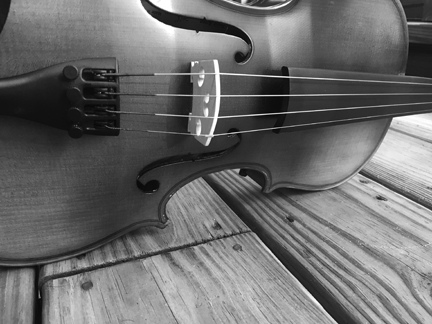
Violin BW 2 for web

The following was inspired by true events.


“I WANT TO KEEP MY LEG.”

“Jack, we’ve been through this. Your leg is dying. If we don’t amputate, it could kill you.”

“I want to keep my leg.”

“At the risk of dying?”

“Of course not. Cut the leg off. But I want to keep it.”

“I don’t understand.”

“What’s so hard to understand? When you cut off the leg, instead of throwing it in the trash, put it on ice.”

“We don’t just throw it in the trash. We have a medical incinerator.”

“I want to take my leg home.”

“Why?”

“It’s my leg. Maybe I’ll make it into a lamp.”

“Just sign the papers. You can’t take your leg home.”

“Maybe I want to bury it. Could I take it home and bury it?”

Dr. Irving leaned back in his chair and let out a long, slow breath. “It’s really not practical. How would you even dig a hole?”

“But could I do it? Is it legal?”

“There’s paperwork. It has to be approved by Administration. They won’t likely grant your request, given your circumstances.”

“My circumstances.”

“You know.”

“I’m not crazy, Stuart. I checked myself in to get some rest.”

Dr. Irving forced a smile. There was no point in arguing. He had learned that years ago. When they were both boys.

“Where would you bury it?”

Jack thought for a moment. “I could bury it next to Monkey.”

“Monkey died?”

“Two years ago. I told you. You never listen to me.”

“I’m sorry. I forgot. I forget a lot of things anymore.”

“Monkey’s not dead. I was just testing you.”

“Why would you do that?”

“I’ll bury her next to Zsa Zsa.”

“I know Zsa Zsa’s dead. I went to the funeral.” Dr. Irving shook his head. “Who has a funeral for a cat?”

“Lot’s of people do. Don’t be so insensitive.”

“So you want to bury your leg in your pet cemetery?”

Jack didn’t answer. Dr. Irving took off his glasses and rubbed his eyes.

“Does your head hurt?” Jack asked.

“No. Just tired. I don’t sleep much these days.”

“They have meds for that, you know. New ones. I got to try a couple at the hospital. The other hospital. Bateman.”

“I just need some time off. I’m going to the beach next month.”

“The beach. I never understood that. We’re going to the beach! We’re going to the beach! All that sand. The humidity. No, thank you.”

“I like it. Nothing like sitting on the deck with a cup of coffee watching the sun rise.”

“Are the kids going?”

“No. Just me. I haven’t even told them. I’m afraid they’ll come down.”

“They worry about you.”

“I know.”

“You’re not used to being alone, and yet you’re going to the beach to be by yourself.”

“So now you’re my shrink?”

“It hasn’t even been a year.”

“Yeah.”

“Murrell’s Inlet?”

“No. Outer Banks.”

“Oh.”

“Katie loved Murrell’s Inlet. I can’t go there. I just can’t.”

Jack nodded. They sat in silence for a moment.

“Are you going to give me my leg?”

“It’s a horrible idea.”

“I’m not crazy.”

“I know.”

Jack pushed himself up in the wheelchair and lifted his leg at the knee and crossed it over his other leg. The good leg. He rubbed his knee under the hospital gown. “They say there will be phantom pain. Like the leg is still there.”

“That’s what they say.”

“I hear voices.”

“Uh huh.” Stuart turned to his computer and began typing. The office was small and sparse, not so much as a family photo on the desk. It wasn’t his primary office, just a space in the hospital to access records and process patients.

“I got a new violin,” Jack said.

“I didn’t know you were still playing.”

“I sat on my old one. Just flattened it.”

“So you got a new one?”

“I had that violin since junior high.”

Stuart turned and faced Jack. “The same one?”

“I couldn’t fix it this time.”

“I’m sorry.”

Jack looked down at his leg, black and brown and blue and scaly and crusty.

“Sometimes I wonder what my life would have been like had you not come along that day. They would have certainly finished the job on the violin, and then started in on me. Maybe I just needed a good beating. Maybe that would have toughened me up.”

“Nobody needs a beating.”

“I went to Bateman for the first time after that. I was fourteen.”

Dr. Irving went back to typing. “I didn’t know that.”

“My first trip to crazy.”

“Stop it, Jack.”

“I know. It’s just an illness. Like the flu or diabetes or a rotting leg. But there is a difference.”

“There shouldn’t be.”

“So you say.” Jack touched the dead skin, checking for pain. He felt nothing. “My poor, sorrowful leg. It’s dying. You’re going to cut it off, and you’re either going to burn, or I’m going to bury it, or maybe I’ll just keep it my deep-freeze for a while. Doesn’t really matter. It’s just an appendage. Notice how I refer to it? It. Third party. Objective.”

“You can’t keep it in your freezer.”

“But up here,” Jack said as he tapped his forehead, “that’s me. My mind. My thoughts. My fears. My hopes. Me. Not it. It’s so hard to be objective and say that I just need medicine or therapy or electricity. I had that once, you know.”

“Electroconvulsive therapy can be effective, and overall, I think your treatments have served you well. You’re a bit of an odd-ball, but you’re not crazy. And if you need to drop by Bateman every now and then to get it all sorted out, so be it. You go to Bateman, I go to the beach.”

Jack laughed. “I think you’re the one who’s crazy.”

“You’re probably right.”

“Even so,” Jack said.

“Even so, what?”

“My leg is part of me, too.” He uncrossed his leg. He wheeled to the window that overlooked the parking lot. “Nice view.”

“Even so, what?”

“I don’t have much. No family. Just Zsa Zsa, now. I’ve had two real friends in my life. You and my violin. Now it’s gone. Well, it’s not gone, just a pile of broken wood and strings. My new one is nice, but it has no history with me. And now my body is leaving me, piece by piece.”

“Just your lower leg. Every other body part is fine.”

“That’s easy for you to say.”

“Ok, Jack.”

“Ok?”

“Yeah. I’ll do the paperwork for your leg.”

“You think the hospital will approve it?”

“They will. And if they don’t, we’ll figure something out.”

“Thank you, Stuart.”

“Two conditions, though. First, we’re going to keep it here until you’re discharged. Then the day you go home, I’m coming over to your house and I’m going to bury your leg.”

“That sounds so odd when you say it out loud, Doctor. Even a little nutty. What’s the second condition?”

“You’re coming to the beach with me.”

Jack turned from the window and looked at his doctor, his old friend. Stuart was still pecking on the computer. He wouldn’t look back. It wouldn’t be proper. Not for friends like Jack and Stuart.

“Go on back to your room. I’ve got to make my rounds. I’ll see you in the morning.”

“Thank you, Stuart.”

Jack wheeled himself to the door and started down the hall.

“The beach,” he said in a whisper. “I’m going to the beach.”


copyright 2016, joseph e bird
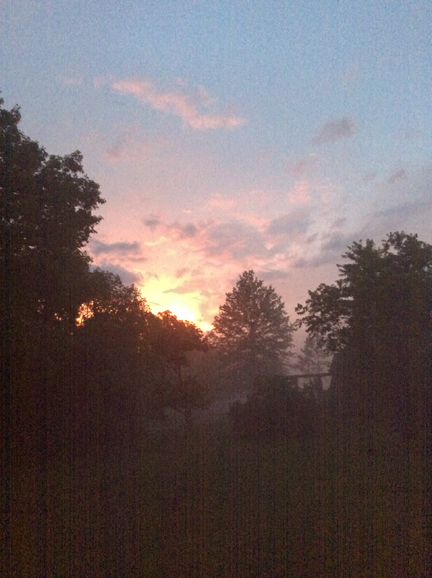
A prayer for no more rain.

rain sunset 1 for web

It’s been a rough couple of days for some in our area. The rain came fast and hard.

Homes have been destroyed. Lives have been lost. Families will never be the same.

As I write, the sun brings the promise of better days.

It will take a while.

Hope springs.

seedling 2 for web

As he awakened to the passing of time, his mind skipped over fall, passed by winter, and envisioned signs of a coming spring. Not outside the window of the conference room, where the shadows of the morning and the afternoon grew longer, and the mountains in the distance transformed into an impressionistic painting, but within himself, where the seeds of optimism and hope that had been planted by so many people over the years, were finally growing.


excerpt from A Prayer for Rain, by joseph e bird, copyright 2016

Walkers.

Our house is a little backwards from most houses, where living rooms face the street and kitchens face the backyard. Ours is just the opposite. We have a pleasant view from the kitchen as neighbors go by on their daily walk. Some I know, some I don’t.

Larry, a writer, walks in the early evenings. He’s an athletic guy, so his gait is purposeful and steady. He walks, eyes ahead, and you get the feeling that he’s working something out in his mind. My guess would be that he’s nurturing an idea for a story, or finding the rhythm for a verse.

But I don’t really know.

Jim walks slowly, head hung down. Like his dog died. But I don’t think he has a dog. And I know it doesn’t die every day. That’s just how he walks. When he stops to talk, he’s very pleasant and friendly, as if life for him is good.

But I don’t really know.

My father is eighty-six. He walks like he’s fifty-six. His fast pace keeps him healthy. He’s suffered loss in the family, but doesn’t talk much about it. Like most men, he’s good at compartmentalization. He’s strong and self-sufficient and seems to be getting along well. He looks forward when he walks. I think that says a lot.

But I don’t really know.

A young man walks wearing a ball cap and an extra shirt over his shoulder. He’s walking to work. I don’t know where his walk begins or where it ends, but it has to be measured in miles. He seems so responsible.

But I don’t really know.

A neighbor walks in the evenings. He does laps up and down the sidewalk, obviously exercising. He’s very quiet and makes no attempt at conversation. I wonder why he is so reserved. I could speculate.

But I don’t really know.

A woman walks in the morning, long strides, arms swinging vigorously. A power walker. Other times I see her simply walking. I imagine that she lives her life like everyone else. Maybe she works. Takes care of flowers in the yard. Television in the evening. And then I see her with a special needs child. She holds his hand as he measures his steps carefully. There’s more to her world than I thought.

But I don’t really know.

It’s hard to know people. It’s hard to know beyond the fleeting picture we get as they pass by, or take our order at the restaurant, or sit in front of us in church. It’s hard to know what people are dealing with when they don’t return our phone calls, or snap at us at work, or say inexplicable things in line at the market.

When our own thoughts are muddled, when our hearts are sick with worry, when we wish we had someone to talk to about our problems, a little understanding goes a long way. We would do well to treat others with that same understanding.

Because we don’t really know.


copyright 2016, joseph e bird

Almost

desk b&w grain for web

One brick.
Another.
Carefully.
Thoughtfully.
Almost.
Just a few more.
Stop.

Forty years ago.
Graphite lines
on vellum
give shape.
Buildings begin
with a stroke
of my pencil.

Turn off.
Unplug.
Gather.
Solemnly.
Almost.
Just a few more.
Stop.

Forty years now.
Wisdom guides
the architect
and builders
so kids
can play
in school.

Resume’.
Send.
Wait.
Anxiously.
Almost.
Just a few more.
Stop.


copyright joseph e bird, 2016


Real life.

From Amos Mallard. I told you he had a story to tell.

MEMORIES | THE HEALTH CENTRE

I married early. I knew it would be her because of how we were with each other, conspiratorial and effortless. She sat on my knee at a party and kissed me near an open window and there, framed by billowing curtains, we decided to be together. I don’t remember all of that time. I was happy. Rented suit, top hat and wedding gown, a week in Sicily we couldn’t afford and then married life. I wanted to be an artist but I’d stopped believing art was useful and I wasn’t much of a painter. I worked as a photographer for a time but it made me bitter because I wanted to tell stories not photograph children and weddings. She wanted me to just pick something and do it, but I couldn’t. So I walked up and down Bennetts Hill until one of the agencies took pity on me and sent me to a Health Centre; a depressing one storey building clad in pitched lumber in a deprived part of the city.

I sat at the reception desk behind reinforced glass, opening a slot to take medical notes or give vitamin drops. Mothers brought their children for vaccinations and annual check-ups, few of them spoke English. I spoke to the mothers from Burkina Faso in broken French and used the few Urdu words I’d been taught with everyone else. The children were wild and ragged, failing on every developmental test we administered. Some of them were hopeless cases with addict parents who’d arrive agitated and ferocious. We never turned them away. We didn’t know if we’d see the child again that year. The Health Visitors spent most of their time visiting homes and checking that children were being cared for properly. They brought back sad reports or disease and violence. Sometimes they’d share funny stories of what they’d seen, but mostly it was sad.

My shifts were mundane, hours of boredom punctuated by little bursts of chaos – patients falling through the doors begging for methadone or medication for their toothache.  I sat opposite the reception desk of a Doctors surgery we shared the building with. I’d watch the three receptionists working and they’d watch me. We didn’t speak very often, separated by glass as we were, but occasionally we’d make eye contact. They had it worse than I did, a steady stream of people; colds, fevers, rashes, back pain, chest pain, pain when standing, pain when sitting. They ran their desk with merciless efficiency. They had to. I was much softer, trying to help every lost cause, having my hand patted by relieved mothers who I had promised to intercede for. I suppose I was a bit of an anomaly, young, compassionate and uncorrupted.

The women I worked with were beautiful in a way one only appreciates with age and hindsight. There was Jen, tall with indolent eyes who moved softly about the office, composed as a Hellenic statue and more beautiful. Lina with skin like honey, wide hipped and embracing, laughing all the time, superstitious, effortlessly maternal. Eve, athletic, dark, fierce to strangers but gentle with those she knew, she laughed loudly at my dirty jokes and I’d hear her laughing hours later, repeating the punch line to herself. And Jean. Jean was older than the rest, sinewy from years of cycling. Savagely intelligent. She knew everything and everyone and I tried to pry her stories from her but she would never fully share them. I knew she’d travelled, spoke different languages, I knew she was here because she chose to be and that she was devoted to people. I think she liked me because she saw some of her son in me. Jean was pragmatic. She didn’t mind me reading novels when there was nothing to do and she protected me from the agency, telling them I was needed, that I should receive more money. I still see Jean, cycling or swimming. She is frail, softened by age, I don’t know if she has retired. I can’t imagine her sitting in a chair.

I fell in love with all of these women. I saw how they worked, how they loved, how weary they became fighting their war against hopelessness, a war they couldn’t win but had to fight every day. I loved them for that and they loved me back I think, understanding that I wasn’t supposed to be there and that I wouldn’t stay. They saw that I was gentle with people who needed gentleness and they took me for one of their own.

I remember one of the final days I worked at the Health Centre. I was holding a new-born, just days old. The mother handed her to me and I stroked the downy black hair across her forehead, lulling her to sleep. A car screeched to a halt outside the doors and a frantic looking girl burst in to the centre. I handed the baby back to the mother and tried to ask the girl her what was wrong. She dragged me out to the car and pointed at her grandmother who slumped in the passenger seat, breathing shallow raspy breaths. A heart attack. There was movement around me, panic, but all I could hear were those shallow rasping breaths. I picked the woman up and carried her in to the Doctors office. She was light in my arms, fragile as a bird, the silk of her sari draped loosely about her skeletal frame. As I paused at his office door the woman breathed her last, a long exhalation. The Doctor tried CPR but she was gone. She died in my arms.

That was the closest I had been to death. The finality and simplicity of it surprised me, she was alive one moment and dead the next, life had escaped her and what I held in my arms was nothing, dust, a shell. I washed my hands after everything settled down. I wasn’t sure why. The mother and her baby were still at the desk waiting for me.

It would be too grand to look back and say I saw the worst and best of people while I worked there, but I am different because of the Health Centre. Behind my reinforced glass I watched parts of the journey of life and death; the joy of birth, the exuberance of youth, the struggle of age, the inevitability of death. I watched these little vignettes from my window and I took in as much as I could. I felt trapped at the time, by the low pay, by a job I felt was beneath me, by my pretensions which told me I should be doing something more worthwhile. I still feel that way. I’m discontent and restless.

I went running on Sunday morning, a steady ten miles around the city. Its research for me, I like to get up early so I can stare at the city without anyone else around. I took a detour past the Health Centre. It’s been demolished, replaced with a modern looking church iced in blinding white plaster. I wasn’t sad; it was an ugly and dilapidated building.

If you live in a city long enough you’ll see parts of your history erased. But if you remember those places, you’ll remember who you were while you were there. That’s important. We all need to remember who we were to understand who we are, and who we might become.

Hold fast. AM.

Hairbrained Ideas

schedule for web

This is going to be a little embarrassing.

The image above is a schedule I made for myself when I was very young. I’m thinking junior-high age but I’m not sure. I obviously had a lot on my plate back then. And a lot of ambition. Since then I’ve at least learned to draw a straight line.

After I got home from school, I gave myself some time to rest. A half hour. Then some hoops. I guess I was health-conscious even back then. Home in time for supper, then help with the dishes. An hour and a half for homework. I tried to be a good student.

Practice Instruments. I was in the band. A trumpet player. I was probably working on “Flight of the Bumblebee” for band auditions. Seriously. But no, I never learned it and was never better than third chair. I was probably practicing the guitar, too, working on the same three chords I still play today. Hey there Little Red Riding Hood… Only some of you will get that reference.

And then at 9:00, the magic happened.

I’ve always been an unrealistic dreamer and I had so much I wanted to do, I carved out time every night to work on what my mother called hairbrained ideas, as is in What hairbrained idea are working on now? It wasn’t how it sounds. She really was encouraging.  But heck, at one point I wanted to make my own laser. This was decades before you could go to a dollar store and buy a laser pointer. And I wasn’t the Sheldon Cooper type. There was no way I’d ever make a laser. I made snow skis once, complete with old belts screwed to boards to serve as bindings. Then there was the space trip I took in our basement. Another story for another day. If nothing else, I was good for a laugh around the dinner table.

These days my hairbrained ideas are only slightly more sophisticated. I thought if I really tried, I could learn “Classical Gas” on the guitar. I thought I could teach myself Chinese, but after 90 lessons, I can barely order a cup of tea. Then there’s this whole writing thing.

Four finished novels; none published.

The schedule is still on the door of my childhood home where my father lives. I mentioned it to him today and he didn’t realize it was still there.  (I wonder if he remembers the time I covered the ceiling of my room with aluminum foil?)

I still work by schedules and have pretty good self-discipline. And I’ll always be that unrealistic dreamer. I’ll always have hairbrained ideas.

I’ve got a concept for my fifth novel. Dreams die hard.


P.S.  If you look closely, you’ll see different handwriting in the time slots.  Call Susie.  A girlfriend added that years after I posted the original schedule. It speaks to the challenge of living in the real world, where schedules and plans are sometimes pure folly.


Time Alone

mountains for web

Listen.

The leaves that rustle in the breeze.
It’s just the stirring of the trees.
To bend and sway at nature’s pleas.
And sing the song of time alone.

The sound of paper as I turn.
The book I’ve read, of life to learn.
My eyes are heavy, this rest I’ve earned.
And comfort in my time alone.

I speak, my friend, but you’re not there.
So many things we used to share.
I sit beside that empty chair.
And curse my hated time alone.

The soul is restless, thoughts fill my head.
Of troubling times, so full of dread.
But there is peace; a prayer is said.
So strong becomes the time alone.

I hear a voice, it’s someone new.
Talk with me and stay a few.
I’ll be your friend, you’ll be mine, too.
And share our precious time alone.

The leaves will fall, no sound to make.
As winter brings the heart to ache.
But know that spring will soon awake.
The gift of no more time alone.


Copyright joseph e bird, 2016

Alfred Einstein

Editor’s Note:  The following account is basically true, in the sense that high drama has eluded the author’s life. And in the sense that the author does not have a particularly engaging personality.  And in the sense that the author is pretty much forgettable. It’s not that he hasn’t experienced a time to weep, and a time to laugh; a time to mourn, and a time to dance.  He has.  And there will be more such times.  Nonetheless…


Everyone has a story to tell.

I heard that most recently from a writer at a gathering of St. Albans Writes.

“I don’t,” I said.

A lot of people do.

Andrew does.
Chris does.
Ashley does.
Larry does.
Sharon does.
Kevin does.
Amos does.

I could tell you about the most interesting things that have happened in my life, so technically, yeah, I have a story, but it’s not worth telling.  I have no great triumphs; no spectacular failures. I have not experienced war. I have (so far) dodged personal tragedies. I have not traveled the world.  I have not been in the crucible. Even the lessons I’ve learned along the road of life are not associated with intriguing vignettes that might elicit empathy.

You know the guy who throws a dart on the map or closes his eyes and picks out a name in the phone book (remember phone books?) and then goes and interviews them to learn their story?  If he came to my house, it would go something like this.

“So, Joe.  Tell me what it was like growing up in St. Albans.”

“It was nice. We played a lot. Rode bikes. Played in the creek.”

“What was the most traumatic thing you endured as a child?”

“I remember one time I came home from school and the front door was locked.  I couldn’t get inside.  That was pretty bad.”

“How long were you locked out?”

“I don’t know.  Maybe five minutes.”

The clock ticks in the background.  He looks at the guitar setting on the stand.

“Do you play?” he asks.

“A little. I’m really not very good.”

“Can you play something for me?”

“No.”

Tick, tick, tick.

“What about your family?”

“I was found in a shoebox, brought up by welders, and educated by wolves. Then I went to Harvard.”

He raises his eyebrows.

“That’s a line from In Sunlight and In Shadow, a Mark Helprin novel.  No, I’m from a conventional family.  Mom, Dad, two sisters. I was a middle of the road student. At work, just a steady manager type. Been married for almost thirty years.”

He takes a deep breath and exhales slowly.  He taps his pen and looks around the room.  

“What difficult challenges have you had to overcome in life?”

I think for a minute. “People tend to forget my name,” I say. “Sometimes they call me Jim. Or John. So I’ve had to learn not to get offended when they don’t remember me.”

He looks at his watch, but he’s not wearing one.  

“Ok, then.”

He leaves.  The segment never airs.

I have no compelling story to tell, but I’m not complaining.  I’m glad that my life has been absent of trauma and gut-wrenching challenges. Boring can be good.

If I want to tell a story, I’ll just do what I’ve always done.  I’ll make one up.

Remind me some day to tell you about Albert Einstein’s brother, Alfred.


Blog at WordPress.com.

Up ↑