Search

Joseph E Bird

Let's talk about reading, writing and the arts.

Category

Art

My Conversation

Recreation.
Relaxation.
That’s all I need
for motivation.

Observation.
Contemplation.
It’s my way
of restoration.

Calculation.
Conjugation.
Created for
communication.

Perspiration.
Inspiration.
What once was play
is avocation.

Acclamation.
Adoration.
Distorts the mind
and expectation.

Preparation.
Presentation.
Hoping for
more confirmation.

Indignation.
Resignation.
Subject the dream
to termination.

Devastation.
Isolation.
Kills the soul
with suffocation.

Then.
None of it matters.

Exhumation.
Restoration.
Education.
Innovation.
Fascination.
Elevation.
Vindication.
Liberation.

Conversation.
Tribulation.
It’s just for me,
my celebration.


copyright 2016, joseph e bird

It’s a trip, man.

A couple of items for your Sunday afternoon reading.

First, an article in the Sunday’s Charleston Gazette-Mail about The Mystery Hole, a crazy roadside attraction near Ansted, West Virginia.  You don’t see these kinds of places very often anymore. If you’ve never been, it’s worth the trip, even if you have to spend the night. (And there are plenty of other things to do on a weekend visit. New River Gorge Bridge. Hawk’s Nest State Park. Babcock State Park.  West Virginia – Wild and Wonderful!)

Mystery Hole 1 for web
It’s more than meets the eye. Note the gorilla on the roof.

So read this first.

Then read this. It’s a story I wrote after my first trip to The Mystery Hole. My story is fiction and any resemblance to real events or characters is purely coincidental. The roadside attraction in my story is called The Enigma.

We interrupt this post to bring you a special news bulletin.  Joseph Bird has never posted The Enigma story to which he refers. Or maybe he did, and for some reason, he deleted it. He can be that way sometimes and he can’t remember much of anything. For that error, he will make amends in the coming days. Until then, he offers the following poem, written as part of his novel Three Seconds. (To be read in the spirit of Nights in White Satin. If you have to ask, never mind.)


From the original post:

In Three Seconds, a roadside fun-house called The Enigma serves as a metaphor for the illusion of truth the characters in the novel must face. In The Enigma, the laws of gravity are not what they seem to be and visitors are left wondering about the reality of it all. At the end of every tour, Rembrandt Walker offers this cautionary reminder.

Breathe in,
my friends,
while you still can.
When shall we tarry,
it’s all in God’s plan.

Marvel and wonder
at gravity’s plight.
The day is dark
and evening bright.

Live now and love,
while the spirit is young.
In life’s quick passing,
our song will be sung.

Not all we see
can we comprehend.
Up becomes down,
beginning is end.

Worry not, my friends,
and judge with much grace,
Our fate will come quickly,
our day we will face.

Look beyond
what you see
and know what is true.
It’s out there somewhere.
It’s waiting for you.


copyright 2014, joseph e bird

Hope springs.

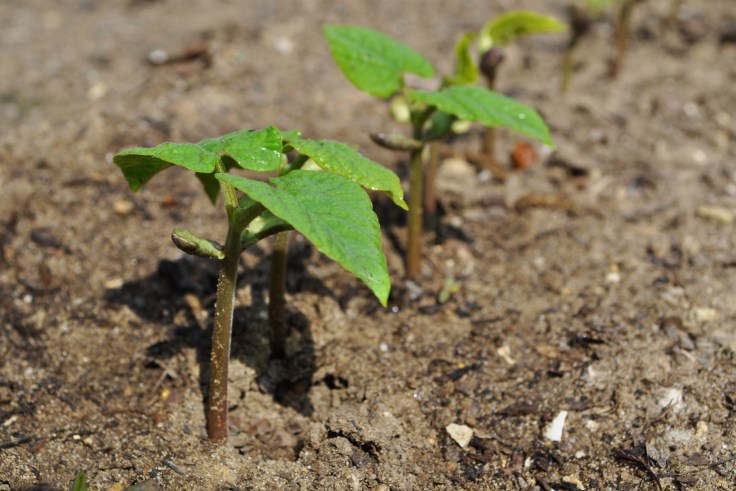
seedling 2 for web

As he awakened to the passing of time, his mind skipped over fall, passed by winter, and envisioned signs of a coming spring. Not outside the window of the conference room, where the shadows of the morning and the afternoon grew longer, and the mountains in the distance transformed into an impressionistic painting, but within himself, where the seeds of optimism and hope that had been planted by so many people over the years, were finally growing.


excerpt from A Prayer for Rain, by joseph e bird, copyright 2016

Red

Red is real.  I don’t know his name, though I did at one time.

When I first saw him, he was probably 15. Maybe older. It was hard to tell because he was big for his age. He was a least six feet tall then, but I knew he was young because his face was youthful. He rode a bike. One of those BMX-type bikes that kids that age ride. Yeah, and a blazing shock of red hair. He had the kind of unconventional good looks that could have landed him movie or television roles. In another life.

I live in a very small town, population around 10,000. Maybe less. I work downtown, such as it is. Downtown encompasses a few blocks. My office faces an alley that’s on the route from the soup kitchen at St. Mark’s to points elsewhere, like the GoMart a block away. Across the alley is a house that’s been converted into a duplex. Renters come and go. There have been good people living in the house, some just starting out, trying to save money and build a better life. There have been others not so well intentioned. Over the years, the police have been called to the house many times.

It was when the house was occupied by others that I first saw Red. He would cruise in on his bike, have some contact with people in the house, then ride away. I sort of knew what was going on, but I had hoped that this kid was just sowing oats, that maybe he would mature and take a different path. There was life in his eyes and something told me there was pontential for great things.

Then I didn’t seem him for a while. Months. Maybe a year or two.

Then his picture in the paper. Busted for something, I don’t remember what. I know it was drug related, but it was more than just possession. It was obvious to me that he hadn’t taken a different path and that he was doing what he had to do to feed his addictions.

I started seeing him on the street again. No bike, just walking. He seemed ok. I wondered if he had gotten help. Maybe he was turning his life around.

Then last night I made a trip to the store. It was raining hard. I sat in my car listening to Ben Sollee on Mountain Stage before going inside. When I came out, Red was walking along the drive in front of the store. He was oblivious to the rain. Then he stopped. He started circling his left wrist with his right hand. Back and forth. I thought maybe he was trying to get something off his arm. Then I saw there was nothing there. He was muttering to himself. He had that look. Frustration. Anger. Fear. In his world, not ours.

Then he started walking again. The look was gone, and he was just a guy walking in the rain.

We see people like this all the time. Seemingly too far gone to help so we just drive by.  Like I did. I look back and wonder if I should have offered him a ride, but I know that wouldn’t have been very smart. He was obviously unstable and given his past, even talking to him might have been a mistake.

But I can’t help wondering what life is like for him. That’s the point of the story. He’s tragically broken.

But he’s still a person.

Every now and then we all need shelter from the storm.


Ben Sollee

I heard this guy on a Mountain Stage broadcast tonight. I was fortunate to grow up listening to my sister play the cello and I’ve always been partial to cello music.  This guy does it a little differently.  Enjoy the show.

Many goods.

Our high school band was full of amazing musicians, many who are still playing in bands locally. It was the time when Chicago (the band) was still cool and playing album-oriented, blues and jazz-influenced rock. Some of the guys in our marching band formed their own group called Chite (not sure of the spelling) and developed their own language. “Many goods” was one of their catch phrases.

This crazy clip from NPR’s Tiny Desk Concert reminded me of the old days. Enjoy Mucca Pazza.  Many goods, as they would say.

Real life.

From Amos Mallard. I told you he had a story to tell.

MEMORIES | THE HEALTH CENTRE

I married early. I knew it would be her because of how we were with each other, conspiratorial and effortless. She sat on my knee at a party and kissed me near an open window and there, framed by billowing curtains, we decided to be together. I don’t remember all of that time. I was happy. Rented suit, top hat and wedding gown, a week in Sicily we couldn’t afford and then married life. I wanted to be an artist but I’d stopped believing art was useful and I wasn’t much of a painter. I worked as a photographer for a time but it made me bitter because I wanted to tell stories not photograph children and weddings. She wanted me to just pick something and do it, but I couldn’t. So I walked up and down Bennetts Hill until one of the agencies took pity on me and sent me to a Health Centre; a depressing one storey building clad in pitched lumber in a deprived part of the city.

I sat at the reception desk behind reinforced glass, opening a slot to take medical notes or give vitamin drops. Mothers brought their children for vaccinations and annual check-ups, few of them spoke English. I spoke to the mothers from Burkina Faso in broken French and used the few Urdu words I’d been taught with everyone else. The children were wild and ragged, failing on every developmental test we administered. Some of them were hopeless cases with addict parents who’d arrive agitated and ferocious. We never turned them away. We didn’t know if we’d see the child again that year. The Health Visitors spent most of their time visiting homes and checking that children were being cared for properly. They brought back sad reports or disease and violence. Sometimes they’d share funny stories of what they’d seen, but mostly it was sad.

My shifts were mundane, hours of boredom punctuated by little bursts of chaos – patients falling through the doors begging for methadone or medication for their toothache.  I sat opposite the reception desk of a Doctors surgery we shared the building with. I’d watch the three receptionists working and they’d watch me. We didn’t speak very often, separated by glass as we were, but occasionally we’d make eye contact. They had it worse than I did, a steady stream of people; colds, fevers, rashes, back pain, chest pain, pain when standing, pain when sitting. They ran their desk with merciless efficiency. They had to. I was much softer, trying to help every lost cause, having my hand patted by relieved mothers who I had promised to intercede for. I suppose I was a bit of an anomaly, young, compassionate and uncorrupted.

The women I worked with were beautiful in a way one only appreciates with age and hindsight. There was Jen, tall with indolent eyes who moved softly about the office, composed as a Hellenic statue and more beautiful. Lina with skin like honey, wide hipped and embracing, laughing all the time, superstitious, effortlessly maternal. Eve, athletic, dark, fierce to strangers but gentle with those she knew, she laughed loudly at my dirty jokes and I’d hear her laughing hours later, repeating the punch line to herself. And Jean. Jean was older than the rest, sinewy from years of cycling. Savagely intelligent. She knew everything and everyone and I tried to pry her stories from her but she would never fully share them. I knew she’d travelled, spoke different languages, I knew she was here because she chose to be and that she was devoted to people. I think she liked me because she saw some of her son in me. Jean was pragmatic. She didn’t mind me reading novels when there was nothing to do and she protected me from the agency, telling them I was needed, that I should receive more money. I still see Jean, cycling or swimming. She is frail, softened by age, I don’t know if she has retired. I can’t imagine her sitting in a chair.

I fell in love with all of these women. I saw how they worked, how they loved, how weary they became fighting their war against hopelessness, a war they couldn’t win but had to fight every day. I loved them for that and they loved me back I think, understanding that I wasn’t supposed to be there and that I wouldn’t stay. They saw that I was gentle with people who needed gentleness and they took me for one of their own.

I remember one of the final days I worked at the Health Centre. I was holding a new-born, just days old. The mother handed her to me and I stroked the downy black hair across her forehead, lulling her to sleep. A car screeched to a halt outside the doors and a frantic looking girl burst in to the centre. I handed the baby back to the mother and tried to ask the girl her what was wrong. She dragged me out to the car and pointed at her grandmother who slumped in the passenger seat, breathing shallow raspy breaths. A heart attack. There was movement around me, panic, but all I could hear were those shallow rasping breaths. I picked the woman up and carried her in to the Doctors office. She was light in my arms, fragile as a bird, the silk of her sari draped loosely about her skeletal frame. As I paused at his office door the woman breathed her last, a long exhalation. The Doctor tried CPR but she was gone. She died in my arms.

That was the closest I had been to death. The finality and simplicity of it surprised me, she was alive one moment and dead the next, life had escaped her and what I held in my arms was nothing, dust, a shell. I washed my hands after everything settled down. I wasn’t sure why. The mother and her baby were still at the desk waiting for me.

It would be too grand to look back and say I saw the worst and best of people while I worked there, but I am different because of the Health Centre. Behind my reinforced glass I watched parts of the journey of life and death; the joy of birth, the exuberance of youth, the struggle of age, the inevitability of death. I watched these little vignettes from my window and I took in as much as I could. I felt trapped at the time, by the low pay, by a job I felt was beneath me, by my pretensions which told me I should be doing something more worthwhile. I still feel that way. I’m discontent and restless.

I went running on Sunday morning, a steady ten miles around the city. Its research for me, I like to get up early so I can stare at the city without anyone else around. I took a detour past the Health Centre. It’s been demolished, replaced with a modern looking church iced in blinding white plaster. I wasn’t sad; it was an ugly and dilapidated building.

If you live in a city long enough you’ll see parts of your history erased. But if you remember those places, you’ll remember who you were while you were there. That’s important. We all need to remember who we were to understand who we are, and who we might become.

Hold fast. AM.

A story in song.

A story is told.  A song is sung.

Darrell Scott on Mountain Stage.

Hopeful Voice

Glen Hansard and Marketa Irglova from the movie “Once.”  Nice, soothing music.

Sometimes we need that.

Blog at WordPress.com.

Up ↑